You spray.
You clean.
The pests disappear.
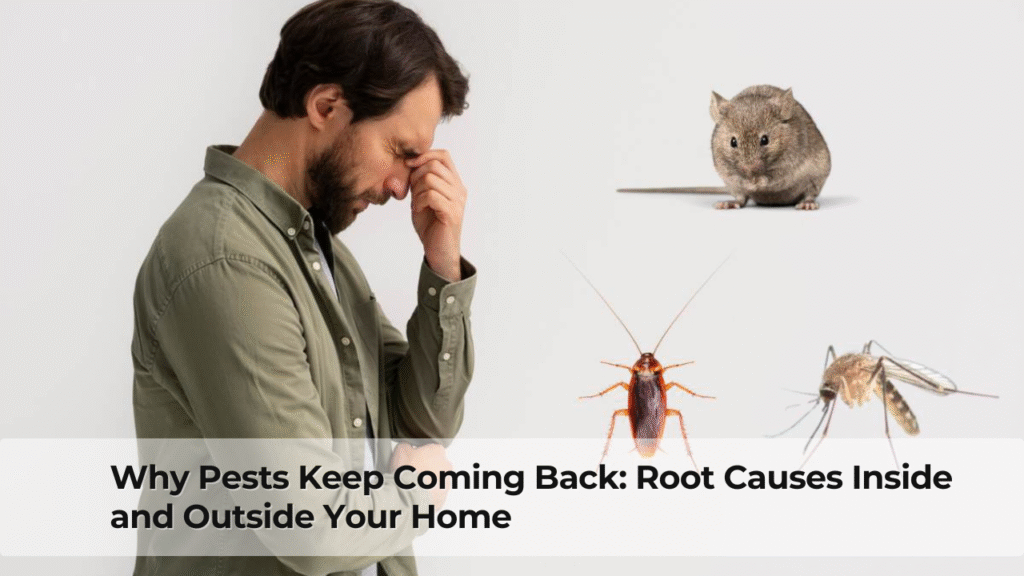
Then a few weeks later, they are back. Ants in the kitchen. Mice in the basement. Spiders in the corners. It feels like a bad loop you cannot escape.
Here’s the thing. Pests almost never come back “for no reason.” There are real causes inside and outside your home that invite them in again and again.
In this blog, you will learn why pests keep returning, what is going on behind the scenes, and how a team like Bug Managers can help you break the cycle for good.
It’s Not Just Bad Luck
When you see pests again after treatment, it is easy to think:
- The products did not work
- The weather is “just bad this year.”
- Your home is cursed
Most of the time, none of that is true.
What is really happening is this:
- The original problem was bigger than it looked
- The root causes were never fully fixed
- New pests are taking advantage of the same weaknesses
If you only kill what you see, but do not change what attracts pests and how they enter, they will keep returning.
So let’s break it down.
Inside Your Home
Hidden Reasons Pests Keep Finding You
Your home is warm, dry, and full of food and shelter. For pests, that is paradise. Some of the root causes are obvious. Others are easy to miss.
1. Food left out, even in tiny amounts
You may not leave full plates on the counter. But pests do not need much.
They can live on:
- Crumbs under the toaster
- Sugar stuck to a sticky jar lid
- Pet food left in the bowl at night
- Cereal dust at the bottom of an open box
Ants, cockroaches, and mice love these small, constant snacks. Even if you sprayed last month, they will return if the food is still easy to find.
What this really means is this.
Unless your cleaning routine changes, your pest problem will not truly change either.
2. Water and moisture
Pests need water just like you do. Many homes have “free water” spots that never get noticed.
Common ones:
- Slow leaks under sinks
- Condensation around pipes
- Damp basements or laundry rooms
- Drips near the water heater or furnace
Silverfish, cockroaches, ants, and many other pests use these moist areas as safe hangouts. Kill them once and they might be gone for a while. Ignore the moisture and new pests will move in.
3. Clutter and hiding spots
Clutter is not just a mess. It is shelter.
Pests hide in:
- Stacks of cardboard boxes
- Overloaded closets
- Piles of newspapers or flyers
- Bags and containers stored directly on the floor
Rodents, spiders, and even bed bugs love tight, dark, untouched spaces. When a home is packed with clutter, treatments can only do so much. Pests always have somewhere else to run to.
4. Cracks and gaps that never got sealed
You might see a mouse and think it came in through a big hole. In reality, mice can squeeze through openings as small as a dime. Ants and spiders need even less space.
Inside your home, common gaps are:
- Around baseboards
- Behind cabinets
- Where pipes go through walls
- Around window and door frames
If those gaps stay open, pests can move from room to room, even after a good treatment. The problem then feels “new” every time, but the path is the same.
Outside Your Home
How Your Yard Keeps Sending Pests Back In
Your pest problem does not start at the front door. It starts in the yard, on the outside walls, and even in your neighbours’ spaces.
1. Overgrown plants and branches touching the house
Branches, vines, and shrubs that touch your roof or walls act like bridges.
They let:
- Ants walk inside
- Spiders spin webs right at windows
- Rodents and wildlife reach the roof and attic
If plants stay untrimmed, you can treat the inside over and over, but new pests will keep marching in from outside.
2. Wood, junk, and stored items near the foundation
Wood piles, old lumber, broken furniture, and even kids’ toys stored against the house all help pests.
They give:
- Shelter to spiders and ants
- Hideouts for mice and rats
- Moist spots that attract insects
When these piles sit close to the house, pests only have to travel a short distance to enter through tiny cracks.
3. Standing water and poor drainage
Water that sits in:
- Clogged gutters
- Old tires
- Buckets or plant saucers
- Low spots in the yard
becomes a magnet for mosquitoes and other insects. Some of those insects then move closer to doors and windows, looking for light and heat.
4. Neighbouring problems
Sometimes your home is in good shape, but nearby properties are not.
For example:
- A neighbour with heavy clutter attracts rodents
- Shared walls in townhomes let pests travel between units
- Garbage bins left open behind buildings attract cockroaches and wildlife
You cannot control everything outside your property. But you can build a stronger barrier at your own walls, foundation, and entry points.
Treatment Problems
When “Half Fixed” Turns Into “Not Fixed”
Another big reason pests keep coming back is that the first treatment was incomplete, rushed, or done with the wrong approach.
1. Only treating what you can see
Spraying visible ants or roaches might give quick relief. But most colonies live:
- In wall voids
- Under floors
- Behind cabinets
- Outside the building
If the nest or main source is not targeted, pests will keep sending new workers into your home. So it looks like they “came back,” but really, they were never fully gone.
2. Eggs and life cycles
Many pests have life stages that survive basic treatments.
For example:
- Bed bug eggs may not be affected by some products
- Cockroach egg cases can hide deep in cracks
- Flea eggs and larvae can sit in carpets and pet bedding
If follow up timing does not match the life cycle, new pests will hatch after the treatment and the problem starts again.
3. DIY products used the wrong way
Store sprays and traps look simple. But they can cause more trouble when used without a plan.
Common issues:
- Spraying ants randomly can split the colony and create more nests
- Using too much product can make pests avoid treated areas
- Placing bait in the wrong places can feed pests without reducing the population
After weeks of DIY attempts, many people finally call a professional. By then, the infestation is usually heavier and more spread out.
4. No follow up or prevention plan
Even the best treatment benefits from follow up. Some pests, like bed bugs or large rodent problems, almost always need more than one visit.
If there is no second look:
- Missed spots stay active
- New entry points do not get found
- Small remaining populations bounce back
This is why an ongoing plan with a company like Bug Managers can help you stay ahead, instead of reacting again and again.
Specific Pests And Why They Return
Different pests return for different reasons. Here are a few common ones.
Ants
Ants come back when:
- Food trails are left in place
- The main colony outside is not treated
- Entry points around doors and windows stay open
You wipe the counter and they disappear for a day. Then they find the same sugar line or crumb trail and you are back to square one.
Rodents

Mice and rats return when:
- Gaps in foundations, doors, and vents stay unsealed
- Garbage, bird feeders, or pet food stay easy to reach
- Nesting spots in garages and basements stay cluttered
You can trap a few, but if the “mouse highway” holes are still open, new ones will keep coming.
Cockroaches
Roaches return when:
- Moisture and warmth around appliances stay the same
- Grease and food residue build up in tight spots
- Shared walls in multi unit homes are not treated as a system
They love apartments, condos, and older homes because they have many hiding spots and often more than one food source.
Bed bugs
Bed bugs come back (or seem to) when:
- Only one room is treated while others are missed
- Used furniture brings in new bugs
- Eggs hatch after a single treatment with no follow up
Sometimes it is not a “return” at all. It is the same original infestation that was only partly hit.
How Bug Managers Targets Root Causes
A company like Bug Managers does more than spray and leave. The goal is to find why pests picked your home in the first place and fix that.
That means:
- Inspecting inside and outside, not just obvious spots
- Asking about your routines, pets, and past pest issues
- Checking moisture, clutter, gaps, and food storage
- Identifying the exact species, not guessing
Then the team builds a plan that may include:
- Targeted treatments at nests and high traffic zones
- Sealing entry points with proper materials
- Advice on cleaning, storage, and yard care
- Follow up visits for stubborn pests like bed bugs and rodents
What this really means is simple.
You stop chasing pests and start changing the conditions that let them win.
Bug Managers serves homes and businesses across Brampton, Mississauga, Toronto, and the GTA, with a focus on long term solutions, not quick cover ups.
What You Can Do To Break The Cycle
You do not have to do everything at once. Start with a few key habits.
Inside:
- Wipe counters every night
- Store food and pet food in sealed containers
- Fix leaks and damp areas as soon as you see them
- Reduce clutter in basements, closets, and spare rooms
Outside:
- Trim plants so they do not touch walls and roof
- Move firewood and stored items away from the house
- Empty standing water and keep gutters clear
- Keep garbage lids closed and bins clean
With a good pest control partner and these simple steps, you turn your home from “easy target” into “hard to invade.”
The Bottom Line
Pests do not keep coming back by accident.
They come back because:
- Food, water, and shelter are still easy to find
- Entry points inside and outside are still open
- The first treatment did not reach nests and eggs
- There is no ongoing plan to stay ahead of them
The good news is that you can change this story.
When you work with a team like Bug Managers, you are not just getting another spray. You are getting a clear look at the real causes, a plan to fix them, and support to keep your home pest free for the long term.
If you are tired of fighting the same pests over and over, it is time to tackle the root causes instead of the symptoms.
Reach out to Bug Managers, book an inspection, and start turning your home into a place where pests do not feel welcome anymore.