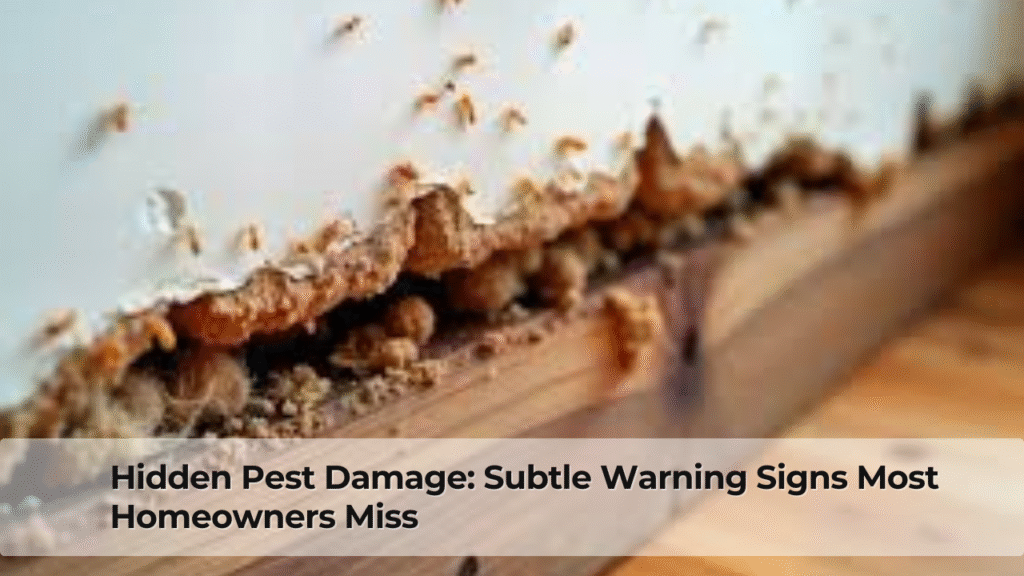
You walk past that same spot on your wall every day. The paint looks a little weird, maybe bubbling slightly. You think it’s just moisture or old paint. No big deal.
Except it is a big deal. Behind that innocent-looking bubble, termites might be eating through your wall. By the time the damage is obvious, you could be facing thousands of dollars in repairs.
Pests are experts at hiding. They work behind walls, under floors, and inside places you never look. The damage builds slowly and quietly. Most homeowners miss the early warning signs because they don’t know what to look for.
Bug Managers sees this constantly. Homeowners call when the problem is already serious. But if you know what subtle signs to watch for, you can catch pest damage early and save yourself a fortune.
Paint That Looks Wrong
Your paint shouldn’t bubble, peel, or look bumpy for no reason. When it does, most people blame humidity or age. Sometimes that’s true. But often, it means pests are working behind your walls.
Termites create moisture as they feed, which causes paint to bubble or peel. They tunnel just below the surface of wood. The moisture gets trapped between the wood and your paint, creating bubbles.
Tap the wall where the paint looks weird. Does it sound hollow? That’s a bad sign. Healthy walls sound solid. Hollow sounds mean something ate through the wood inside.
Look for paint problems near baseboards, around window frames, on door trim, and anywhere wood meets walls. Don’t ignore bubbling paint just because you don’t see bugs. By the time termites become visible, the damage is usually extensive.
Tiny Piles of Sawdust
You sweep up a small pile of what looks like coffee grounds or sawdust near a wall. You think someone tracked in dirt. You clean it up and forget about it.
These could be termite droppings. Drywood termites push their waste out of tiny holes in the wood they’re eating. It piles up below those holes.
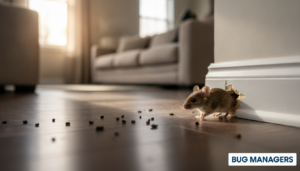
The piles are usually small and neat. The pellets are all roughly the same size. They often look like tiny grains of sand or pepper. The color depends on what kind of wood the termites are eating.
Check for these piles in corners, along baseboards, on windowsills, and under furniture. If you see them once, check back in a few days. Fresh piles mean active termites.
Doors and Windows That Suddenly Stick
Your door was fine last month. Now it sticks when you try to close it. You figure the wood swelled from humidity.
Maybe. But it could also mean termites or carpenter ants damaged the frame. As these pests tunnel through wood, they weaken it. The wood warps. Frames shift slightly. Doors and windows that fit perfectly before suddenly don’t fit right.
Check multiple doors and windows. If several are sticking at the same time, especially if they never did before, investigate further. Look at the frames carefully. Do you see any small holes? Any crumbling wood? Any hollow spots?
Strange Sounds at Night
You’re lying in bed. The house is quiet. Then you hear it. A light scratching sound. Maybe some scurrying. You convince yourself it’s just the house settling.
Scratching, scurrying, or squeaking sounds coming from walls or ceilings, especially at night, usually mean rodents. Mice, rats, or squirrels are nocturnal. They’re most active when you’re trying to sleep.
The sounds aren’t random. They follow patterns. You’ll hear them in the same areas at roughly the same times. That’s because rodents use the same paths repeatedly.
Listen near walls, in the attic, and above ceilings. Mice make lighter, faster sounds. Rats make heavier, slower sounds. If your pet suddenly becomes fixated on a certain wall, pay attention. Dogs and cats can hear rodents before you do.
Grease Marks Along Walls
You notice a dark streak along your baseboard. It looks like someone dragged something dirty across it. You wipe it off, but it comes back in the same spot.
Rodents follow the same pathways repeatedly, leaving greasy, dark streaks along walls from oils in their fur. Rats and mice have oily fur. As they run along walls day after day, that oil transfers to your walls.
These streaks usually appear at baseboard level because rodents run along the bottom of walls. They feel safer there than running across open floors. The marks are typically dark gray or brown.
Look for grease marks along hallways, behind appliances, and near food storage areas. Following these marks can lead you to entry points or nesting areas. The marks get darker as the infestation grows.
Weird Smells You Can’t Explain
Your kitchen smells musty. Or maybe your basement has an ammonia-like odor. You clean thoroughly but the smell doesn’t go away.
A persistent musty or ammonia smell may indicate rodent urine. A foul, rotting odor could mean you have a dead pest inside your walls. Different pests create different smells. Rodent urine has a strong ammonia scent. Cockroaches produce an oily, musty smell.
These odors linger because they’re often in places you can’t easily clean like inside walls, under subfloors, and in insulation. Pay attention to where the smell is strongest. That tells you where to look for the source.
Don’t cover up pest odors with air fresheners. That only masks the problem temporarily. The smell will return because the source is still there.
Hollow-Sounding Wood
You’re hanging a picture. You tap the wall to find a stud. Part of the wall sounds solid. Another part sounds hollow.
Wood that sounds hollow when tapped often means termites or carpenter ants have tunneled through it. These pests eat wood from the inside out. They leave a thin outer shell that looks fine but has nothing behind it.
Healthy wood sounds solid and dense when tapped. Damaged wood sounds empty or papery. Check baseboards, door frames, window frames, and support beams. Tap in several spots and compare how different areas sound.
You can also gently press on wood that sounds hollow. If it gives under light pressure, the damage is severe. This test works because the outer layer often stays intact even after pests have destroyed everything behind it.
Mud Tubes on Foundation
You’re doing yard work. You notice what looks like a thin line of dried mud running up your foundation. It’s about as wide as a pencil.
Mud tubes are small tunnels made by subterranean termites to travel safely between their nest and your home. These termites live underground. They need to reach the wood in your house to feed. But they can’t survive in open air. So they build these protected highways out of mud.
The tubes run from the ground up to wood sources. You’ll find them on foundation walls, in crawl spaces, and around pipes. They’re usually brownish and have a rough, dried mud texture.
To check if tubes are active, carefully break off a small section. Check back in a few days. If termites rebuild it, you have an active infestation. Don’t just knock down the tubes. The colony is still there and will rebuild.
Frayed or Damaged Wiring
Your electrician mentions that several wires look chewed. You’re confused because everything still works fine.
Rodents gnaw on wires to keep their teeth worn down. They’ll chew on almost anything, including electrical wires. The damage might not cause immediate problems, but chewed wires are a serious fire hazard.
Check wiring in the attic, basement, behind appliances, and in the garage. Look for bite marks, missing insulation, or completely severed wires. Even if your lights work fine, damaged wiring is an emergency.
Bug Managers strongly recommends calling both a pest control professional and an electrician immediately when you discover this damage.
Damaged Food Packaging
You open your pantry. A cereal box has a hole in it. A bag of flour is torn. You think maybe you just tore it by accident.
Look closer. The holes are usually small and clean-edged. Rodents chew precise little holes to access food. Check all your dry goods like cereal, flour, rice, pasta, and pet food. Look for holes in packaging, scattered food, and small black droppings.
Food contamination is serious. Once pests get into food, you can’t just seal the box and keep using it. Rodents and insects leave behind droppings, urine, and bacteria. That food needs to go in the trash.
Piles of Wings Near Windows
It’s spring. You notice small piles of wings on your windowsill. They look like tiny insect wings.
Discarded wings near windowsills can indicate termites. When termites reach maturity, winged termites leave the colony to mate and start new colonies. After they find a mate, they shed their wings. The wings pile up where the termites emerged.
This happens most often in spring or early summer. That’s termite swarming season. The wings mean a mature termite colony is somewhere nearby. It might be in your house already or close enough that swarmers found their way inside.
Don’t just vacuum up the wings. Those wings are evidence of a potentially serious problem. Take photos and call a pest control company.

What to Do When You Spot These Signs
Finding these warning signs is scary. But catching damage early is way better than discovering it late.
First, document what you see. Take clear photos of any damage, strange marks, holes, or droppings. Write down when and where you noticed each sign.
Second, don’t try to fix structural damage yourself. If wood is hollow or paint is bubbling, don’t just paint over it. That hides the evidence without solving the underlying pest problem.
Third, call a professional pest control company. Most companies offer free inspections. A trained technician can identify exactly what pest you’re dealing with and how extensive the damage is.
Fourth, avoid disturbing potential nests. If you think pests are behind a wall, don’t knock holes in it. You might scatter them throughout your house.
Fifth, take preventive action. While waiting for your pest control appointment, remove food sources, fix water leaks, and seal obvious cracks.
Why Early Detection Saves Money
Every day you ignore these warning signs, pest damage gets worse. Termites don’t stop eating. Rodents don’t stop chewing. Carpenter ants don’t stop tunneling.
Catching infestations early means smaller repair bills, less structural damage, fewer health risks, and easier pest elimination. A minor termite problem caught early might cost a few hundred dollars to treat. That same problem ignored for a year could cost tens of thousands.
Insurance typically doesn’t cover pest damage. The subtle signs we covered seem small. A bit of bubbling paint. A strange sound. A few droppings. But these small signs point to big problems hiding behind your walls.
Trust Your Instincts
If something seems off in your house, it probably is. That weird smell isn’t normal. That scratching sound isn’t nothing. That hollow-sounding wall deserves investigation.
Homeowners who ignore their instincts always regret it later. They noticed something months ago. They convinced themselves it was nothing. By the time they called for help, the damage was extensive.
Don’t be that homeowner. Trust what you see, hear, and smell. Even if you’re not sure what’s causing it, get a professional opinion. A free inspection takes an hour. Rebuilding damaged structures takes weeks and costs thousands.
Take Action Today
Walk through your house with this guide. Check for bubbling paint. Listen for strange sounds. Look for grease marks and droppings. Tap walls to test for hollow spots. Inspect your foundation for mud tubes.
Spend 30 minutes doing this inspection. You might find nothing, which is great. Or you might find warning signs that save you from major damage later.
If you find any of these signs, don’t wait. Contact Bug Managers or another pest control professional immediately. The longer you wait, the more damage occurs and the more expensive repairs become.
Your home should be a safe, comfortable place. Hidden pest damage threatens both safety and comfort. But now you know what to look for. You can spot the subtle signs most homeowners miss completely.
Stay vigilant. Check regularly. Act quickly when you notice something wrong. Your future self will thank you for catching the problem early instead of ignoring it until disaster strikes.