Wildlife problems in Canada are not random. They follow the seasons. Spring and fall are when most homeowners notice the biggest spikes. That is because animals change their behaviour when they are raising young or preparing for colder weather. If you understand the seasonal pattern, you can avoid the most common mistakes and fix problems with less stress.
Why Spring Is a High-Risk Season
Spring is “baby season” for many animals. Mothers look for warm, protected den sites. Unfortunately, attics, soffits, chimneys, sheds, and decks often feel perfect.
The big risk in spring is separating a mother from her babies. That can lead to crying young left behind, strong odours, and more damage as the mother tries to get back in.
Toronto Wildlife Centre warns that if a raccoon is living in an attic from January to September, you should always assume it may be a mother with babies.
Toronto Wildlife Centre also warns that one-way doors can be risky for squirrels between February and October because the mother can be locked out while babies are trapped inside.
The City of Toronto gives the same type of warning for skunks. It says one-way doors should not be used between April and September when skunks are raising young, unless the babies are mobile.
What This Means for Homeowners in Spring
In spring, the best approach is usually slower and more careful. The goal is to avoid creating a bigger problem than the one you started with.
Good spring-time principles are:
- Do not rush to seal an entry point if you are not 100% sure the animals are out
- Assume babies may be present if it is the common birth season for that animal
- Focus on observation first (where are they getting in, and when do they leave)
- Plan repairs that prevent re-entry after you confirm the space is empty
Why Bat Timing Matters Even More
Bats are a special case because of maternity season. If you exclude bats when pups cannot fly, pups can die inside the attic.
Ontario’s “Bats in Buildings” guide explains that from mid-May until mid-August, bats and flightless pups may be present, and eviction or sealing can put pups at risk.
So with bats, timing is not just “nice to have.” It is the difference between a humane fix and a harmful one.
Why Fall Is Another Peak Season
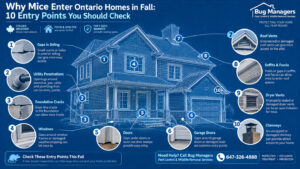
Fall is when many animals prepare for winter. Some wildlife looks for warmer shelter. Rodents often start moving indoors as temperatures drop. And many homeowners only notice the issue once the animal has already settled in.
A clear example is house mice. MyHealth Alberta states that house mice usually enter homes in the fall and winter looking for food and shelter.
This is why you may suddenly see droppings, hear scratching in walls, or spot gnawing in storage areas in late fall and early winter.
What Fall Wildlife Pressure Looks Like in Real Homes
In fall, homeowners commonly deal with:
- Mice and rats entering through small gaps and worn door thresholds
- Squirrels testing roof edges, vents, and soffits as they move and nest
- Raccoons finding weak rooflines or attic access points
- Skunks looking for den sites under decks before deep cold sets in
Fall is also when prevention work pays off the most. If you seal and repair before the first serious cold, you often stop the problem before it starts.
The Best Time to Do Prevention Work
If you want fewer wildlife surprises, the smartest approach is seasonal maintenance.
Late summer to early fall is often ideal for:
- Inspecting roof vents, soffits, fascia, and roof edges
- Repairing loose or rotted wood near the roofline
- Adding or replacing vent covers
- Sealing gaps where pipes and cables enter the home
- Installing door sweeps and fixing worn thresholds
Health Canada explains that the first line of defence is getting rid of easy entry points, noting mice can squeeze through very small openings and even small gaps under doors can allow access.
A Simple Seasonal “Do This, Not That” Guide
Spring and early summer
Do:
- Watch first, especially if you suspect babies
- Assume baby risk for raccoons, squirrels, and skunks in their known rearing periods
- Plan exclusion and repairs carefully
Do not: - Seal holes quickly without confirming the space is empty
- Use one-way doors during high baby-risk windows unless you are sure young are mobile
Fall and early winter
Do: - Seal and reinforce entry points before cold weather sets in
- Reduce attractants like open garbage and outdoor food sources
- Expect mouse pressure as weather cools
Do not: - Rely on “quick fixes” that do not include proofing and sealing
- Ignore small gaps, because small gaps become big problems over time
Why Humane Removal Matters Most in These Seasons
Humane removal is not only about being kind. It is also about avoiding costly outcomes.
In spring, humane timing helps prevent:
- Orphaned young inside walls or attics
- Strong odours and difficult cleanup
- More property damage from animals trying to re-enter
In fall, humane prevention and exclusion help prevent: - Repeat infestations
- Ongoing scratching and nesting
- Rodent entry as temperatures drop
Conclusion
Spring and fall are the two seasons when wildlife conflicts spike in Canada because animals are either raising young or preparing for winter. If you act with the season in mind, you avoid the most common mistakes, especially mother-and-baby separation risks in spring and rodent entry pressure in fall