Intro — one pest event can cost more than you think
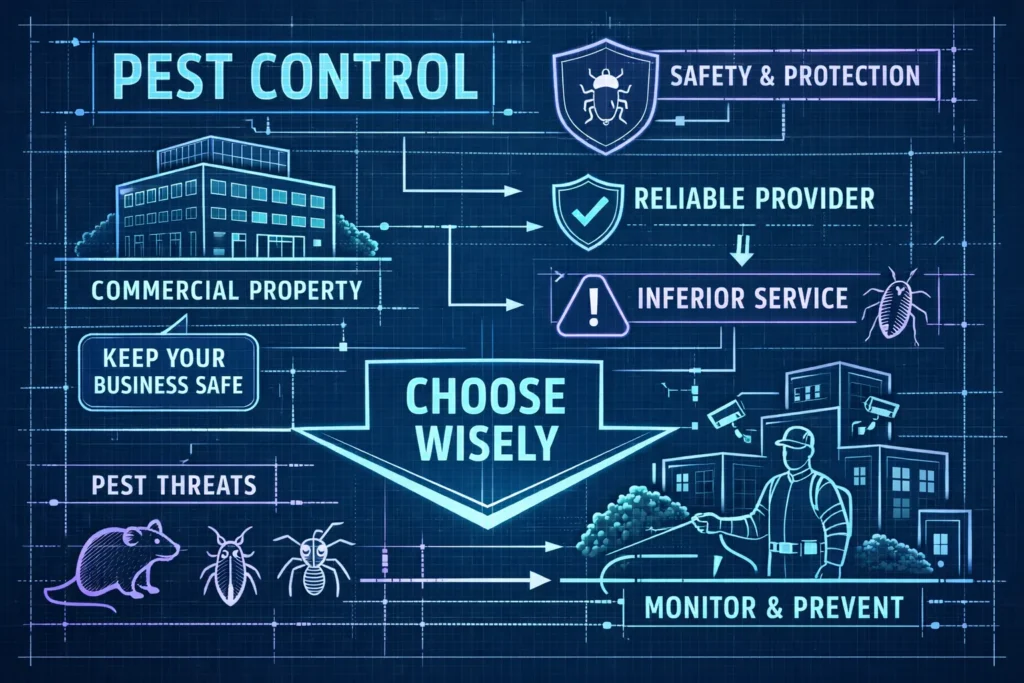
A single sighting of rodents, cockroaches or a bed bug report can cost a business its reputation, lost bookings, and costly health‑inspection penalties. Facilities and procurement managers need a practical checklist: what outcomes to demand from a commercial pest partner, how to compare quotes fairly, the audit paperwork to keep, and a ready‑to‑use RFP you can drop into a bid today. At Bug Managers we use integrated pest management (IPM), digital reporting and guaranteed response times for commercial clients across the GTA, and the guidance below reflects what effective, audit‑ready programs actually look like in the field.
What a good commercial pest control partner actually does
Good commercial pest management delivers measurable outcomes: regulatory compliance, fewer interruptions to operations, documented prevention work, and steady reductions in pest activity over time. Treat the vendor relationship as a risk‑management partnership, not a one‑off treatment.
1. IPM‑first approach
Your provider should prioritize prevention, monitoring and targeted treatments. Chemical applications are a tool of last resort. Relying on pesticides alone is a red flag—IPM reduces pesticide use, produces trend data, and gives you defensible answers in audits.
2. Relevant industry experience
Experience matters because methods differ. A restaurant needs HACCP‑friendly solutions and drain work; a warehouse needs stored‑product monitoring and dock‑door exclusion. Ask for examples from similar sites.
3. Licensed and insured technicians
Confirm company licences and individual applicator/exterminator numbers, and request a current insurance binder. In Ontario expect operator/exterminator licences and minimum commercial general liability of $2M plus pollution coverage (~$1M) on file.
4. Proofing, exclusion and contractor coordination
Spraying without sealing openings and fixing structural issues is incomplete. A strong program includes written corrective action logs, coordination with maintenance or contractors for repairs, and follow‑up verification photos.
5. Digital monitoring & audit‑ready reports
Look for trap counts, trend graphs and clear service notes delivered as monthly PDFs, CSV exports or a dashboard. Sample deliverables should show location, date, trap counts, corrective actions and time‑stamped photos.
6. Clear guarantees and emergency options
Expect written response times, defined re‑treatment windows and remedies if performance targets aren’t met. For high‑risk sites demand emergency response commitments and escalation paths.
Quick red flags:
- No written scope of work or vague guarantees
- Supplier refuses to provide references or sample reports
- Only chemical treatments offered with no proofing or monitoring
Six questions to ask on a first call:
- Do you use an IPM framework and can you show sample reports?
- Who will be our technicians and can we see their certificates?
- What is your guaranteed response time for urgent issues?
- How do you document corrective actions and proofing work?
- What is covered in the base price versus billed extras?
- Can you run a 30–90 day pilot at one site before a multi‑site rollout?
How commercial pricing works — and how to compare quotes fairly
Commercial vendors price services several ways: flat‑rate monthly/annual contracts for routine prevention; per‑visit or pay‑as‑you‑go for low‑risk sites; tiered or customized contracts that scale by square footage and risk; and one‑time or per‑sq‑ft pricing for infestations or special projects. Which model fits depends on risk and predictability needs. (See a practical commercial pest control pricing guide for examples of common models.)
Normalize bids before comparing. Convert every quote to a monthly equivalent, separate one‑time setup fees from recurring fees, and make a side‑by‑side list of inclusions: inspections, monitoring devices, proofing, chemicals, and emergency call‑outs. Compare response and guarantee terms, not only the headline price. (For a comparison of common pricing approaches see commercial pest control pricing compared.)
Ballpark ranges (very approximate): small offices and low‑risk retail can be near the lower end of commercial rates; restaurants and warehouses cost more because of food safety and storage risk. Accurate pricing always requires a site inspection and inventory of risk points like drains, docks and food storage.
Example normalization: Quote A = $120/month flat (inspections + monitoring). Quote B = $600 one‑time setup + $100/month. Normalize Quote B to monthly: (600 ÷ 12) + 100 = $150/month. That makes comparison apples‑to‑apples.
Three hidden fees many forget to ask about: proofing/exclusion billed separately, emergency/after‑hours call‑out surcharges, and parts or contractor coordination charges for repairs. Put these on the RFP so vendors must disclose them up front.
Integrated Pest Management (IPM) and audit‑ready documentation
IPM is a preventive, data‑driven strategy that prioritizes exclusion, sanitation and monitoring before targeted treatments. Commercial sites need documented IPM so you can show inspectors what was done, when, and why.
Ask for and archive these exact documents:
- Inspection and monitoring logs (dates, locations, trap counts)
- Treatment records with product names and label numbers
- Safety Data Sheets (SDS) and applicator certificates
- Corrective action logs (proofing, repairs, sanitation changes)
- Staff training and communication logs with operations
Professionals deliver monthly PDFs, CSV exports or dashboard access. Sample RFP wording to request: “Provide three months of anonymized monitoring reports and copies of applicator certificates for technicians assigned to our account.” Retain pesticide and treatment records for the period your regulator requires (Ontario guidance commonly references keeping records for up to five years).
Service levels, contract terms and the fine print you can’t ignore

Insist on written SLAs for visit frequency, response times and remedies. Recommended baseline commitments for commercial/high‑risk sites: scheduled monthly or quarterly visits as appropriate, urgent response within 24–48 hours, and routine follow‑ups within 72 hours. Guarantees should define what “pest‑free” means and specify re‑treatment windows.
Watch contract clauses: auto‑renewals and long early‑termination fees, overly broad scope exclusions, indemnity and insurance limits below Ontario minimums, and unclear ownership of monitoring data. Require sample reports as part of the contract and negotiate an SLA addendum that spells out response times, escalation and credit or re‑treatment terms. (For a sample service‑agreement checklist and standard SLA clauses see a service agreement primer.)
Negotiation tip: require a 30–90 day pilot with a performance review before committing to multi‑site deals. Use that window to verify reporting, response and communications. (Local examples: Pest Control Services in Milton.)
Industry priorities and multi‑site program needs
Different sectors demand different focus. Restaurants need drain maintenance, sanitation coordination and HACCP‑friendly techniques to control roaches, flies and stored‑product pests. Hotels prioritize confidential bed‑bug protocols, rapid guest‑room isolation and remediation. Warehouses require stored‑product pest monitoring, dock exclusion and pallet/packaging controls. Offices and retail benefit from exterior rodent exclusion and scheduled, low‑disruption visits.
For multi‑site accounts centralize SLAs, have a single point of contact, standardize SOPs and consolidate billing. Track KPIs across sites like trap reductions, average response time, and number of corrective actions completed—these make vendor performance measurable and visible to stakeholders. Property managers may also find a targeted commercial property managers’ guide to pest prevention and maintenance useful when drafting scope and SLA expectations.
RFP + selection checklist (copy and paste)
RFP sections to include: executive summary, detailed scope of work, IPM approach, monitoring & reporting format, full pricing (recurring/one‑time), SLAs and response times, insurance & certifications, references, pilot request, and contract/termination terms. Request these attachments: sample monthly report, applicator certificates, proof of insurance, and three commercial references.
| Criterion | Weight |
|---|---|
| Technical approach & IPM plan | 30% |
| Pricing & total cost of ownership | 25% |
| Certifications & insurance | 20% |
| References & industry experience | 15% |
| Customer service & response capability (including pilot) | 10% |
Pilot step: run one representative site for 30–90 days, verify reports, response times and corrective action completion, then roll out gradually.
If you’d like a second pair of eyes on an RFP, or want a free inspection and sample reporting for an Ontario site, contact Bug Managers. We’ll review your scope and suggest edits based on real field experience. For local service in the GTA see our pages for Affordable Pest Control Services in Mississauga and Pest Control Vaughan.
Wrap — what to do next
Focus on IPM, require audit‑ready documentation, normalize pricing to a monthly total, insist on clear SLAs and run a 30–90 day pilot. Use the RFP structure above, ask the right first‑call questions, and keep proofing work on your radar—prevention is the lever that saves reputation and revenue. When you’re ready, request a free inspection or sample report from a licensed local partner to validate your shortlist.