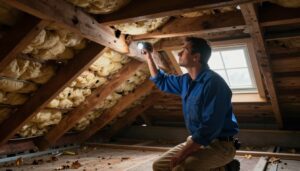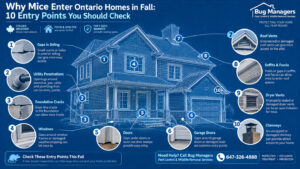
You found a hive. Don’t panic. Keep people and pets away and get a clear picture — literally and mentally. This piece cuts the noise: how to ID the insects, when a volunteer beekeeper can save the bees, when you need a licensed pro, what removal commonly costs, and the exact words to use when you call for help. If you’re in Ontario or the GTA, Bug Managers is a licensed, insured option for humane relocations and in‑wall extraction.
Look first for a hanging cluster. A honey bee swarm usually appears as a dense, dark, moving mass dangling from a branch, fence, or eave. Swarms are often calm. They’re waiting to be claimed by a beekeeper, not defending a nest.
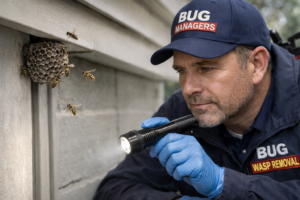
Contrast that with paper wasps and hornets. They build enclosed, papery nests. Their flight is fast and aggressive. Bumblebees are plump, fuzzy, and usually nest at ground level in holes. If you think they might be wasps, contact local wasp specialists rather than beekeepers.
Flight and traffic matter. Steady, purposeful lines of bees going to and from a single point suggest an active hive. Chaotic, darting flight is more likely wasps.
- Cluster vs enclosed nest.
- How many bees — a big ball is a swarm.
- Location — tree branch, eave, wall cavity, ground.
- Time of day and noise — steady hum vs aggressive buzzing.
- Any visible pollen sacks on hind legs = honey bees.
Do not approach. Photograph from a safe distance using zoom. Note the exact spot (eave, attic vent, chimney, inside wall). Those details decide who can help.
What to do right now — safety first
- Keep everyone 10–20 feet away. Move kids and pets inside immediately.
- Close nearby windows and doors. Block pet doors if you can.
- Do not swat, throw things, spray, or try to smoke out the hive yourself. That provokes bees.
- If anyone shows signs of a severe allergic reaction — trouble breathing, swelling, fainting — call emergency services right away.
- Take photos from a distance, mark the area, and call for help: a volunteer beekeeper for a visible swarm, a licensed pro for in‑wall or attic colonies.
Decision rule: visible swarm hanging in the open = contact rescuers first. Hive inside a wall, attic, chimney, or in a high‑traffic area = call a licensed pest/wildlife company.
Free rescues vs paid pros — how to choose
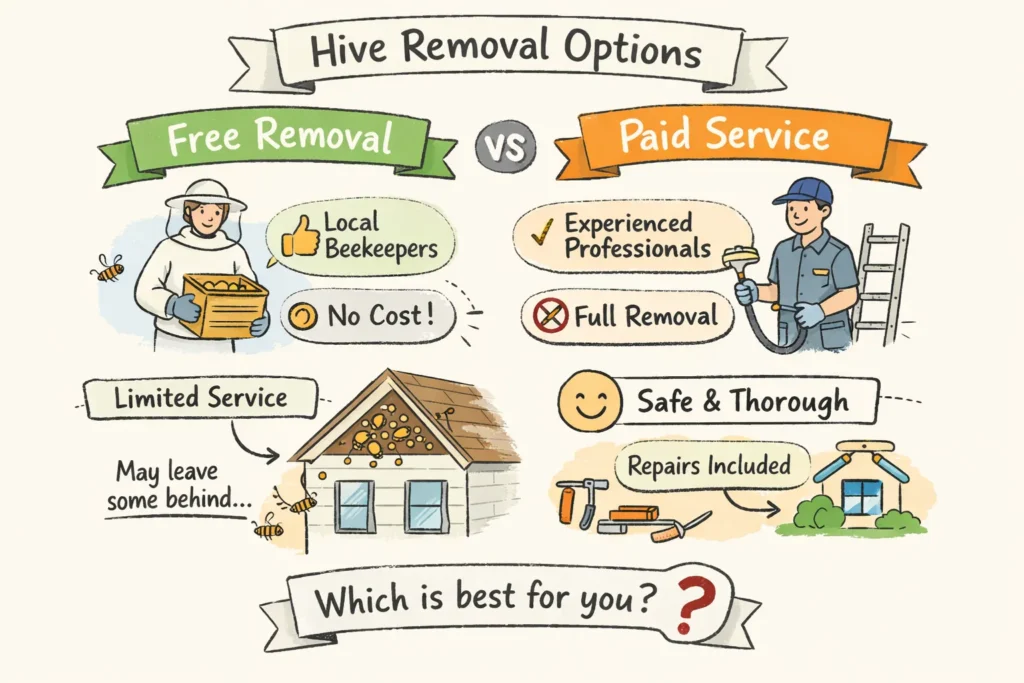
Volunteer beekeepers do great work. They often remove and relocate visible swarms for free. If the bees are hanging on a low branch, fence, or accessible eave, start there. The upside is humane relocation and minimal cost. The downside: most volunteers won’t cut into walls or remove attic comb, and they rarely do structural repairs.
Licensed pros fill the gap. They handle in‑wall and attic extractions, roof and chimney jobs, and situations where liability, insurance, or structural repair matter — look for a trusted wildlife removal company when you need those services. Pros bring equipment, liability coverage, and the ability to remove comb and fix damage. Those capabilities come at a price. Some companies always relocate; some may euthanize in certain situations — ask up front.
Simple rule of thumb: swarm on a branch or fence → try a local beekeeper. Colony inside structures or near heavy use → hire a licensed technician. If you’re in Ontario/GTA and want a single-call solution for humane relocations, in‑wall extraction, proofing and repairs, Bug Managers offers licensed, insured service and free inspections.
What removal will likely cost and what drives the price
Short headline: many jobs sit in the $100–$500 range. Humane relocations commonly fall between $150 and $500. Complex structural extractions can reach $750–$2,000 or more depending on repairs.
| Typical job | Typical cost (CAD) |
|---|---|
| Simple swarm on tree or fence | Often free or $0–$150 |
| Professional removal (accessible) | $100–$500 |
| Roof/attic work | $200–$1,100 |
| In‑wall extraction (includes cleanup) | $200–$750 (can exceed $1,000 with repairs) |
| Chimney or hard‑to‑reach | $200–$1,500+ |
| Emergency or after‑hours response | Typically a $200–$600 premium |
Primary cost drivers: how hard it is to get to the bees (height, scaffolding), whether comb and honey must be removed, the size and age of the colony, travel and emergency timing, and local demand. Always ask for an itemized quote listing removal, hauling comb, cleanup, sealing/repairs, and any guarantee. For broader consumer cost guides, see Angi’s bee removal cost guide and This Old House’s overview of bee removal costs.
How to find and contact help now (exact search steps + scripts)
Find volunteer rescuers on Swarmed.org, local beekeepers associations, and community groups (Facebook, Nextdoor). For paid help, search terms like “bee removal near me,” “hive removal service,” or contact local pest and wildlife companies. Your municipal 311 or county agriculture office can also point you to hunters and registered beekeepers. Many pest and wildlife companies also handle bird control issues and skunk removal if your problem involves other nuisance wildlife. For help confirming species, this primer on how to identify a honey bee can be useful.
Copy/paste scripts that work:
To a volunteer beekeeper (text/email):
Hi — there’s a swarm of bees hanging from a [branch/fence/eave] at [address]. Photo attached. It’s accessible from the ground. Are you available to remove/relocate it today? No one is allergic. Thanks.
To a licensed pro (phone):
I have an active bee colony at [exact location: in wall/attic/roof/tree]. Is your tech insured and do you offer live relocation or extraction? Can you give a rough estimate and earliest availability? I can send photos.
Always ask: are you licensed and insured? Will you relocate or exterminate? What exactly is included in the quote? Do you handle structural repairs and cleanup? What guarantees do you offer? When you contact anyone, send clear photos, the exact location, access notes (interior access? ladder needed?), and whether children, pets, or allergies are present.
For Ontario and the GTA, Bug Managers provides free inspections and quotes and handles in‑wall and attic situations with humane relocation and repair options — ask about proofing and guarantees when you call.
What removal looks like and what comes after
- On‑site assessment to confirm species and plan access.
- Containment: safety zones, timing, and blocking re‑entry points.
- Removal: swarm box capture, bee vacuum, comb extraction, or cut‑out for in‑wall/attic hives.
- Transport to a new hive or, if relocation isn’t possible, disposal per local rules.
- Cleanup: remove honey and wax to prevent rot and secondary pests.
- Proofing and repair: seal holes, replace soffits or drywall, and advise on prevention.
Simple jobs often finish in 30–120 minutes. Structural cut‑outs can take longer and may require follow‑up repairs. Aftercare you should expect: a written invoice listing work and repairs, photos of removed comb if you request them, and clear advice on proofing to prevent reinfestation. For an overview of humane approaches to relocation, see this guide to humane honey bee removal and relocation.
Extermination is a last resort. It’s used for aggressive, dangerous species or when relocation is unsafe. Ask your technician to explain why they recommend killing rather than relocating.
Before you agree to work, confirm the arrival window, get a written, itemized quote, verify insurance, and ask whether bees will be relocated or killed. If you want humane relocation and full repairs, say so explicitly.
Summary and next steps
Two quick takeaways: a hanging swarm is often a free, humane rescue; a hive inside walls or attics needs a licensed pro. Keep people away, document the situation, and call the right helper.
If you’re in Ontario or the Greater Toronto Area and you want a licensed, insured team that does humane relocations, in‑wall extraction, cleanup and proofing, contact Bug Managers for a free inspection and quote. If your issue involves birds or skunks instead of bees, Bug Managers also offers bird removal and skunk removal. If anyone is having anaphylaxis, call emergency services immediately.