A simple promise
Wasps guard their homes. You can talk to them from a safe distance — or remove the house. Read this and you’ll know how to read a nest, choose the right product or DIY option, protect yourself, and finish the job — or hand it off, confidently.
At Bug Managers we begin by reading the nest like a map. The shape, position and traffic tell us everything we need to plan a safe, effective treatment.
Know the nest: the shape tells the story
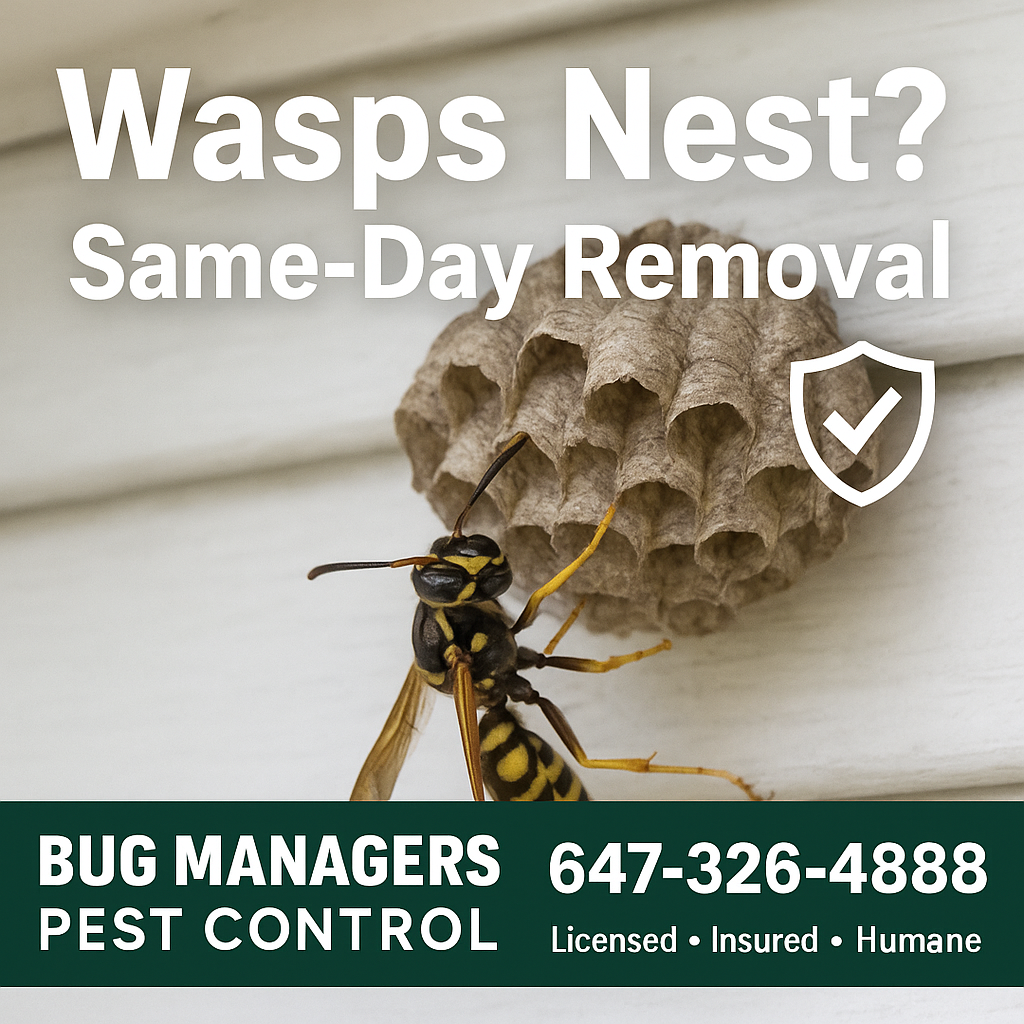
The nest’s shape is the first sentence of the problem. Paper wasps make open combs under eaves and ledges. Yellowjackets build enclosed, layered combs and often nest in the ground or wall voids. Hornets form large, spherical aerial nests. Solitary wasps live alone and rarely warrant aggressive action.
Why it matters: architecture determines access and risk. Ground or in‑wall nests are hidden, concentrated and prone to sudden mass emergence — higher danger. Exposed aerial nests are easier to treat from a distance but can be large and contain many workers.
How to observe safely: keep your distance. Use binoculars or your phone’s zoom. Note the entry and exit point. Count flight frequency for a rough size estimate — many flights in a minute equals a big colony. Photograph the nest for reference. Do not poke, prod or disturb it.
Choose the right tool: match the fortress
Pick the product to match the nest type. Long‑range jet aerosols are built for stand‑off work — manufacturers advertise 20–27 ft, but real world horizontal range is typically 16–19 ft. Foaming, clingy formulations are best for aerial nests where surface saturation matters. Insecticidal dusts are the right choice for ground or void nests; dusts ride the workers back into the colony.
Understand contact versus residual action. Contact killers act immediately where they hit. Residual products leave a lasting film that kills insects that return later. Both have uses: contact for immediate knockdown, residual for preventing return.
Active ingredients to watch: pyrethrins (natural, short‑lived) and pyrethroids (synthetic: permethrin, deltamethrin, bifenthrin). Product labels are the law and the safety plan — follow them exactly. Note that some permethrin products carry clear residential instructions for wasp treatment; others may be professional‑only. Read the label before you buy.
DIY reality check: a soapy water mix (a few tablespoons of dish soap per gallon) can kill on contact and is low‑toxicity. It’s useful for small, accessible nests at dusk. It lacks residual control and may require repeat treatments. Guides on using dish soap for wasps show the limits and proper technique. Essential oils have limited evidence. Use DIY for minor, reachable nests and accept the possibility of re‑treatment.
Buying tip: choose products that list wasps or hornets on the label, test a short burst to verify practical range, and favor foam for cling and jets for distance.
Timing & conditions: time is your ally
Treat at dusk or early night when most workers are inside and movement is slowed by cool temperatures. Dawn is an acceptable alternative. Avoid midday; that’s when wasps are foraging and aggressive. For more on timing your spray, see recommendations about the best time to spray a wasp nest.
Weather matters. Pick a calm, dry evening. Wind reduces effective range and creates drift. Rain washes insecticide away. Never spray near flowering plants, pollinators or water bodies — pyrethroids are toxic to aquatic life and harmful to bees.
Seasonal note: late summer is peak population. Nests are largest then and deserve extra caution or professional help. For guidance on dealing with seasonal wasp behavior, especially late‑season activity, read tips on how to avoid the sting of late‑fall wasps and hornets.
Safety first: dress like you mean it
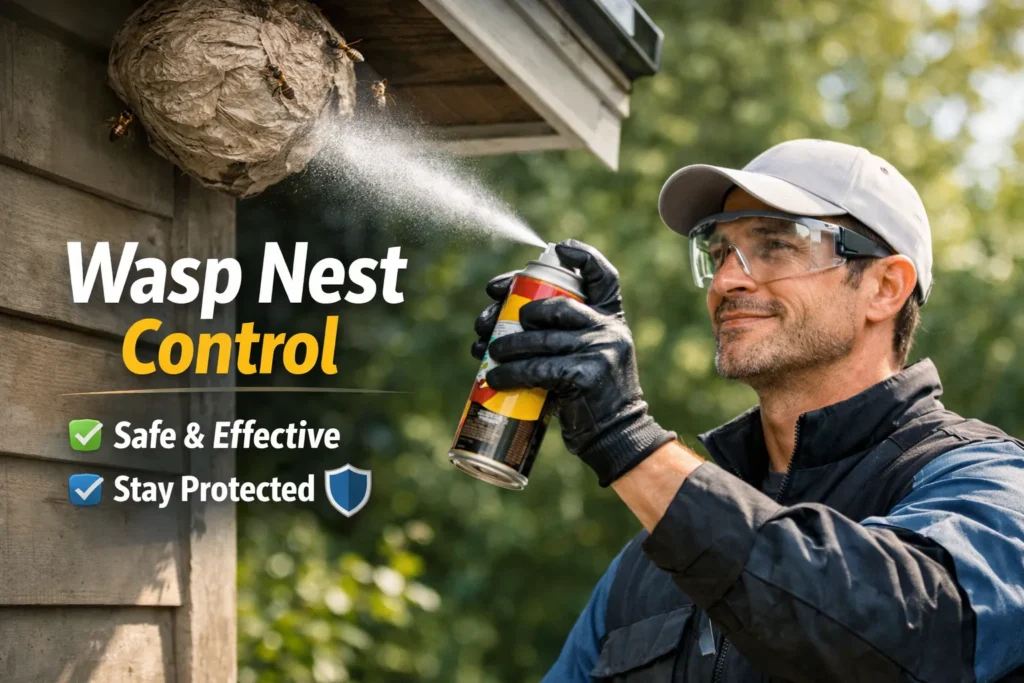
Clothes are your first shield. Minimum sensible PPE for a homeowner: thick, long sleeves and pants tucked into boots, leather gloves, and eye protection. For riskier jobs add a veil or face shield and a respirator when using aerosols or foams. Tape cuffs and tuck trousers. Layers block penetration.
Plan the operation. Clear people and pets from the area. Pick an escape route before you approach. Bring a phone and a flashlight. Test the can to confirm spray pattern and range. Work with a spotter if possible. If anyone in the household is allergic to stings — don’t attempt this. Call a professional.
Environmental caution: pyrethroids and some concentrates can harm fish and pollinators. Avoid spraying near gardens, storm drains or water. Follow label buffer zones and disposal instructions.
How to spray: plan your retreat before the first burst
Pre‑spray checklist: read and follow the label; assemble PPE; test the can to confirm effective range; have a sealed bag or bin for later nest removal; and decide your escape route. If the nest is in a wall or attic or otherwise inaccessible, stop and call a pro.
- Approach calmly at the recommended stand‑off. Keep the wind at your back. Never stand beneath the nest.
- Aim at the entrance and base. Use short, controlled bursts rather than one continuous stream.
- Saturate the surface. Foam clings and increases contact. For ground voids, apply dust according to label directions so workers carry it inside.
- Retreat immediately and observe from a safe distance.
Post‑treatment protocol: wait 24–48 hours. Monitor for activity from a distance. Reapply only as the label allows. If there is no activity, remove the nest in full PPE: seal it in heavy plastic and dispose of it with regular trash unless local rules prohibit that. If the nest is inside walls, attics or otherwise inaccessible — don’t attempt removal. Call a professional.
Preventive follow‑up: seal entry points, trim vegetation that touches structures, secure trash and food sources, and consider a property inspection if you dealt with a large infestation. For help with other common household invaders, see our Ant Control, Bug Managers page. If bird activity is part of the problem, our Bird Proofing Services, Bug Managers can be scheduled alongside pest‑proofing.
When to call professionals: know when DIY stops being safe
Call the pros when the risk or complexity outstrips your gear. Red flags: nests in wall voids, attics or chimneys; large colonies; ground nests in busy areas; nests near power lines; multiple nests; or anyone on the property with severe allergies.
What a technician does: licensed inspection, targeted treatment with commercial‑grade products and full PPE, safe removal or exclusion, and pest‑proofing to prevent return. Professionals can also manage insurance questions and protect delicate or high‑value properties.
Bug Managers offers licensed, insured, eco‑minded removal across the GTA. We use humane techniques, provide fast emergency response for high‑value properties, and follow through with pest‑proofing and guarantees. When a nest is too big, too risky, or too close to what matters — call the team who reads nests like maps. Learn more about our approach on our Skilled Wasp Removal Specialists in Brampton | Bug Managers page.
Conclusion
One truth: respect the nest, the label and your exit plan. Small, visible nests can be handled safely with the right timing, PPE and product choice. Hidden, large or risky nests deserve professional attention.
Key points to remember: observe from a distance and identify the nest; treat at dusk with the right product for the job; wait 24–48 hours before removal. If in doubt, call Bug Managers for licensed, insured, eco‑minded service and fast response across the GTA. If you’re in Caledon, see our Pest Control Caledon, Bug Managers services, and check our FAQ, Bug Managers for answers to common questions.