Intro
Bed bugs don’t negotiate. You must decide.
In under a few minutes you’ll know whether to try a household fix or call a pro, what treatments actually work, what reasonable prices look like, which questions to ask local teams, and how to prepare your home so the work succeeds.
If you’re in the GTA, use Bug Managers as a model: licensed, eco-conscious, heat-capable, and focused on pest-proofing and warranty-backed results. Their answers show what a professional reply should look like.
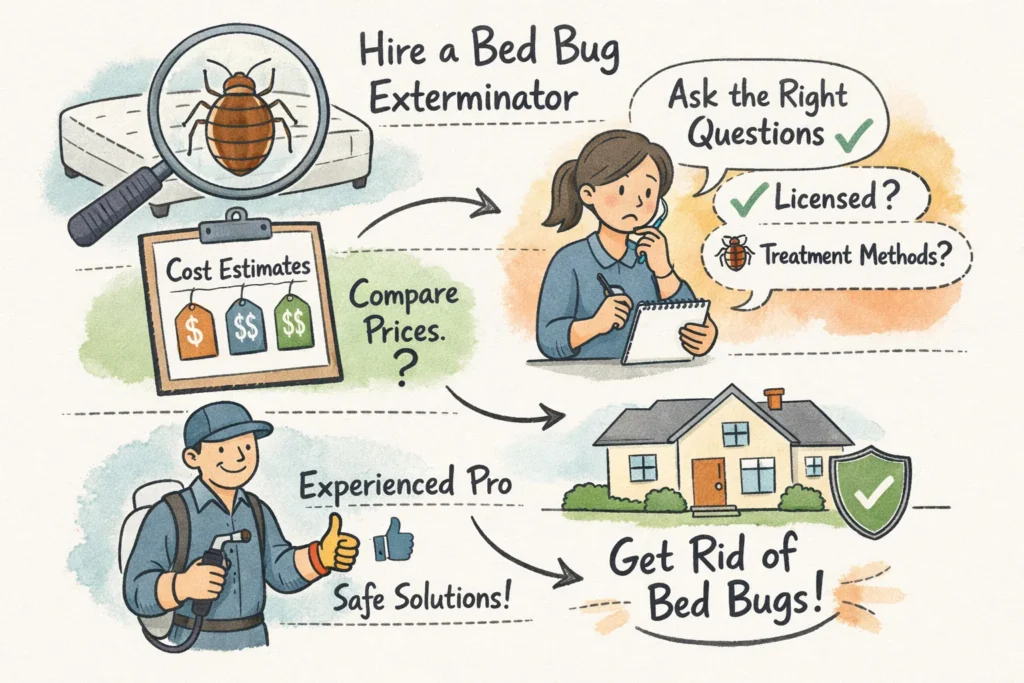
Decide: DIY or hire a professional?
Rule of thumb: small, early problems you can handle. Anything spreading, persistent, or in a multi-unit building needs a specialist.
Quick diagnostic checklist to run now: how many rooms or beds show signs; do you see live bugs or eggs; how long have bites or sightings continued; what DIY steps have you already tried and with what result; are children, pregnant people, elderly or pets involved; is there an urgent timeline (sale, guests, staging)?
If the issue is a single mattress and you caught it early, try these immediate home actions: wash and dry all bedding on high heat, vacuum seams and crevices, encase mattress and box spring, and set interceptors under bed legs. Monitor closely for 2–3 weeks.
Call a professional now if bugs appear in multiple rooms, eggs are visible, bites continue despite DIY effort, you live in a condo or multi-unit building, or the property is high-value where discretion and warranty matter.
When you need discretion, warranty and fast results — for example on luxury properties — call a licensed team like Bug Managers.
What really works — Heat, Chemicals, or Both?
Short answer: heat is decisive; chemicals are strategic.
Heat treatment raises room temperatures to lethal levels (generally 120–140°F / 49–60°C). It kills eggs, nymphs and adults in one session if temperatures are held and circulated properly. No chemical residue; no insect resistance to heat.
Chemicals (sprays, dusts, IGRs) act on contact and provide residual protection on treated surfaces. They can miss eggs and sheltered bugs and are subject to resistance—especially pyrethroids. Fumigation is rare and reserved for severe or whole-building responses.
Compare practically: heat delivers immediate, whole-space kill but risks damage to heat-sensitive items and fails if cold spots exist. Chemicals are cheaper per visit, give residual coverage, but often require multiple applications and careful product choice. The reliable route is targeted heat plus selective residuals to catch escapees.
Vendor skill matters. Heat can leave cold pockets if units are placed badly. Chemicals can fail if applicators ignore resistance patterns or skip cracks and voids. For more on documented heat-treatment outcomes, see recent research on heat treatment efficacy.
What it’ll cost — realistic ranges and what moves the price
Price is a signal. Understand the ranges and the levers.
Typical North American ranges: chemical treatments commonly run about $300–$1,000 (some quotes are per room at $200–$775); whole-home heat treatments commonly fall between $1,000 and $2,500; structural fumigation is unusual for single-family homes and can be extremely expensive for large buildings.
Pricing models you’ll see: per room, per square foot (about $1–$7.50/sq ft), or a flat whole-home fee. Expect separate inspection fees ($75–$300) and charges for follow-up visits ($100–$300 each) unless included in a warranty.
Cost drivers: infestation severity; number and size of rooms; building type and access (apartments cost more because of containment); treatment type (heat equipment and crew time raise price); prep difficulty and included extras (mattress encasements, disposal, monitoring); emergency scheduling; and warranty length.
Example scenarios: a studio apartment might be $300–$700 for chemical control or $800–$1,500 for a heat session; a typical 3-bedroom home could be $1,200–$2,500 for whole-home heat. Multi-unit clusters quickly scale into the thousands — building-wide action can be costly and must be coordinated.
Practical tip: insist on line-item quotes. Compare what’s included: inspection, prep help, number of follow-ups, warranty length and terms. Beware lowball offers that skip follow-ups or a written warranty.
How to vet and shortlist local exterminators
Credentials tell a story. Verify before you trust.
Good proof includes a valid provincial or state pesticide applicator license, a business/operator licence if required locally, general liability insurance, worker’s compensation coverage, documented training in bed‑bug protocols (especially for heat specialists), and membership in industry organizations. Some companies add K‑9 detection; it’s useful when offered but not required.
- Are you licensed to perform structural/bed‑bug treatments in my province/state? (Please provide the license number.) — check local rules such asOntario pesticide licences and permitsif you’re in that jurisdiction.
- What treatment method(s) do you recommend and why for my situation? (Heat, chemical, or a combo?)
- Can you provide proof of liability insurance and a written estimate with line items?
- What is your warranty: length, coverage, and what voids it?
- How many follow-up visits are included and at what cost if more are needed?
- Do you require special preparation and will you provide a written prep checklist?
- Can you share local references or recent case examples similar to mine?
Red flags: pressure to sign on the spot; quoting without inspection; vague warranty language; refusal to show licences or insurance; cash-only lowballers. A professional reply looks like the Bug Managers model: licensed, insured, clear method rationale, written estimates, a stated warranty, and a prep checklist. If you’re searching locally, look for established providers such as Pest Control Vaughan, Bug Managers, Pest Control Burlington, Bug Managers, or broader Pest Control in Toronto, Bug Managers listings that show licence and warranty details.
Preparing your home — step-by-step before and after treatment
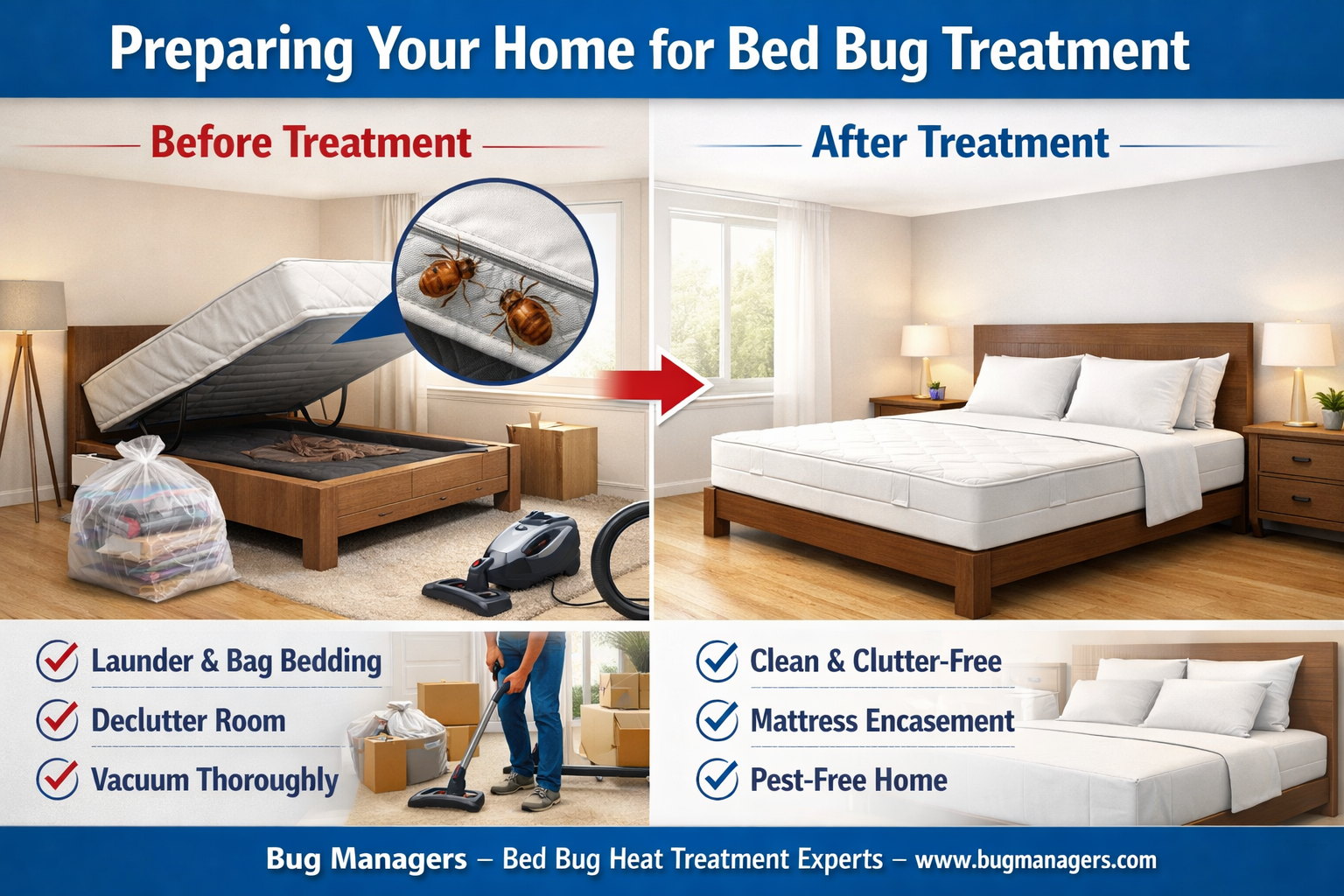
Good prep doubles the odds of success. Follow your technician’s written list exactly.
Chemical treatment prep
- Launder and dry on high all bedding, clothing, curtains, towels and pet bedding; double-bag clean items until treatment is complete.
- Empty drawers, closets and shelves so applicators can reach baseboards and voids; declutter to expose hiding spots.
- Vacuum seams, mattress folds and crevices; remove and double-bag vacuum contents and dispose immediately.
- Move furniture away from walls, unplug electronics as instructed, and remove items from floors to allow access.
Heat treatment prep
- Wash/dry fabrics on high and bag them. Do NOT return linens to beds until cleared.
- Remove aerosols, medications, candles, batteries, electronics that may be damaged, and any heat-sensitive valuables.
- Declutter minimally — heat needs to penetrate items, so leave washable/non-sensitive items if your tech instructs.
- Move furniture slightly away from walls and ensure clear access for heaters and fans.
For detailed treatment and prep guidance, see the practical recommendations from extension specialists such as the Purdue Extension treatment recommendations.
Post-treatment rules: wait for professional clearance before re-entering; replace bedding only after clearance; vacuum on a short cadence and monitor with interceptors; schedule follow-ups as your warranty requires. Don’t bring second-hand furniture home without a full inspection.
Landlords and multi-unit buildings: coordinate building-wide inspections. Never move personal items between units. Involve property management early — containment matters.
Sign, sleep, repeat — guarantees, contracts, and long-term prevention
Read the contract. It’s the map of responsibility.
Must-haves in writing: scope of work, exact methods to be used, total price and payment schedule, inspection and follow-up timeline, number of included visits, warranty length and explicit voiding conditions (for example, failure to follow prep instructions or introducing infested items), and cancellation terms.
Warranty realities: standard windows are commonly 30–90 days; many companies offer extensions up to 12 months for a fee or as part of a maintenance plan. Warranties usually cover free re-treatments if live bugs are found during the term, but they can be voided by missed prep, reintroduction of infested items, skipped follow-ups, or partial treatments that don’t cover the whole infestation source.
Long-term prevention: encase mattresses and box springs; use interceptors on bed legs; vacuum regularly; seal cracks and gaps; and consider professional exclusion/pest‑proofing for structural entry points. For guidance on pesticide choices and safe application, consult EPA guidance on pesticides for bed bugs. Schedule a follow-up inspection at roughly 30–45 days to confirm success.
Fix the infestation. Protect the house. If you want a licensed, eco-conscious team with warranty and exclusion services in the GTA, Reliable Bed Bug Exterminators in Toronto | Bug Managers is ready to inspect. For other common household invaders and exclusion work, see their Ant Control, Bug Managers services as part of a broader prevention plan.