Quick answer up front
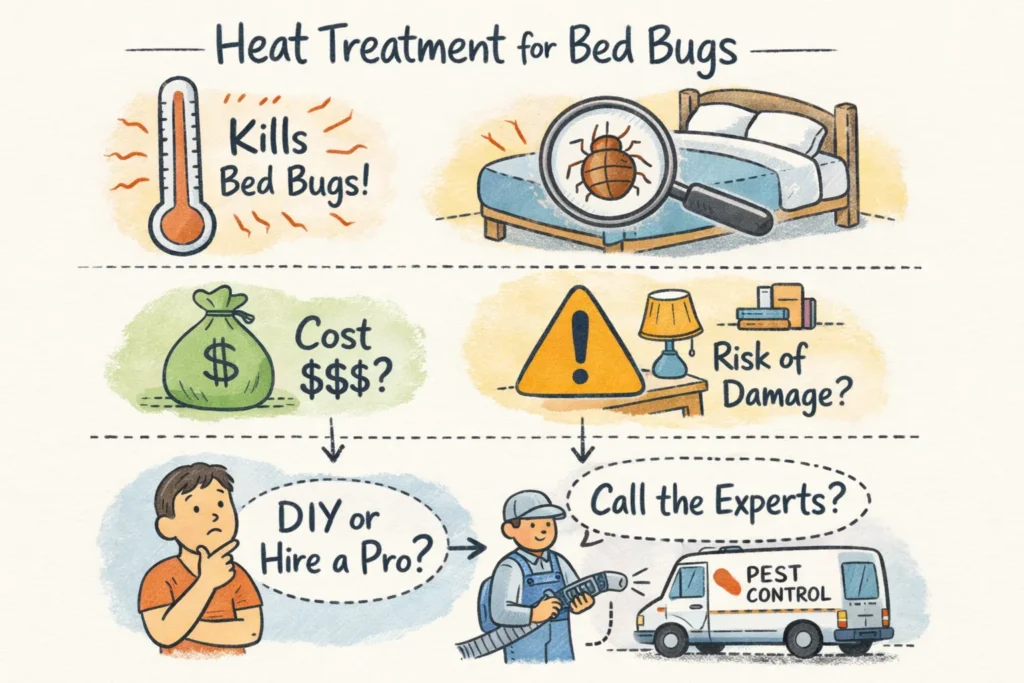
Yes — heat kills bed bugs. But only if you reach the right temperatures in the places they actually hide. No shortcuts, no guessing.
Key numbers to remember: above 50°C (122°F) is essentially an immediate kill. At about 48°C (118°F) you need roughly 71.5–90 minutes to reliably kill eggs as well as adults. In the field, technicians usually run air temps in the 49–60°C range (120–140°F) and hold the house for several hours to get heat into cracks and cores.
We’ve run whole‑home thermal remediations across Ontario and we use calibrated probes and data logging — so we see where houses fight back. This piece explains the numbers, why eggs matter, what goes wrong, and when hiring a pro is the smart play.
How heat actually kills bed bugs — the hard numbers and why eggs matter
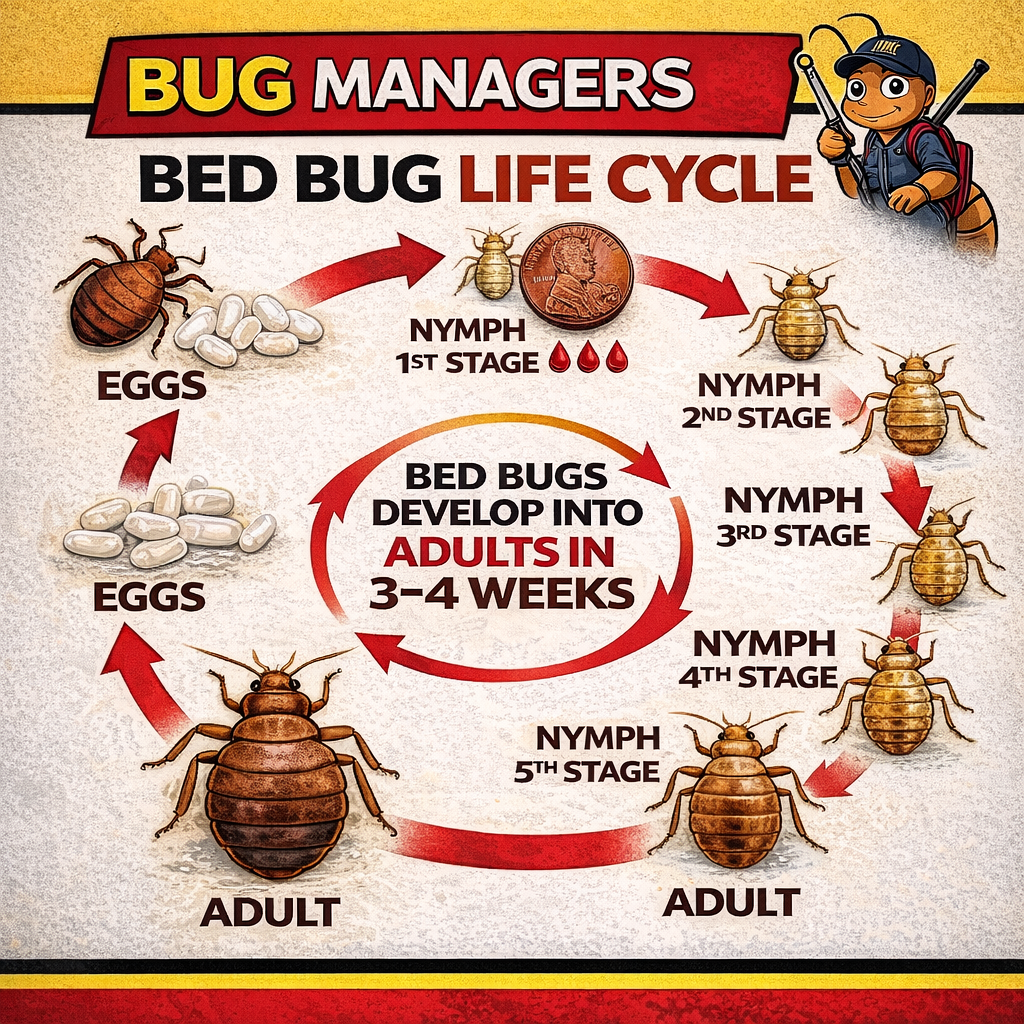
Adults are easy compared with eggs. Adults die faster at lower temperatures. Eggs are the tough ones; they tolerate more heat and require longer exposure. (See a bed bug heat tolerance study for lab-derived exposure thresholds.)
| Temperature | Minimum exposure | What it kills |
|---|---|---|
| > 50°C (122°F) | Immediate | Adults, nymphs, eggs (if reached in harborage) |
| 48–50°C (118–122°F) | ~71.5–90 minutes | Reliable egg and adult mortality in real rooms |
| 120–135°F (49–57°C) | 4–8+ hours (industry practice) | Room-level treatment allowing penetration into voids |
Why the time matters: heat has to penetrate thermal mass. Mattresses, dressers, wall cavities and insulation warm slower than the air. That delay — thermal lag — is where survivors hide. Humidity and density of materials change the time needed. That’s why professionals place multiple probes and log temperatures; “felt hot” isn’t evidence.
Lab numbers vs. the real house
Lab tests assume uniform heating and direct exposure. Houses do not behave like labs. For more on differences between controlled experiments and field performance, see this peer-reviewed overview.
- Shielded eggs in cracks, baseboards and electrical voids can stay cooler.
- Dense furniture or thick insulation creates cold pockets that trap survivors.
- Too few sensors or bad placement gives a false sense of security.
Pros counter those problems with airflow management and measurement. They use convection fans and ducts to move heat. They place probes in suspected harborage sites, ramp temperatures gradually to avoid damage, and monitor until every probe hits lethal thresholds. We once had an upstairs closet lag 20°F behind the living room until we moved fans and added a probe — the difference between success and a retreat. Learn more about our team and capabilities on the About, Bug Managers page.
DIY and small-scale options — what you can realistically do, and what you shouldn’t
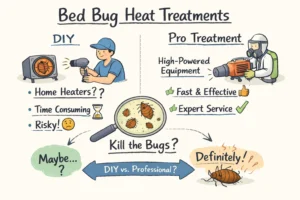
Rule: DIY is fine for small, removable items. It’s not a good plan for whole-room or structural infestations.
- Use hot dryer cycles (20–30 minutes on high) for clothes, bedding and washable fabrics.
- Use purpose-built hot boxes or portable heat chambers for small furniture, luggage or boxes — only if you have reliable temperature control and monitoring.
- Steam cleaners applied correctly will kill exposed bugs on surfaces; they won’t reach eggs deep in seams or voids.
Stop and call a pro if the infestation includes mattresses, spreads across rooms, reappears after treatment, or someone in the home is elderly, immunocompromised, or very young.
Blunt warnings: don’t try to heat a room with space heaters, ovens, or improvised rigs. Those are fire risks and they rarely raise hidden cores to lethal temperatures. Electronics, medicines, plants and aerosols can be ruined or dangerous when heated. If your DIY attempt causes damage or a fire in a multi-unit building, you may face legal and insurance trouble.
Prep checklist: what to remove, protect and how to stage your home
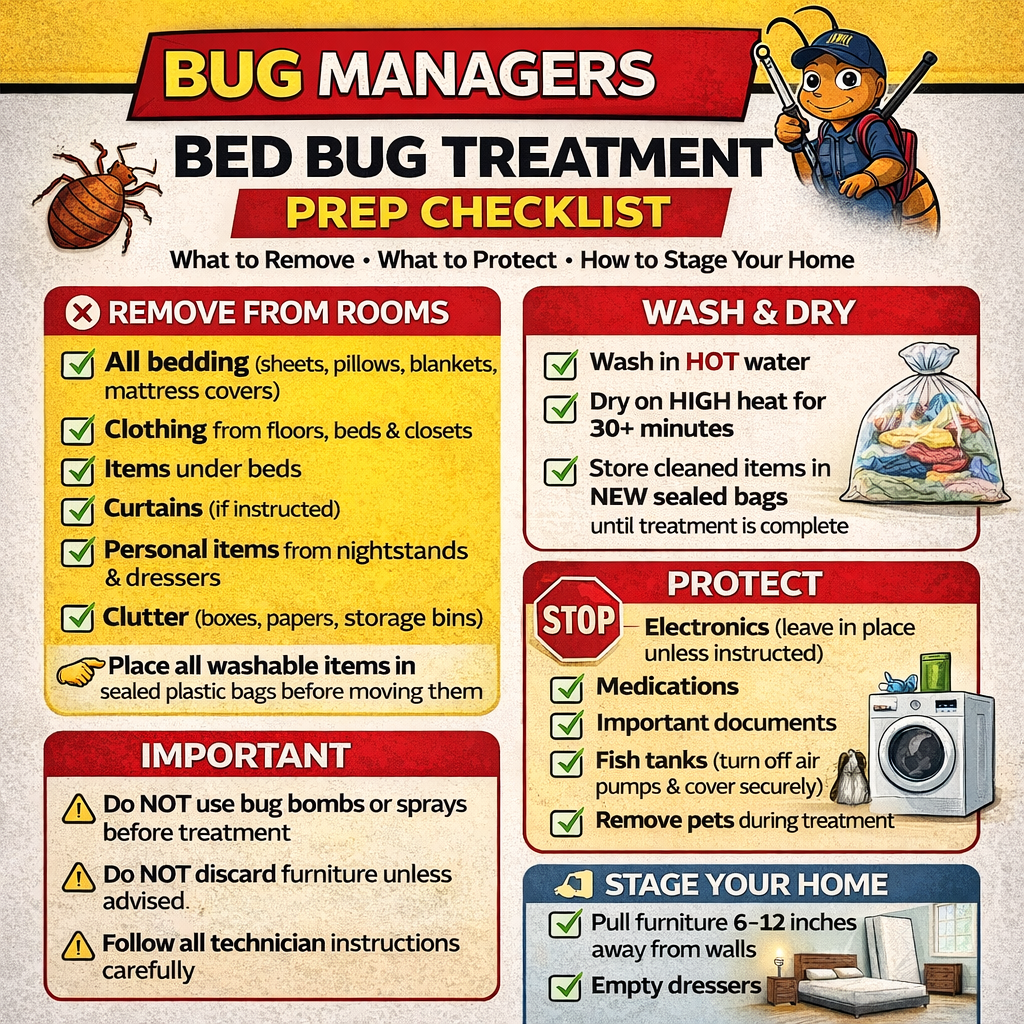
Priority: people and pets out. Meds, plants, aerosols, firearms and pressurized cans removed.
Before the inspection: wash and dry infested linens on high heat and store them sealed. Don’t cram drawers or closets; leave items accessible for inspection. Leave most furniture and mattresses where they are until the tech inspects — moving everything can hinder the job.
24 hours before treatment: remove plants, perishables and anything you can’t or don’t want heated. Deflate air and water beds. Follow technician instructions on alarms and sprinkler systems.
Day of treatment: label fragile or irreplaceable items, unplug non-fixed electronics and secure wall hangings. Technicians will usually tell you exactly what must go; follow that list. Improper prep slows the job, reduces effectiveness and can void guarantees.
Cost, guarantees and how to vet a heat-treatment company
Be realistic about price. Expect roughly $1–$3 per ft² in U.S. markets. In Ontario and the GTA whole-home jobs commonly run about $1,200–$4,000 CAD; single-room treatments typically cost $300–$800. Complexity, hidden voids and multi‑unit situations raise the bill.
Main cost drivers: square footage, structural complexity, insulation and voids, access, and whether follow-ups are needed.
Ask these exact questions before you book:
- What target temperatures and hold times will you achieve in hard-to-reach sites like wall voids and mattress seams?
- Do you use calibrated probes and will you provide the temperature logs after treatment?
- Are you licensed, insured, and do you carry liability for heat-related damage?
- What guarantee or follow-up inspections are included, and what triggers a retreatment?
- How will you protect heat-sensitive items and electronics?
(See our FAQ, Bug Managers for sample questions and documentation you should expect.)
Red flags: vague promises, refusal to show data or insurance, and pressure to skip prep. A serious operator documents temperatures — not slogans.
For homeowners in the GTA, Pest Control in Toronto, Bug Managers offers free inspections, clear reporting, eco-friendly protocols, licensed technicians and backed guarantees. That’s the kind of answer you want from any provider. Property managers should also review our Commercial Pest Control Services in Brampton | Bug Managers when coordinating multi-unit responses.
For ballpark cost comparisons from a consumer perspective, check a third-party heat treatment cost estimate.
Risks, common failures, and what comes next after treatment
Heat works, but it isn’t invincible. Failures come from uneven heating, survivors in insulated voids, and reinfestation from neighboring units or luggage brought back in.
Mitigation steps after a treatment: have a post‑treatment inspection, deploy passive monitors and interceptors under beds, seal cracks and install mattress encasements, and consider targeted chemical spot treatments only where heat couldn’t reach. In multi‑unit buildings, coordinate with neighbours and the property manager — an isolated treatment can be undone by an untreated unit next door.
If live bugs are found after treatment, a repeat treatment is appropriate when monitoring proves temperatures were insufficient in some probes, or when reinfestation is confirmed. Reliable providers include clear retreatment triggers in their guarantees.
Bottom line: when a job is planned properly, monitored with calibrated probes and data logs, and performed by a reputable tech, heat is one of the fastest, chemical‑minimal ways to clear an infestation.
Conclusion
Heat kills bed bugs — but only when lethal temperatures reach the hiding spots. Remember the thresholds: roughly 48°C (118°F) for about 71.5–90 minutes to handle eggs, and >50°C (122°F) for a quicker kill if you can get it into the harborages.
Use DIY measures only for isolated items. Use professional whole‑home thermal remediation for mattress or multi‑room infestations, and insist on temperature logs. If you’re in Ontario/GTA and want a straight answer, get a free inspection and documented plan — Reliable Bed Bug Exterminators in Toronto | Bug Managers for a no‑nonsense quote.
Suggested visuals and downloads: the table above for quick scanning. Ask your provider for a printable prep checklist, a photo of probe placement (e.g., mattress seam) and a sample temperature log before you book.