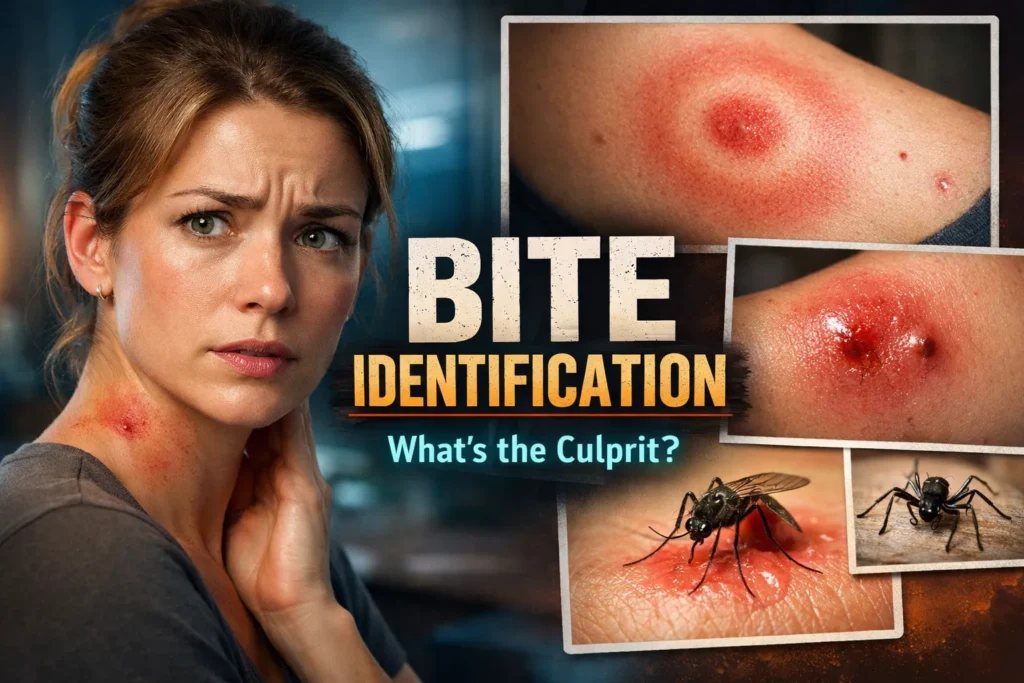
Short answer: you found a bite. Here’s a fast, sensible way to figure it out.
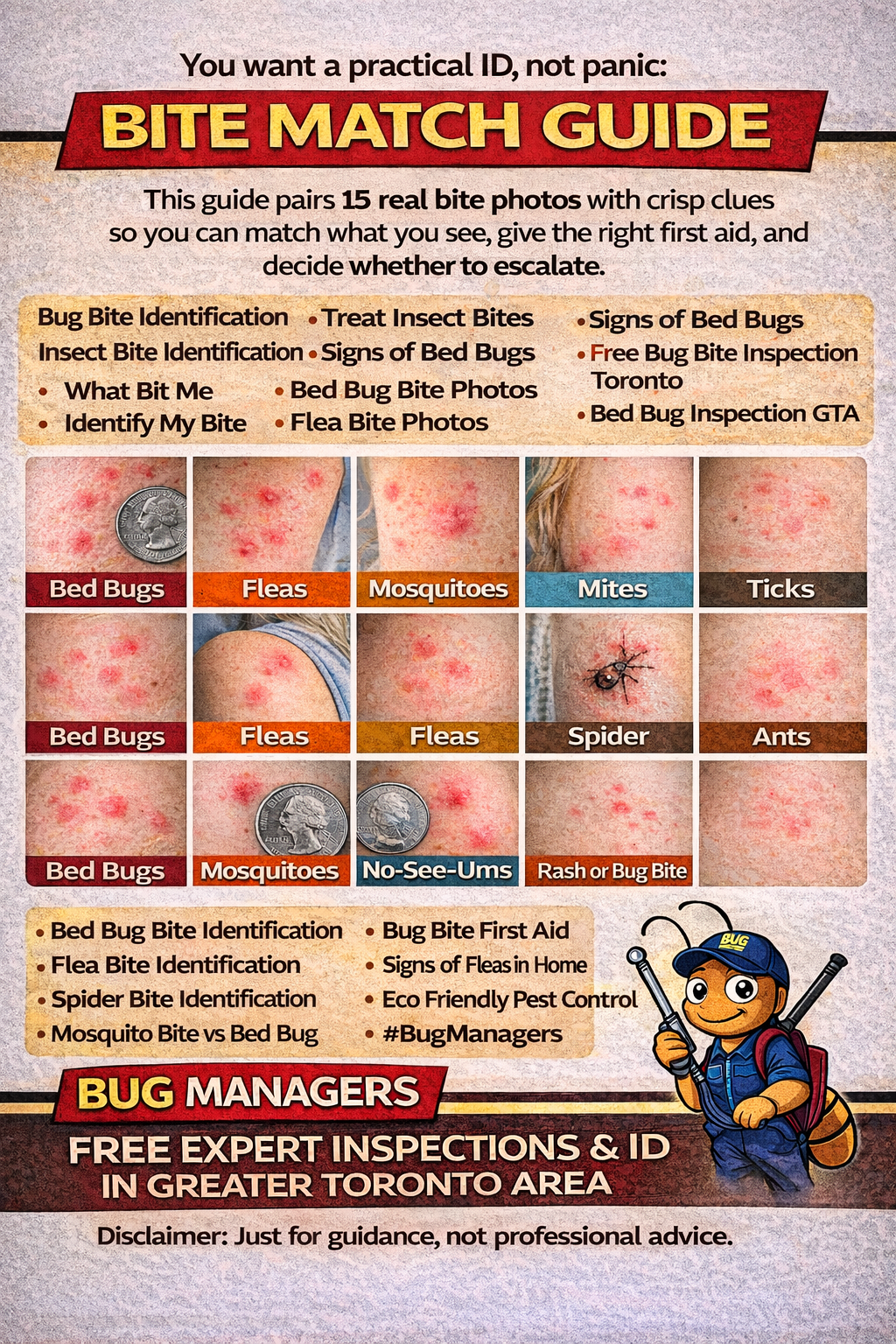
You want a practical ID, not panic. This guide pairs 15 real bite photos with crisp clues so you can match what you see, give the right first aid, and decide whether to escalate. If photos and these steps don’t settle it, Bug Managers offers free inspections and on-site ID across the GTA — licensed, eco-friendly, no‑nonsense.
Quick rules to read a bite
- Is it one or many?
- Is it itchy, painful, or numb?
- Is it changing (expanding, blistering) or mostly static?
Pattern matters. Random single bumps point to mosquitoes or flies. Lines or tight clusters — think bed bugs or fleas. A single painful puncture is often a sting. A large, slowly expanding round patch (more than 2 inches) should make you think Lyme disease.
Look at the center. A dark punctum suggests a biting insect. A blister or white pustule hints at fire ant or infected lesion. Necrosis (dark, sinking tissue) is rare but dangerous.
Timing is diagnostic. Minutes to hours for mosquitoes, stings, and fleas. Delayed itching over days fits bed bugs. Days-to-weeks expansion suggests erythema migrans (Lyme).
Decision flow: linear cluster on sleep-exposed areas → inspect the mattress and bedding; expanding round rash >2 inches → see a clinician for possible Lyme; immediate sharp pain and swelling → treat as sting and watch for allergy; tick found attached → remove correctly and save the tick.
If you find signs of infestation — bed bug fecal spots, live ticks on bedding, visible flea dirt, or many bites across household members — stop guessing and get a professional inspection from Bug Managers.
Photo guide — 15 common bites and what to do now
Mosquito
Typical photo: small, round, puffy bump, often scattered on exposed skin. Common places: arms, legs, neck. Do this now: wash, cold pack, oral antihistamine for itch. Watch for: excessive swelling or signs of skin infection after scratching (redness, warmth, pus). For reliable background on mosquito bites and what to expect, see the CDC guidance on mosquito bites. If mosquitoes are a recurring problem at your property, consider professional mosquito control to reduce breeding sites and outdoor biting.
Bed bug (cluster or line)
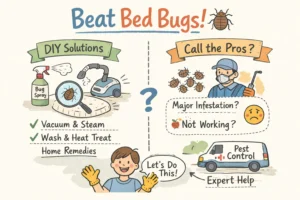
Typical photo: 3–5 small red welts in a line or cluster on sleep‑exposed areas. Timing: bites may itch only after a delay. Do this now: launder bedding on hot, vacuum mattress seams. Watch for: many bites, blood stains, or tiny black fecal spots — that calls for a professional inspection. For authoritative information on bed bugs and household signs, see the CDC’s page about bed bugs. If you confirm infestation, schedule a licensed inspection with Reliable Bed Bug Exterminators in Toronto | Bug Managers.
Flea
Typical photo: tiny clustered red dots around ankles and lower legs with intense itch. Do this now: wash, antihistamine, launder clothing and pet bedding. Watch for: infested pets — treat pets and the home, not just the skin.
Tick (attached)
Typical photo: a small dark oval attached to the skin with a red bump around it. Do this now: remove with fine tweezers, grasping close to the skin and pulling straight out; save the tick in a sealed container. Watch for: an expanding rash or fever in the next weeks — seek medical care.
Erythema migrans (Lyme rash)
Typical photo: a large, expanding red or pink circular patch, sometimes with central clearing (bull’s‑eye). Do this now: photograph with scale and see a clinician promptly; antibiotics are often indicated. Watch for: other systemic signs — fever, fatigue, joint pain. For more on Lyme disease signs and when to seek care, review the Lyme disease symptoms guidance.
Bee or wasp sting
Typical photo: immediate swelling and redness with a sharp pain; a stinger may be visible. Do this now: scrape the stinger away (don’t squeeze), cold pack, antihistamine. Watch for: breathing trouble or throat/face swelling — use epinephrine and call 911.
Fire ant
Typical photo: small pustules with white centers at multiple nearby sites after a sting. Do this now: clean, cold pack, monitor. Watch for: systemic allergic reaction — dizziness, widespread hives, breathing problems.
Brown‑recluse‑type necrotic lesion
Typical photo: small bite that becomes painful, then ulcerates or darkens in the center. Do this now: seek medical care quickly. Watch for: spreading necrosis or severe pain — emergency evaluation required.
Black widow (systemic picture)
Typical photo: a small, often unremarkable bite but with severe muscle cramps and systemic symptoms later. Do this now: seek emergency care if cramps or vomiting develop. Watch for: severe hypertension, vomiting, or respiratory difficulty.
Chigger bites
Typical photo: clusters of tiny red dots at waistlines, sock lines, and folds with intense itch, worse at night. Do this now: wash, anti‑itch cream, avoid hot baths that can worsen itching. Watch for: heavy scratching causing secondary infection.
No‑see‑ums / sandfly
Typical photo: small, itchy clusters on exposed skin after outdoor activity near water or shorelines. Do this now: topical anti‑itch and repellents for the future. Watch for: persistent swelling or infection after scratching.
Horsefly / deerfly
Typical photo: single, large painful bump that may bleed. Do this now: clean and cold pack; pain control as needed. Watch for: signs of infection at the puncture site.
Caterpillar / stinging hairs
Typical photo: linear raised rash or wheals where hairs contacted the skin. Do this now: remove hairs with tape, wash, anti‑itch lotion. Watch for: spreading reaction or breathing difficulty if exposure is large.
Scabies (mite infestation)
Typical photo: thin burrows and thickened, itchy patches in web spaces and folds with intense night itch. Do this now: see a clinician for prescription permethrin; this is an infestation, not an isolated bite. Watch for: household spread — treat close contacts.
Infected bite / cellulitis
Typical photo: expanding red, warm, swollen, tender area sometimes with pus. Do this now: seek medical care for likely antibiotics. Watch for: fever or red streaks toward lymph nodes — urgent care needed.
Evidence‑based immediate treatment — what actually works
- Wash the area with soap and water.
- Cold compress 10–20 minutes to reduce pain and swelling.
- Remove stinger by scraping (not squeezing). Remove attached ticks with fine tweezers — pull straight up; don’t twist or burn.
Topical hydrocortisone (0.5–1%) and oral non‑sedating antihistamines (cetirizine, loratadine) help itch. Use acetaminophen or NSAIDs for pain. Oral steroids are for large local reactions only under clinician advice. Antibiotics are for clear secondary infection — spreading redness, pus, fever — not routine. Update tetanus if the wound is dirty and your shots are overdue. For practical clinician-backed guidance on managing insect bites and stings, see the Tufts Medicine overview on insect bites and stings.
Anaphylaxis signs: throat or face swelling, breathing difficulty, dizziness, widespread hives. If that happens, give epinephrine and call emergency services immediately.
Danger signs — when this is more than a nuisance
- Difficulty breathing, throat or face swelling, fainting or dizziness.
- Rapidly spreading redness, red streaks, high fever, or chills.
- Severe pain, blisters that ulcerate, or necrotic spots.
- Expanding bull’s‑eye rash or flu‑like symptoms after a tick bite.
If you’d describe it as “I’m scared,” or if a child or immunocompromised person is affected, get medical attention sooner rather than later. For a deeper clinical review of arthropod bite reactions and systemic effects, consult this open-access review of arthropod bites.
How to photograph a bite so an ID actually works (and what to send)
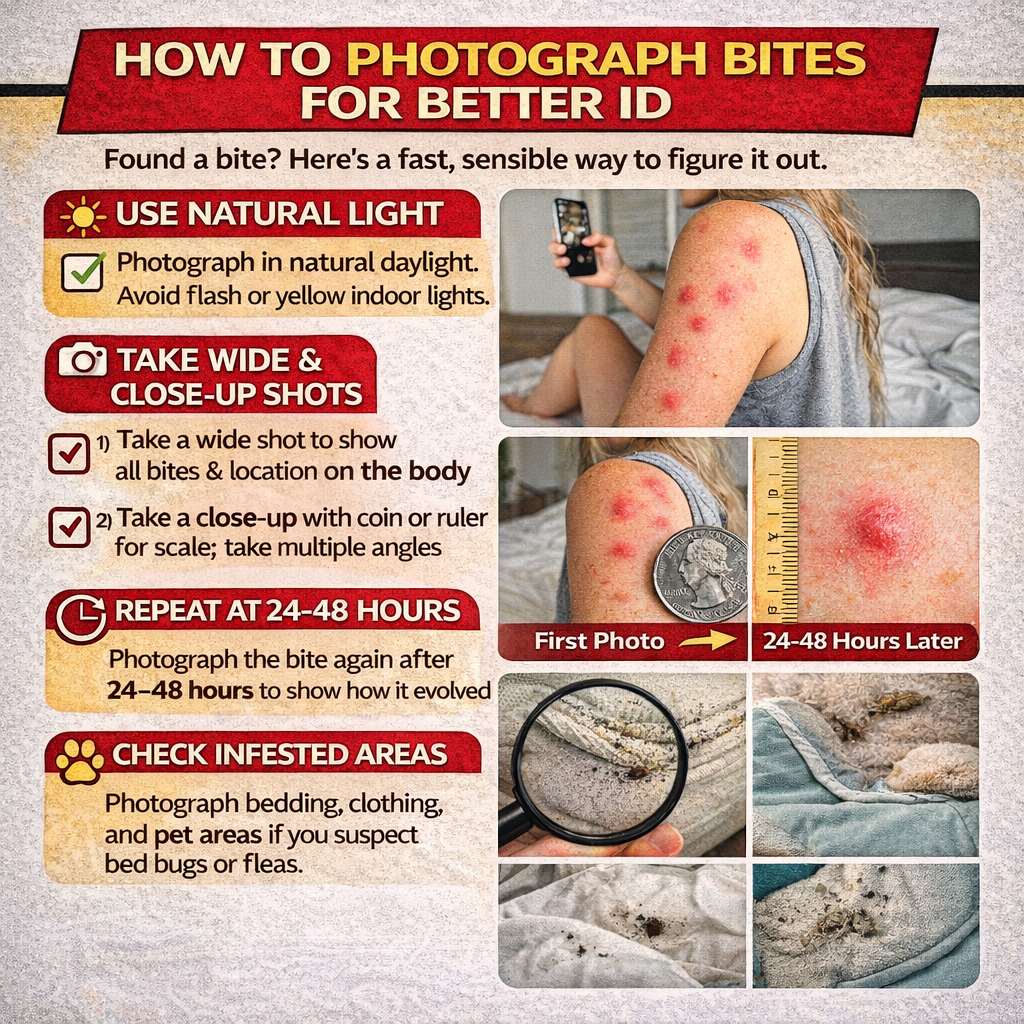
Use natural daylight. Take a wide shot to show all bites and location on the body, then a close‑up with a coin or ruler for scale. Take multiple angles and repeat a photo at 24–48 hours to show evolution. Photograph bedding, clothing, or pet areas if you suspect bed bugs or fleas.
Include in your message: patient age, date/time first noticed, symptoms (itch/pain/fever), recent outdoor activities, pets, travel, and whether others are affected. Example message to send with photos: “35‑year‑old, noticed grouped bites on forearm last night; itchy since morning; no travel; indoor cat; photos attached (wide, close‑up with coin).”
Apps can triage, but photos are imperfect. If images are unclear or you see signs of infestation, schedule an on‑site inspection. Bug Managers will triage photos and offer free inspections and proofing across Ontario and the GTA. If you suspect a bed bug problem specifically, see our Reliable Bed Bug Exterminators in Toronto | Bug Managers page for inspection and eradication options.
Prevention and next steps — stop repeat bites and who to call
For mosquitoes: remove standing water, keep screens in good repair, use repellents (DEET or picaridin) on exposed skin. For bed bugs: wash and heat‑dry bedding, vacuum mattresses and seams, use encasements, and get a licensed inspection for eradication. For fleas: treat pets and bedding and use an environmental treatment plan. For wildlife and rodents: seal entry points and use humane removal and proofing. For specific household pest help, see our pages on Centipede Control and Spider Control.
Call Bug Managers when bites recur, multiple people are affected, you find infestation evidence, or wildlife vectors are suspected. We provide licensed inspections, humane wildlife removal, eco‑friendly treatments, and proofing — with free quotes and rapid emergency response across the GTA. We also serve nearby areas including Pest Control Burlington.
Photograph, treat simply, watch for red flags, and don’t hesitate to get professional help if the photos point to an infestation or a serious reaction. If you want a quick triage or a free on‑site ID, send your photos and we’ll take a look — practical, licensed, and eco‑friendly help from Bug Managers.