Intro
Rats spread disease, chew wiring, and get expensive if you wait. You’ll leave this piece with a quick severity check, realistic price ranges, a clear timeline, and a short hiring checklist. At Bug Managers we get this call every week.
Quick check: DIY or time to call a pro?
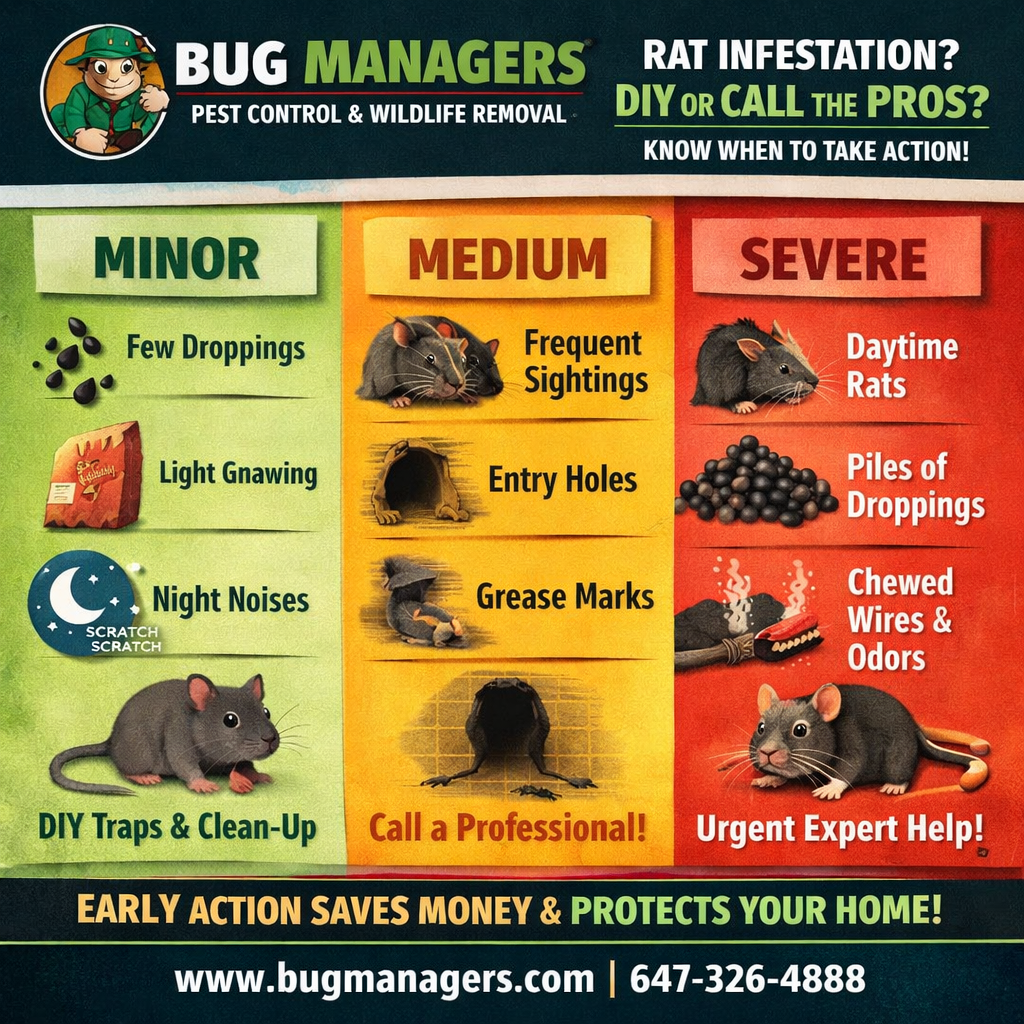
Short rule: if you see rats in daylight, find large piles of droppings, discover chewed electricals, or smell strong ammonia-like odors — call a professional now. Those are signs a colony is established and the risks are both health and structural.
Minor
A few fresh droppings in one spot. Isolated gnaw marks on boxes or food packaging. Occasional nighttime noises. These are often manageable with snap traps, careful cleanup, and better sanitation.
Medium
Regular sightings, droppings in multiple rooms, new entry holes or grease marks along walls. This usually needs professional trapping and some exclusion work to seal entry points and stop breeding.
Severe
Daytime activity, piles of droppings, nests, chewed wiring, or strong odors. That’s a full infestation. You need professional removal, insulation or debris cleanup, and repairs to wiring or structure.
Don’t ignore minor signs. Early action is cheaper and avoids repairs and health risks later.
How professionals handle rats — methods, pros, cons, safety
Pros rarely use a single trick. A safe program combines removal, sanitation, and proofing so the problem doesn’t come back.
Trapping
Snap traps, multi-catch boxes, and live traps are common. The upside is immediate removal without poisons. The downside is labor — traps must be checked and reset — and traps can miss hidden animals. Keep traps away from children and pets. Wear gloves when handling carcasses. For general identification and behaviour details see Orkin’s rat information.
Baiting and rodenticides
Technicians place tamper-resistant bait stations and use labeled products. Baiting is effective for larger populations. The risks are secondary poisoning, and dead rats in walls that cause odors. For those reasons, professional handling is strongly advised — some uses are restricted by regulation.
Exclusion (rodent‑proofing)
Sealing gaps, installing metal flashing, replacing vents, and adding door sweeps is the long-term fix. It takes time and a careful inspection. It’s often the single most important investment if you want rats gone for good. Our Pest & Wildlife Proofing Services focus on durable exclusion and follow-up verification.
Sanitation and repairs
Removing food sources, fixing moisture problems, and clearing clutter reduces harborage and makes traps or baiting work better. Cleanup after removal is essential for health — droppings and contaminated insulation are not just unpleasant; they’re hazardous.
Fumigation
Rarely used. Disruptive and expensive. Reserved for extreme, localized situations where other methods won’t work.
Integrated plans win: reduce the population, then proof and sanitize the property.
What it costs — realistic price ranges and why prices vary
Costs depend on severity, chosen methods, property size, and cleanup or repair needs. Use these ranges to benchmark quotes.
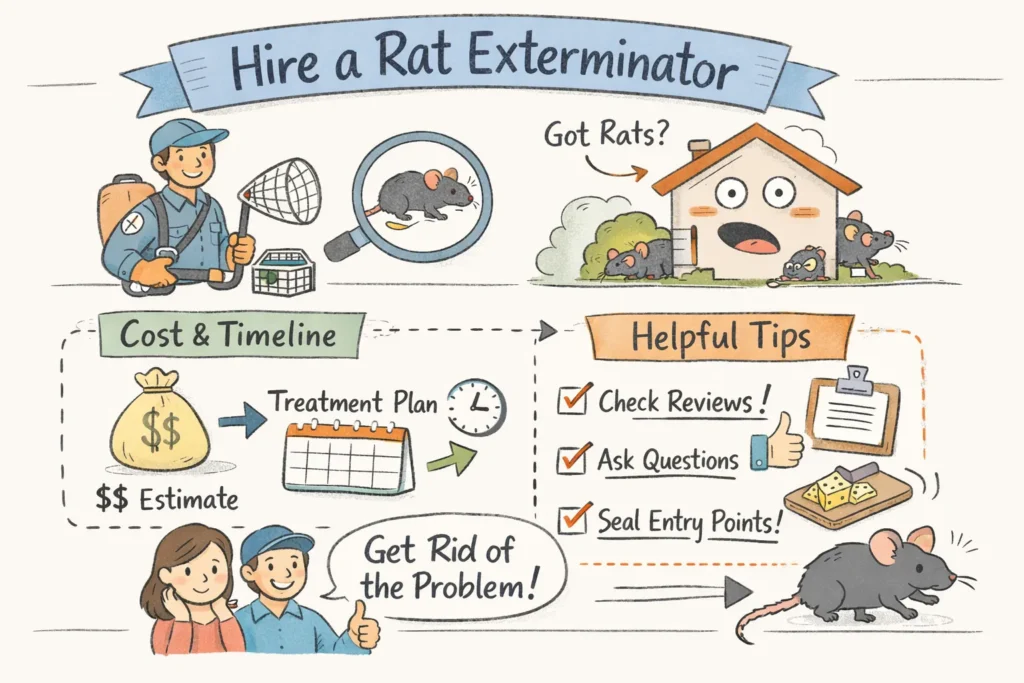
Minor infestations: roughly $80–$600. Typically one or two visits for traps or simple baiting.
Medium infestations: roughly $500–$2,000. Multiple visits and some exclusion work are common.
Severe infestations: $1,000–$8,000+ when you factor in major exclusion, insulation removal, electrical repairs, and extensive cleanup.
Typical line items to expect on an itemized quote: initial inspection $75–$250; traps/baiting $100–$600; exclusion/rodent‑proofing $200–$1,500; fumigation $1,500–$6,500 (rare); cleanup/repairs $200–$4,000+; ongoing maintenance $40–$125 per visit.
Why prices jump: hidden nests in walls or attics, contaminated insulation removal, chewed electricals, and hard-to-reach entry points all add labor and specialist trades. Local labour rates and travel can matter too — expect higher quotes in urban centres like the GTA. If you’re local, learn more about our Effective Rodent Control Services in Brampton for tailored pricing and service details.
Practical tip: insist on 2–3 written, itemized quotes. Ask for a written guarantee and a clear scope of follow-ups before you book. For additional national cost context and breakdowns see HomeAdvisor’s rodent removal cost guide.
Timeline and what to expect during service
Don’t expect a miracle in a day. Full control usually takes repeated visits and follow-up work.
Typical timelines: small problems: 1–2 weeks; medium: 3–6 weeks; severe: 1–3 months. Most programs need five to seven visits before the situation is reliably under control.
Service rhythm: an initial inspection and treatment, weekly checks for the first three visits while the tech gauges progress, then bi-weekly or monthly visits until control. After control, many homeowners move to quarterly maintenance.
How to prepare your home: clear attic, basement, crawlspace and exterior access; secure pets and move fish or turtles while treatments are active; don’t sweep up droppings beforehand — follow CDC guidance on cleaning up after rodents or let the technician handle contaminated insulation or heavy cleanup.
What happens during a visit: a documented inspection, placement of traps or bait stations, temporary exclusion work or a scheduled repair visit, and a written follow-up plan noting what was done and what’s next.
How to hire the right rat pro — licences, questions to ask, and red flags
You’re hiring for safety, legality, and results. Verify credentials before you hand over payment.
In Ontario check that the technician holds a valid pesticide applicator/exterminator licence and that the company has an operator licence when required. Confirm commercial liability insurance and ask for proof. Make sure the company provides written service records and reports after each visit.
Ask these questions on the first call:
- What will you inspect and how do you price the job?
- Which methods will you use and why (traps, baiting, exclusion)?
- Are you licensed and insured? Can you show proof?
- Do you offer a warranty or guarantee? How many follow-ups are included?
- How do you handle dead rats in walls and sanitation/insulation removal?
- Any additional fees for cleanup, insulation removal, or repairs?
Red flags include pressure to sign on the spot, no inspection promised, a single “spray” visit with no follow-up plan, no written estimate, or inability to provide licence/insurance details.
At Bug Managers we are licensed and insured across Ontario and the GTA. We offer free inspections and written quotes, eco‑friendly treatment choices, rodent‑proofing and repair partners, and follow-up maintenance plans. We also respond to urgent calls when a situation poses immediate risk.
A practical checklist: hire, prepare, and prevent
- Do a quick severity check using the signs above. If you’re unsure, call a pro.
- Get 2–3 written, itemized quotes that list methods, expected visits, and follow-ups.
- Verify licences and insurance before booking. Ask to see them.
- Prepare the home: secure pets, clear access to attics and exteriors, and don’t disturb droppings without guidance.
- Insist on a plan that includes exclusion/rodent‑proofing, not just baiting.
- Confirm warranty length and what follow-up maintenance is included.
- After service, seal and clean. Schedule proofing work within weeks if not done immediately.
Summary: act early, demand an itemized plan, and hire licensed pros who combine removal with proofing. If you want a no-nonsense inspection and a clear written plan, book a free quote from Bug Managers — licensed, local, and practical. We also offer affordable pest control services in Mississauga for nearby homeowners.