Warehouses are the backbone of the supply chain, storing valuable inventory and facilitating logistics. However, they are also highly vulnerable to pest, wildlife, and bird infestations, which can compromise inventory, regulatory compliance, and brand reputation.
At Bug Managers, we specialize in licensed, eco-friendly warehouse pest control, wildlife removal, and bird control across Mississauga, Brampton, Toronto, and the Greater Toronto Area (GTA). Our proactive solutions ensure your supply chain remains protected, audit-ready, and pest-free.
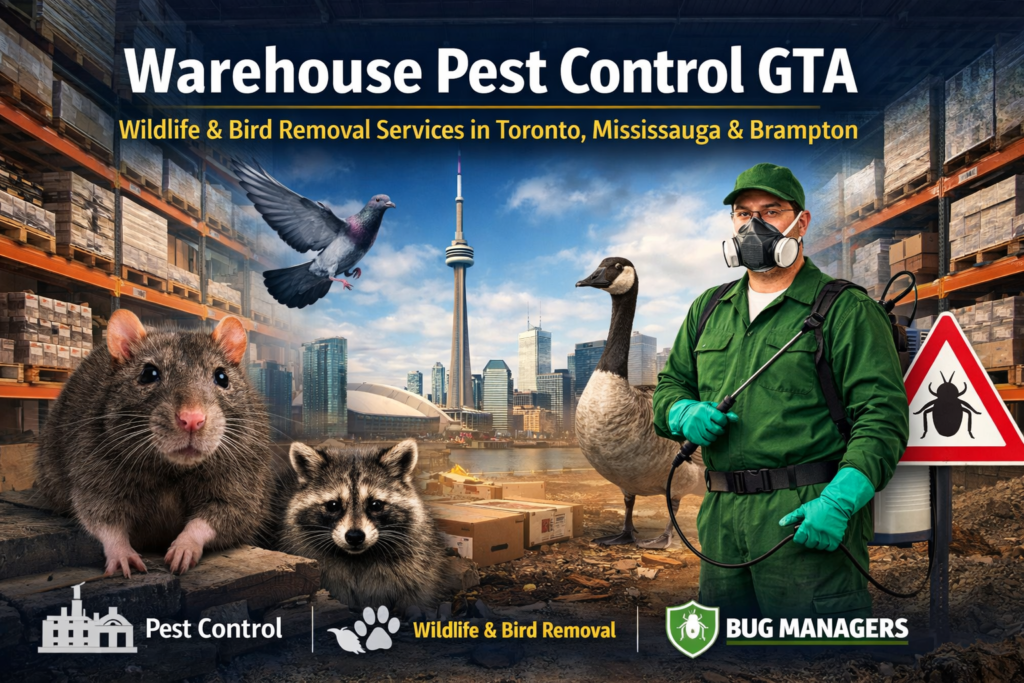
The Cost of Ignoring Pests, Wildlife, and Birds in Warehouses
Infestations can escalate quickly and cause major financial and operational damage:
Rodents and Small Mammals
Rodents such as rats and mice gnaw through packaging, contaminate goods, and carry diseases. They can also damage electrical systems and building infrastructure. Rodent infestations can result in thousands of dollars in lost inventory.
External reference: CDC Rodent Control Guidelines
Stored Product Pests
Beetles, moths, and other stored product insects can silently destroy stock. They thrive in dry food products and packaged goods, making food warehouses particularly vulnerable.
External reference: Purdue Extension – Stored Product Pest Management
Bird Infestations
Pigeons, sparrows, and starlings can roost in warehouses, leaving droppings that carry bacteria and fungi. Bird infestations can trigger audit failures, hygiene violations, and potential employee health risks.
External reference: USDA Bird Control Guidelines
Wildlife Intrusions
Raccoons, squirrels, and other urban wildlife often seek shelter in warehouses, especially in roof spaces, loading docks, and storage areas. Wildlife not only damages property but can introduce pathogens.
Why Proactive Warehouse Pest, Wildlife & Bird Control Matters
Many warehouse operators treat pest and wildlife management as a reactive task, only addressing infestations after they occur. This approach is inefficient and risky.
A strategic, proactive plan ensures:
- Early detection of pests and wildlife
- Reduced inventory loss and contamination
- Compliance with food safety and pharmaceutical audits
- Protection of brand reputation
Comprehensive Warehouse Pest, Wildlife & Bird Management Plan
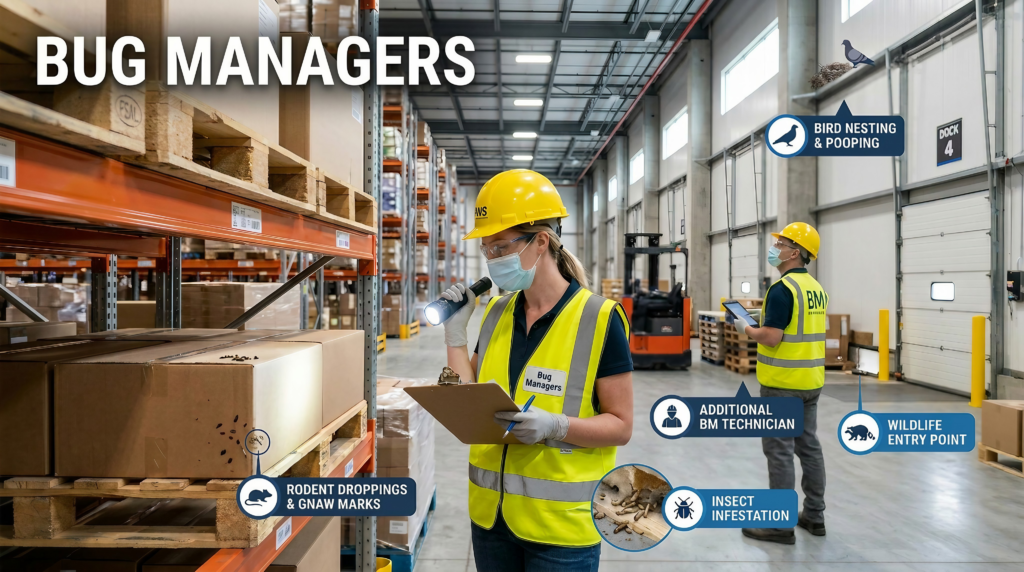
A robust program includes:
1. Routine Inspections
Regular inspections detect early signs:
- Rodent droppings and gnaw marks
- Insect larvae and adult pests
- Bird nests and roosting activity
- Wildlife entry points and evidence of nesting
Internal link: Warehouse Pest Inspection Services
2. Scheduled Treatments
Tailored treatments based on warehouse type and risk:
- Rodent baiting and humane traps
- Insect monitoring and eco-friendly insecticides
- Bird deterrents, netting, and spikes
- Wildlife exclusion and safe relocation
Internal link: Rodent & Wildlife Control Services
3. Integrated Pest Management (IPM)
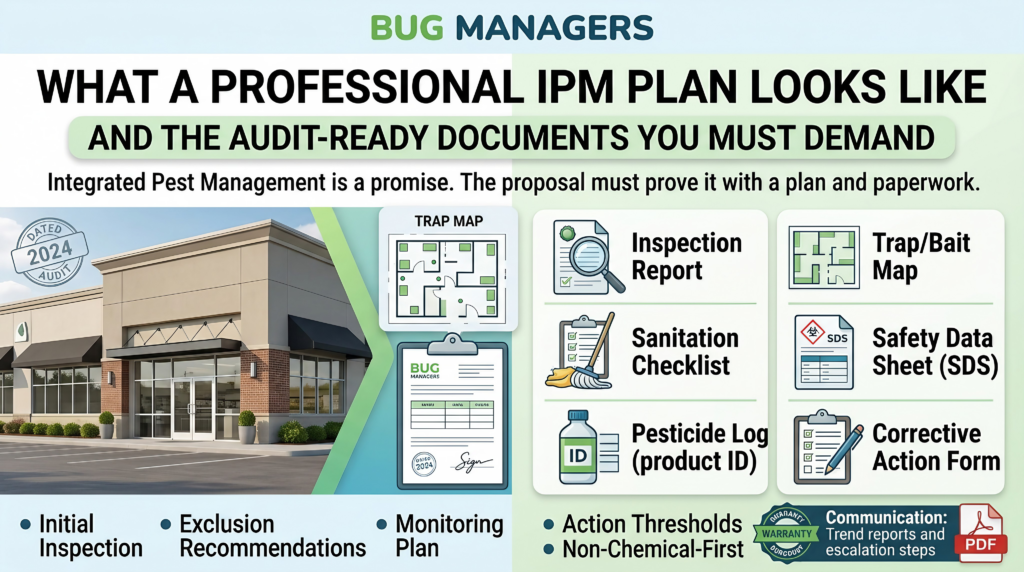
IPM combines prevention, monitoring, and control for sustainable pest management:
- Sealing gaps and structural vulnerabilities
- Using humane traps and wildlife deterrents
- Regular monitoring to adjust treatments
External reference: EPA IPM Resources
4. Sanitation and Facility Alignment
Proper sanitation reduces pest and wildlife attractants. Ensure:
- Trash and recyclables are removed regularly
- Pallets are off the ground and properly stacked
- Water sources are minimized
Internal link: Facility Management Integration
Annual Maintenance Contracts (AMC)
AMCs provide continuous monitoring rather than periodic firefighting. Benefits include:
- Reduced long-term operational costs
- Audit readiness for F&B, pharma, and logistics sectors
- Preventive protection for pests, wildlife, and birds
Internal link: Annual Maintenance Contracts
High-Risk Areas in Warehouses
- Loading docks: Frequent traffic attracts rodents, wildlife, and birds
- Roof spaces & vents: Wildlife seeks shelter
- Storage racks & aisles: Stored product pests thrive in tight spaces
- Receiving & disposal areas: Attracts rodents, insects, and wildlife
Leadership Perspective: Pest Control as Risk Management
Warehouse leadership should treat pest, wildlife, and bird control as risk management and quality assurance:
- Protect inventory and reduce contamination
- Maintain compliance with audits and safety standards
- Safeguard brand reputation
- Avoid operational downtime due to infestations
Case Studies
Case Study 1: Brampton Logistics Hub
- Rodent infestation reduced by 95% in three months
- IPM approach combined with wildlife exclusion and sanitation improvement
- Passed all safety and regulatory audits
Case Study 2: Mississauga Food Warehouse
- Stored product insects eliminated
- Continuous monitoring prevented re-infestation
- Bird deterrents installed on roof and loading zones
Choosing Bug Managers for GTA Warehouse Pest & Wildlife Control
Bug Managers offers:
- Licensed, eco-friendly pest, wildlife, and bird control services
- IPM-based programs tailored to warehouse needs
- Annual maintenance contracts for continuous protection
- Coverage across Mississauga, Brampton, Toronto, and the GTA
Internal links:
External references:
Final Thoughts
Warehouses are constantly exposed to risks from pests, wildlife, and birds—threats that can quietly disrupt operations and lead to costly consequences. A proactive, well-structured pest management strategy is no longer optional; it’s essential for long-term business protection.
By investing in professional pest, wildlife, and bird control, you can:
- Safeguard your inventory and strengthen supply chain reliability
- Stay fully prepared for audits and regulatory compliance
- Protect your brand reputation and operational integrity
For businesses across the GTA, taking action early is the smartest way to avoid disruptions and maintain a clean, compliant facility.
Bug Managers provides licensed, humane, and eco-friendly warehouse pest, wildlife, and bird control solutions tailored to your facility’s needs.
👉 Get a customized plan and fast online quote today—and keep your warehouse protected year-round.