Introduction — Understanding Flying Ants in Your Home
Seeing winged insects indoors can be alarming — especially if you’re not sure whether they’re flying ants or more dangerous pests like termites. Flying ants are often mistaken for termites, but identifying the difference is key to the right treatment. In this post we’ll explain:
✔ What flying ants are
✔ How to tell them apart from termites
✔ How to prevent and control infestations
✔ How to deal with other common pests like Asian lady beetles, wasps, centipedes, silverfish, earwigs, millipedes, sow bugs and pill bugs
What Are Flying Ants?
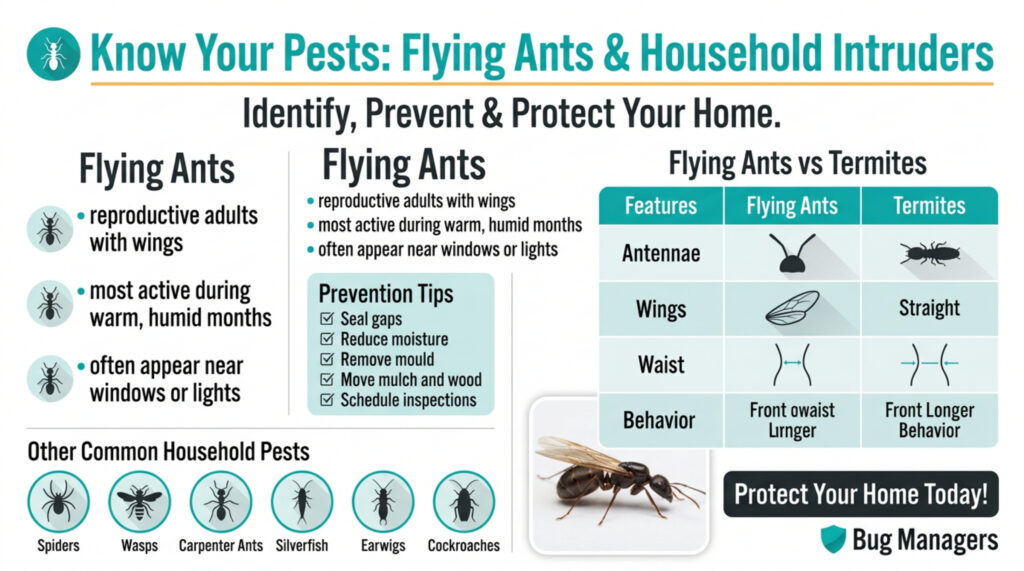
Flying ants aren’t a separate species — they’re simply ants in a reproductive stage (called alates) that grow wings to mate and form new colonies. These winged ants are most common during warm, humid months when colonies are ready to expand. Flying ants may appear inside when they’re searching for food or nesting sites (source: University of Kentucky Entomology).
Flying Ants vs Termites — Key Differences
Identifying insects correctly is important because treatment differs drastically.
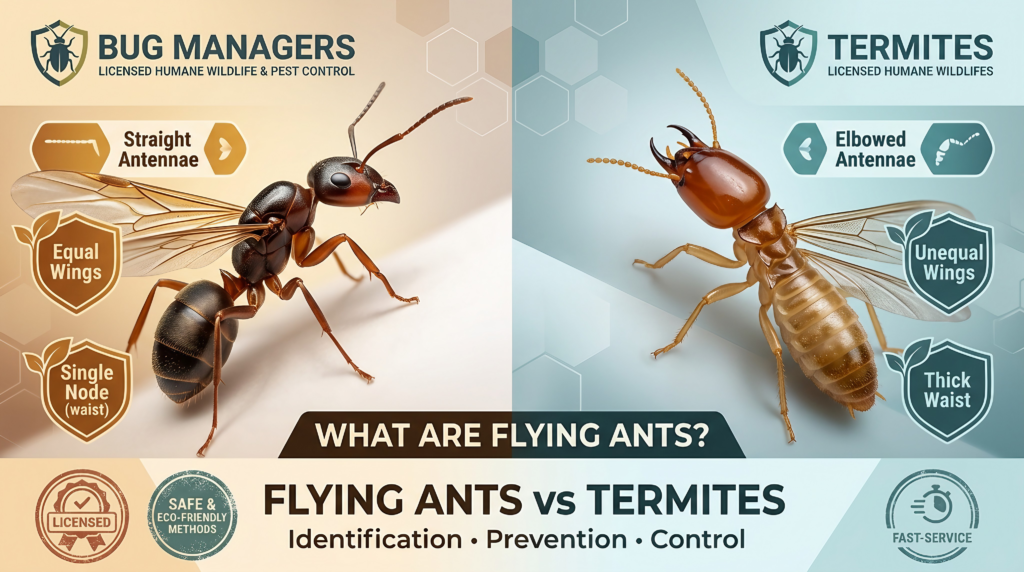
Physical Differences
| Feature | Flying Ants | Termites |
|---|---|---|
| Waist | Narrow, pinched | Broad, uniform |
| Antennae | Bent or elbowed | Straight |
| Wings | Front pair longer | All wings equal length |
Behavior & Damage
- Flying ants tunnel wood to build nests, but don’t eat wood, and rarely cause structural damage.
- Termites consume wood and can cause major structural problems if untreated.
If you’re unsure whether you have winged termites or flying ants, catching one to inspect these traits can be the difference between a DIY fix and calling a pro. If you’re spotting swarms inside your home, check for ant colonies within wall voids or outdoor nests near foundations. Early detection prevents bigger infestations (source: Orkin Pest Control).
How to Identify a Flying Ant Infestation
Signs you’re dealing with flying ants include:
- Small winged ants clustered around windows or light sources
- Trails of ants going to and from walls or cracks
- Wood shavings or nesting debris near baseboards
- Ant nests near moisture sources like leaky pipes
If you’re spotting swarms inside your home, check for ant colonies within wall voids or outdoor nests near foundations. Early detection prevents bigger infestations.
How to Get Rid of Flying Ants — Effective Control Tips
Here are proven ways to eliminate and prevent flying ants:
1. Seal Entry Points
Caulk cracks, repair gaps around doors and windows, and replace torn screens to block access.
2. Eliminate Moisture & Decay
Fix leaks, repair rotten wood, and keep firewood or lumber elevated and away from your home’s exterior.
3. Use Baits and Barriers
Ant baits attract workers that carry poison back to the colony. For heavy infestations, professional baiting systems can be more effective.
👉 For specialized ant treatments, explore our service page: Ant Control Services.
4. Professional Pest Control
When swarms continue despite DIY methods, professional inspection and treatment may be necessary.
Common Household Pests & How They Compare
Aside from flying ants, many other pests invade homes every season. Here’s a quick guide to identification and control:
Asian Lady Beetles
Often mistaken for ladybugs, these oval orange and black beetles cluster on walls in fall and winter. They don’t bite humans, but can stain surfaces and enter homes seeking warmth.
👉 Learn more about identifying and removing them: Asian Lady Beetle Control.
Wasps
Wasps can build nests in eaves and wall voids. Unlike ants, they sting and can be dangerous around pets and children. Professional removal is recommended.
Centipedes
Slim, many‑legged hunters that prey on other insects. Generally beneficial, but they can startle homeowners. Seal cracks and reduce moisture to discourage them indoors.
Silverfish
Small, silvery insects found in damp areas like basements. They feed on paper, glue, and fabrics — great eaters of book bindings! Control involves humidity reduction and sticky traps.
Earwigs
Recognized by pincers on the abdomen, earwigs hide in dark moist spaces. Rarely harmful, reducing moisture and sealing entry points helps prevent entry.
Millipedes
Slow‑moving, cylindrical bugs that enter in wet weather. They don’t bite but indicate damp conditions that may encourage other pests.
Sow Bugs & Pill Bugs
Also called “roly‑polies,” these crustaceans like cool damp areas. They don’t damage homes but can be a nuisance.
Preventive Pest Control Tips for Every Home
Here are universal tips that reduce flying ants as well as other pests:
✔ Maintain clean kitchen surfaces and sealed food containers
✔ Repair leaking faucets and pipes
✔ Trim vegetation away from the foundation
✔ Keep mulch and firewood away from exterior walls
✔ Schedule regular inspections with a certified pest pro
For comprehensive home protection, check out Home Pest Prevention Plans.
Conclusion
Flying ants can look scary — especially when mistaken for termites — but with proper identification and action, you can control and prevent infestations effectively. Understanding the key differences between pests helps you choose the correct treatment and protect your home year‑round.
If insect problems continue or you suspect termites, it’s best to reach out to a professional pest control team for a thorough inspection.
👉 Contact us today at Bug Managers for fast, reliable pest solutions!