Intro
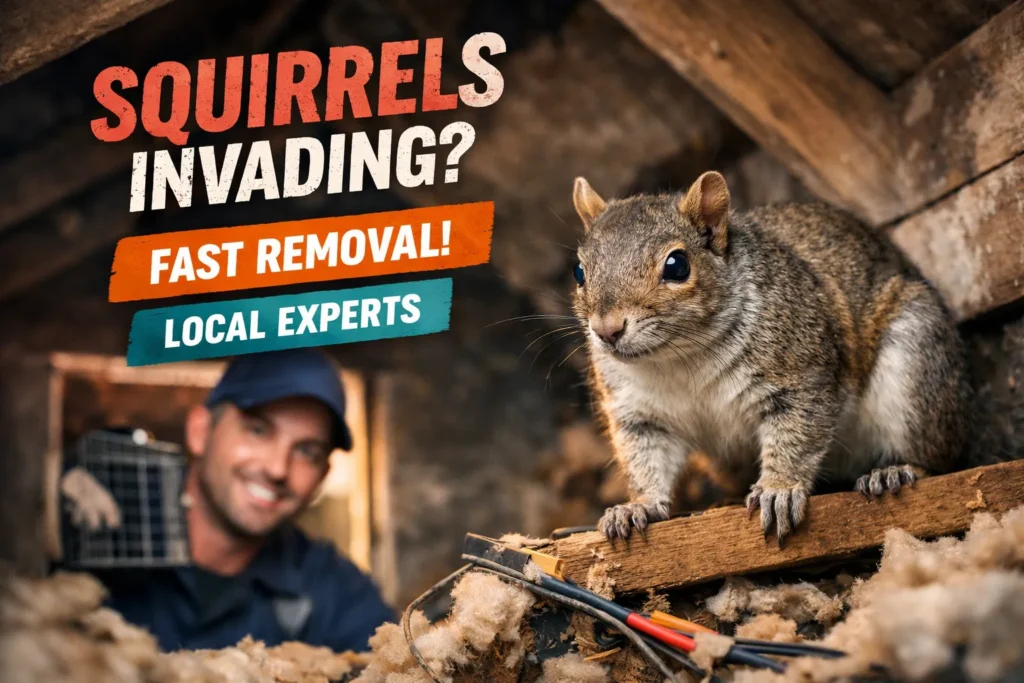
Squirrels in the attic are more than just a nuisance—they can cause structural damage, chew through wiring, and create health hazards. If you need squirrels removal fast, acting with calm urgency is essential: document the problem carefully, photographing entry points, chew marks, and droppings, but avoid poisons or DIY lethal traps that can make the situation worse.
For safe and effective resolution, a licensed professional can provide humane eviction, exclusion, attic cleanup, and follow‑up to prevent reentry. In the Greater Toronto Area, Bug Managers is one example of a team offering inspection, full exclusion, attic cleanup, and a warranty on their work, ensuring peace of mind.
First 20 minutes: triage and what not to do
Squirrels in your attic? Act fast—but avoid costly mistakes. One small choice now saves a home later. Your early actions limit danger to family, pets, and your roofline.
- Keep children and pets away from the attic and the immediate exterior. Safety first.
- Document: photograph chew holes, droppings, and any daytime noises. Photos are evidence for quotes and insurance.
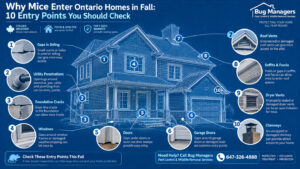
- Survey the exterior for fresh chew marks around soffits, vents, chimneys and eaves. Note the size and location of holes.
Immediate don’ts. These choices cause more damage than the squirrels.
- Do not use poison. It’s inhumane, illegal in many areas, and leaves carcasses in walls.
- Do not seal or block exit holes at night. You can trap babies inside.
- Do not rush DIY lethal traps. Misplaced traps create legal and safety problems.
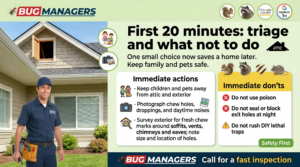
Squirrels in your attic? Act fast—but avoid costly mistakes. Follow Bug Managers’ first 20-minute safety guide to protect your home and family.
How humane pros actually remove squirrels — the step‑by‑step
There is a repeatable workflow. Ask for it. If a company can’t describe these steps, keep looking. For a concise third‑party overview of squirrel biology and humane removal approaches, see squirrel information and removal tips.
Inspection
Professionals map entry and activity. They check attic interiors, rooflines, vents, and nearby trees. Expect photos and a recorded entrypoint map. That document becomes the baseline for the quote.
Eviction
Eviction is usually non‑lethal. One‑way exclusion devices let animals leave and prevent return. When live trapping is needed, it is monitored and done to humane standards. The method must match the house and the animals present.
Exclusion and proofing
After eviction, pros seal vulnerabilities with wildlife‑proof materials: stainless steel mesh, flashing, chimney caps, soffit repair. The goal is to remove temptation and restore the building envelope. For bird‑specific problems you may want a specialist; consider Bird Control, Bug Managers or professional Bird Proofing Services, Bug Managers.
Attic cleanup
Removal often reveals contamination: droppings, urine, nesting material and chewed insulation. Cleanup can include biohazard removal, insulation replacement, deodorizing and a safety check for chewed wiring. If you also suspect rodents after inspection, check Rat & Mice Removal, Bug Managers for combined remediation options.
Repairs and monitoring
Repair work, follow‑up checks and written warranties finish the job. Expect monitoring for the recommended period and a return visit if re‑entry occurs.
Legal note: policies differ by jurisdiction. In Ontario, relocation beyond 1 km and seasonal removals are regulated; maternity season rules exist to avoid orphaning young. Ask your pro how they comply with local laws.
Ask for these services — the minimum scope every quote should include
A good quote reads like a contract. It shows materials, steps, and promises. If it’s not on paper, it didn’t happen.
Essential service items to demand in writing:
- Full inspection report with photos and entry‑point map.
- Eviction method and monitoring plan (one‑way exclusion vs live trapping).
- Exclusion materials and specifics (mesh size, flashing, chimney cap details).
- Attic cleanup scope (biohazard removal and criteria for insulation replacement).
Administrative and warranty items to include:
- Estimated repairs and structural work with price ranges.
- Warranty length and what it covers (re‑entry, repairs, monitoring schedule).
- Proof of licence, permits (if applicable), and insurance documentation.
- Payment terms, deposits and cancellation policy.
Sample homeowner request you can email: “Please send a written scope and price breakdown that includes entry‑point photos, the eviction method, exclusion materials, attic cleanup criteria, warranty length, and proof of insurance.”
Money and time — realistic costs and what changes the price
Cheap today often costs more later. Expect variability based on infestation size and attic contamination.
| Service | Typical Range |
|---|---|
| Single squirrel removal | $200–$300 |
| Typical removal | $300–$600 |
| Large / severe jobs | $500–$1,500+ |
| Attic cleanup / decontamination | $500–$1,500+ |
| Inspection fee | $100–$150 |
| One‑way door visit | $200–$600 |
What raises the price: multiple entry points, attic contamination, babies present, hard‑to‑reach rooflines, required permits and same‑day emergency service. Repairs for wiring or structural damage add cost and should be quoted separately.
Timelines: expect a 30–90 minute inspection. Eviction plus monitoring can take days to two weeks. Repairs and attic restoration are scheduled after exclusion is verified. For quick national averages and common cost ranges, consult reputable cost guides such as squirrel removal cost estimates and a second reference with a detailed breakdown at detailed removal cost breakdowns.
How to vet local pros — credentials, smart questions, and red flags
Trust is a contract you can check. Don’t hire on a promise alone.
Ask to see licence numbers, proof of general liability insurance (and WSIB in Ontario), and any professional certifications like NWCOA or equivalent training. Request references and before/after photos of completed exclusion work.
On the call, ask plainly: Are you licensed and insured? What eviction method will you use and why? Will you include exclusion work and what materials? Do you include attic cleanup and a written warranty? How do you handle nestlings or babies if found? For guidance on unusual animal behavior — for example, aggressive or disoriented squirrels — consult an expert guide on signs that a squirrel may be rabid.
Red flags are simple to spot. Walk away if they use poison, refuse a written scope, cannot show insurance, pressure for cash‑only payment, or promise results without exclusion and cleanup. Honest pros welcome scrutiny; evasive ones do not. If you’re facing other species or need a separate specialty, see Skunk Removal, Bug Managers for an example of a species‑specific service.
Book, expect, and follow up — a homeowner’s roadmap
Booking is not the finish line. Documentation and follow‑through are.
Schedule an inspection and get the written scope. Confirm the eviction method, the exclusion materials, the attic cleanup criteria, and warranty length before work begins. Prepare the property: clear attic access and secure pets.
Day of service: exclusion work typically takes one to four hours. Monitoring follows. Attic cleanup is usually a separate visit. Collect inspection and repair photos, keep receipts, and save the warranty in your files.
If you want a local option in the Greater Toronto Area, look for a licensed humane provider that lists inspection, full exclusion, attic cleanup and a warranty on the estimate. Squirrel Removal and Control in Brampton is one tested, humane team in the GTA that follows that checklist—use them as a reference point when you call around.
Conclusion
You won’t find perfect silence overnight. You will find a plan.
Document the work, demand a written scope, and hire a licensed, humane team that explains each step. That is how noise becomes peace of mind.