Small nest today. Urgent problem tomorrow.
A wasp nest is a simple problem that can become an urgent one. Read seven clear steps to decide, hire, and protect your home — and if you’re in the GTA, Bug Managers is one fast, licensed option to call.
Spot the nest — identify species and the real risk
See the nest. Know what it means.
Quick identification tells you what to do next. Species determines danger, method, and price. Time matters less than correct action.
Identification quick-check
- Paper wasps: Umbrella-shaped, exposed hexagonal cells hung from a single stalk, usually under eaves or porch ceilings. Flight shows long legs dangling.
- Yellowjackets: Enclosed papery envelope with a bottom opening; often in ground holes, wall voids, or tight cavities. Bright yellow/black and can be aggressive.
- Hornets (bald-faced): Larger, rounder, football-shaped nests in trees or tall shrubs. Sizeable and highly defensive when approached.
- Wasp vs. bee: Wasps are smooth-bodied with narrow waists and build papery nests. Honeybees are fuzzy and build wax comb.
Common hiding places include eaves and soffits, attics and wall voids, under decks and sheds, inside outdoor fixtures, and underground burrows. If you see frequent comings and goings near a hole, assume a nest.
Decision mini-rule: a small, exposed paper wasp nest might be dealt with carefully; anything inside walls, attics, chimneys, underground, or larger than a grapefruit is a pro job now.
Don’t be a DIY hero — when a homeowner attempt becomes dangerous
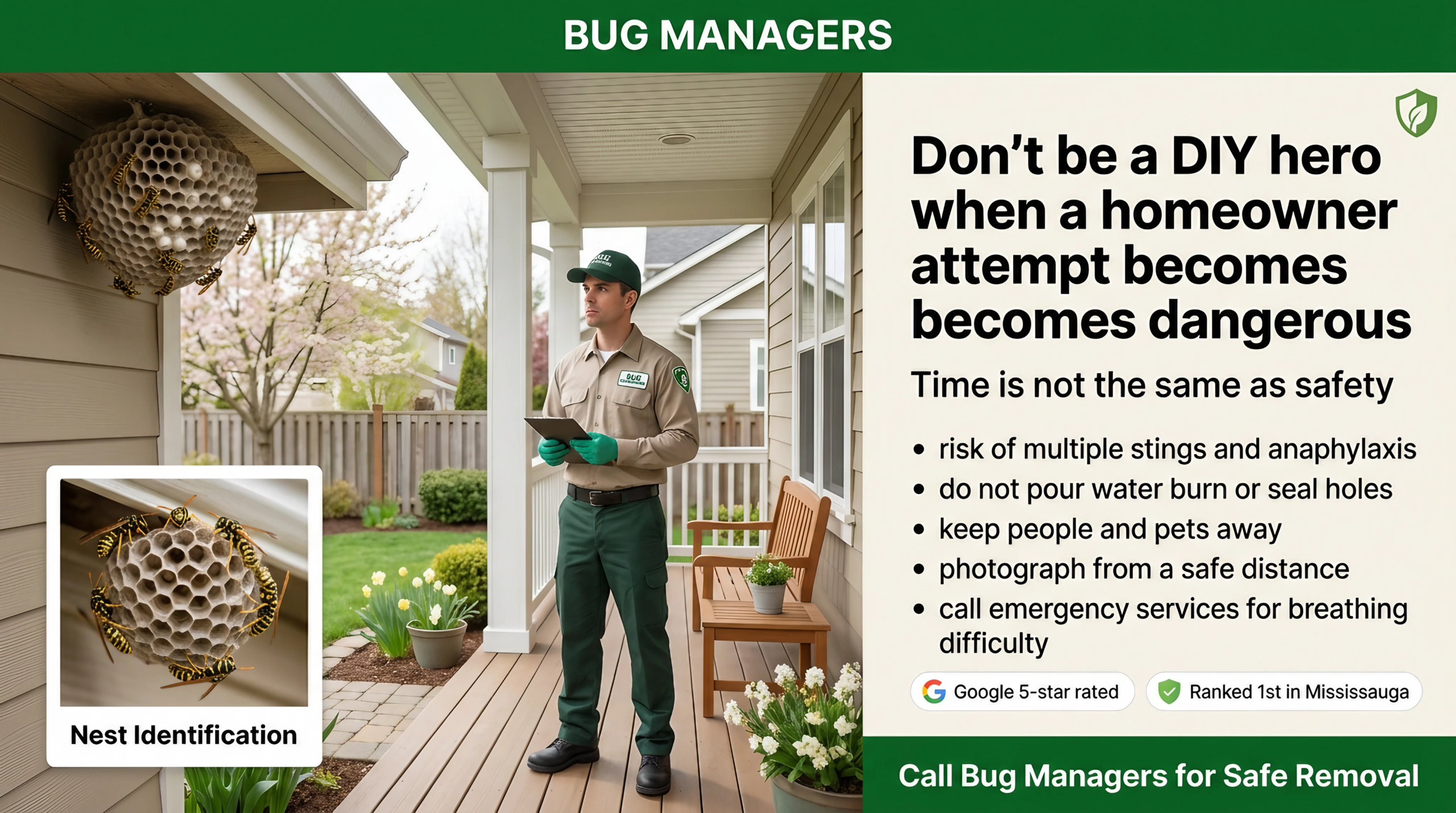
Time is not the same as safety — stop and assess.
DIY attempts risk multiple stings, anaphylaxis, ineffective kills that provoke wasps, and property hazards like falls or fires. Consumer sprays often fail against large colonies and can make the problem worse.
High-risk signals to call a professional immediately include nests inside walls, attics, chimneys, or underground; nests bigger than a grapefruit or with visibly numerous wasps; aggressive species like yellowjackets or hornets; or anyone in the home with allergies. Proximity to children, patios, pools, or high-traffic areas raises urgency.
Immediate safety steps you can and should take now: keep people and pets away and close nearby doors and windows; warn neighbors and anyone who uses the yard; photograph the nest from a safe distance using zoom for identification later; do NOT pour water, burn the nest, or try to seal the hole — that traps and enrages wasps. If someone has breathing difficulty after a sting, call emergency services right away.
When DIY might be considered: a tiny, exposed paper wasp nest, accessible at night, handled with proper protective gear and timing. Even then, professionals are safer and often affordable. For a clear comparison of professional versus homeowner approaches, see a practical overview of professional vs. DIY extermination.
Find and vet a local wasp exterminator — a quick script, red flags, and why Bug Managers is an example
You want speed and proof — both are easy to ask for.
Search locally with terms like “wasp nest removal near me,” “same-day wasp exterminator,” or check Google Maps and neighborhood reviews with job photos. Don’t hire on price alone.
What to demand on the phone
- Confirm the company is licensed and carries business liability insurance; ask for licence number and policy limits.
- Ask which method they’ll use (spray, dust, vacuum, or removal) and what environmental safeguards they take.
- Request same‑day availability and clarify any emergency or after-hours fees.
- Insist on a written guarantee or re‑treatment policy and a written estimate.
- Ask for recent local references or photos of completed jobs.
Simple phone script to read: “I have a wasp nest at [exact location]. It’s [size/visible details]. Are you licensed and insured? What method would you use and when can you come? Can I get a written estimate and guarantee?”
Hang up on red flags: no insurance, vague or evasive answers about methods, cash-only demands, refusal to provide a written estimate or guarantee, or no locational reviews (or suspiciously perfect reviews).
If you’re in the GTA, Professional Pest and Wildlife Removal Services | Bug Managers is one vetted option that meets those boxes — licensed, insured, eco-friendly methods, same‑day removal and exclusion options, and written guarantees. When checking licences and certifications in other jurisdictions, review local applicator certification rules such as the pesticide applicator certification guidelines for an example of what to verify.
If you’re looking specifically for local expertise, the team also advertises region-focused services; for example, they list Skilled Wasp Removal Specialists in Brampton | Bug Managers for Brampton customers.
Compare methods and costs — understand what you’ll pay for and why prices vary
Price without context is gambling.
National averages typically sit in roughly the $300–$700 range, with common averages around $375–$525. In the GTA, many basic, accessible jobs run lower — some providers list flat fees around $159–$300 for standard removals — but complex nests can reach $1,000+.
Price drivers are clear: species (yellowjackets cost more), nest size, location (attic or wall work raises labor), access difficulty, urgency, and whether exclusion/sealing is included.
Method comparison in practical terms:
Aerosol/foam — fast knockdown for exposed nests and usually lower cost, but foams dry and may need follow-up for full colony kill. Insecticidal dust — preferred for ground or wall nests; highly effective and residual, often used by pros when a thorough colony elimination is needed. Vacuuming/dig-out — immediate physical removal for accessible nests; labor-intensive and sometimes pricier. Nest removal + exclusion — adds time and cost but prevents returns and is a sensible investment on attics, soffits, and wall voids.
Money tips: for anything beyond a small exterior nest get two written estimates; beware very low quotes that exclude follow-up or exclusion work; always ask what’s included — inspection, treatment, removal, disposal, follow-up visit, and warranty. For detailed cost breakdowns and national estimates, consult a consumer cost guide such as the wasp and hornet nest removal cost guide.
Prepare, expect, and prevent — what to do before the tech arrives and after the nest is gone
Preparation speeds the job and lowers surprises.
Before the technician arrives, photograph the nest and note its exact location. Clear a safe path to the work area and move pets, children, and fragile items indoors. Cover pools and vehicles if they’re near the treatment zone and make notes about allergies and access (gates, keys).
During the visit expect a quick inspection, an explanation of the chosen method, visible PPE on the technician, the treatment itself, and either nest removal or an in‑situ application. A reputable company will clean up, leave an invoice, and provide a written warranty or re‑treatment window. Ask to see ID and to be told which chemical or dust was used and why.
After the job, seal entry points with professional materials (steel mesh, caulk) if recommended. Remove attractants — secure garbage, pick up fallen fruit, fix leaks, and tidy soffits. Monitor the area for a week or two and use the pro’s guarantee if anything reappears. For authoritative information on wasp behavior and identification to help with monitoring, review the University extension overview on social wasps (yellowjackets, hornets, and paper wasps).
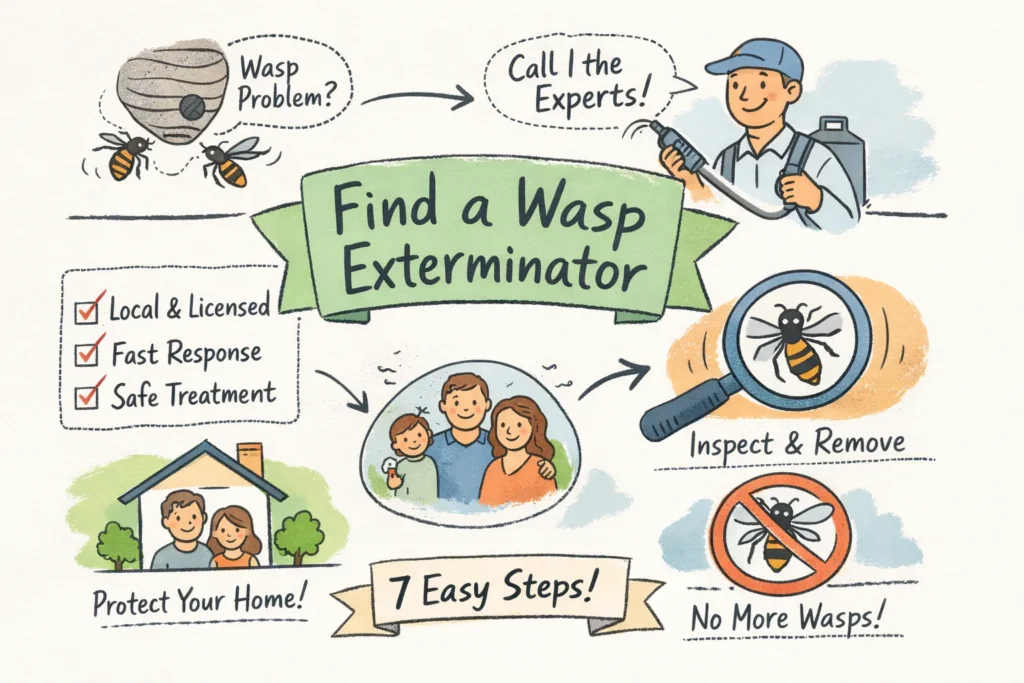
- Spot and photograph the nest from a safe distance.
- Identify likely species and note the location.
- Keep people and pets away — don’t provoke the nest.
- Call a licensed local pro using the vetting script above.
- Compare written estimates and methods before booking.
- Prepare the site for the service (clear path, move pets, cover pool/vehicles).
- Seal entry points and use the warranty for any follow-up work.
Don’t trade speed for safety
Make one confident call, follow the prep, and don’t let a wasp nest become an ongoing problem. Spot it. Contain it. Hire a licensed pro when needed.
Key points: identify the species and location; avoid risky DIY when the nest is hidden or large; demand proof of licence, insurance, and a written guarantee. If you need same‑day licensed service in the Greater Toronto Area, Skilled Wasp Removal Specialists in Brampton | Bug Managers is one vetted option that checks those boxes — otherwise use the vetting script above and hire with confidence.
Bug Managers also serves nearby communities with regional offerings such as Pest Control Caledon, Bug Managers and Pest Control Burlington, Bug Managers, and provides specialized coverage for other household pests like Ant Control, Bug Managers.
A calm decision now saves pain later.