Bed Bug Treatment Made Simple: Seal It, Apply Heat, and Stop the Spread
This is a plan you can execute. It gives the reliable DIY tools, a room‑by‑room playbook with exact temps and times, prevention habits, cost expectations, and the honest rule for when to hire a pro. If you’re dealing with Bed Bugs and you’d rather skip the guesswork, Bug Managers inspects and builds a guaranteed plan across the GTA.
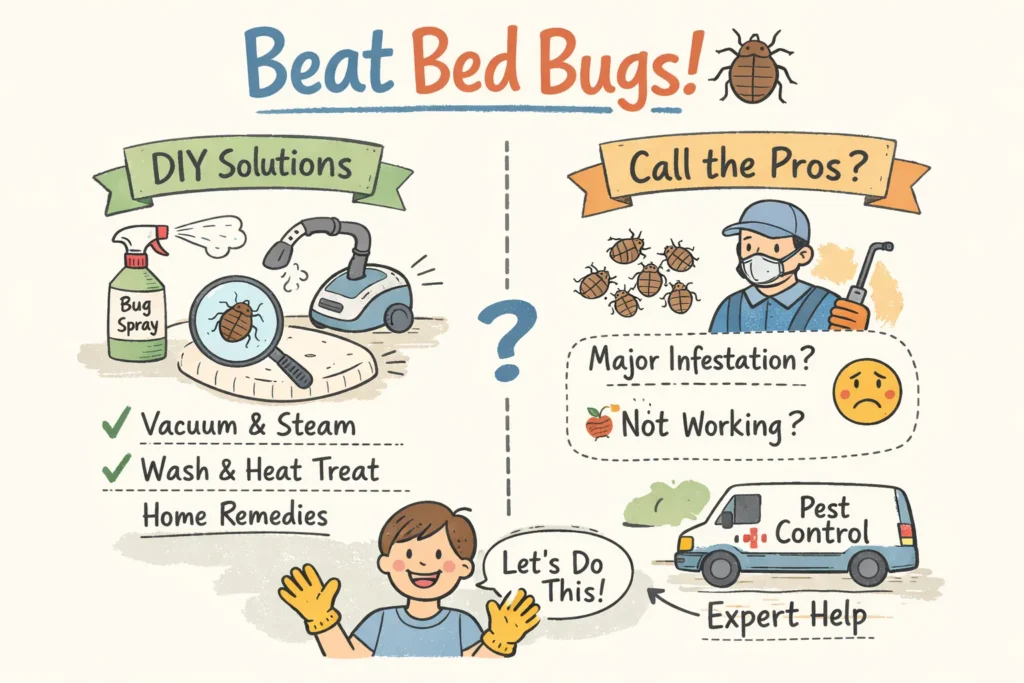
Triage: Is this a DIY job or a professional call?
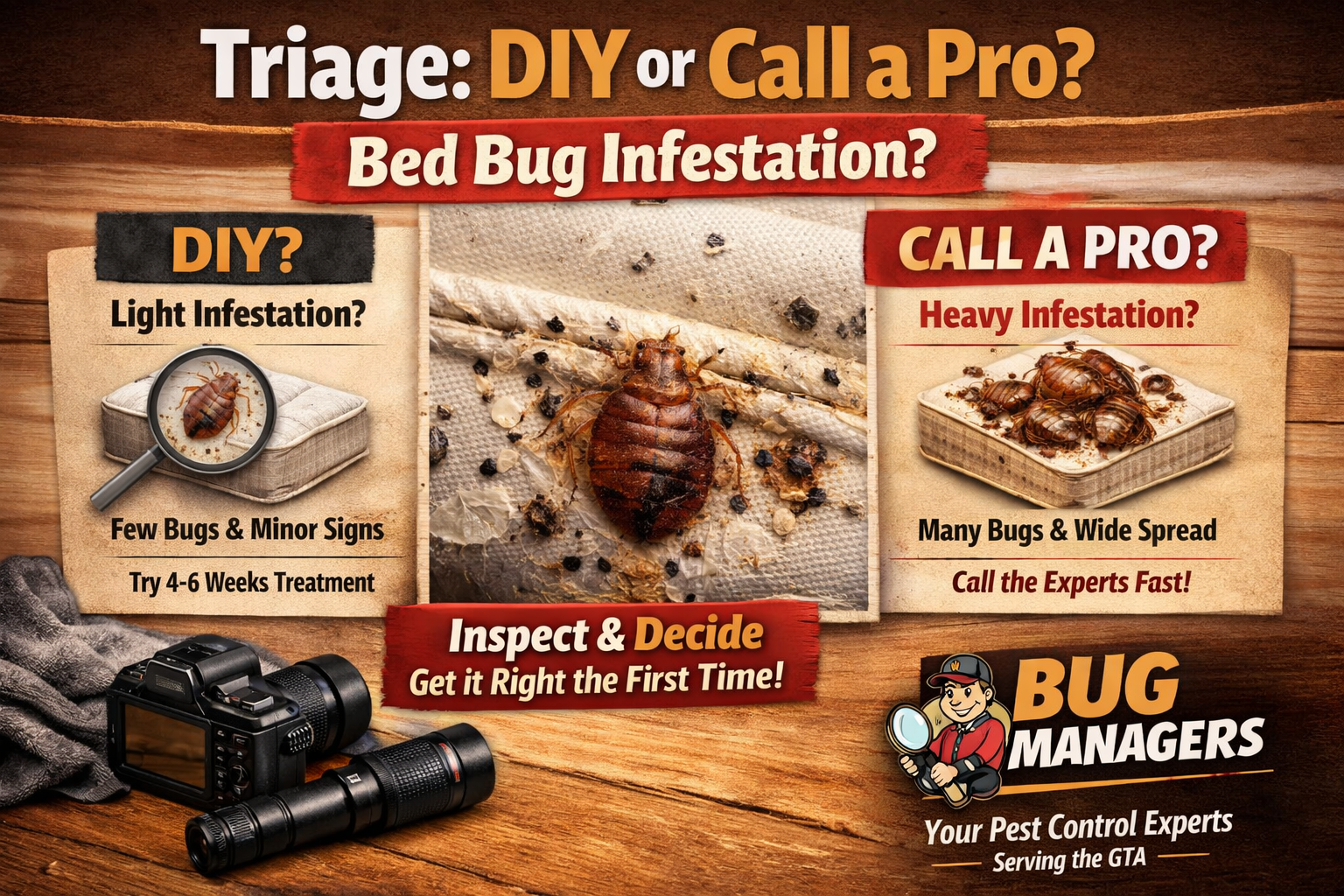
Inspect first. A quick look decides almost everything.
What to look for: live bugs, black fecal spots on seams or baseboards, tiny white eggs, translucent shed skins, a musty sweet odor, bite patterns in lines or clusters, fresh mattress seam stains, or bugs on furniture or luggage. Photograph dates and locations.
Severity, simplified: light means a single room and occasional sightings. Moderate means multiple signs, eggs found, or repeated bites. Heavy means lots of live bugs, several rooms affected, or neighbor reports in multi‑unit buildings.
Decision rule: try DIY for light infestations and follow the plan for 4–6 weeks. If you still see bugs after 2–3 careful treatment cycles, call a professional. If the infestation is heavy or across multiple units, call a pro immediately.
Local nudge: GTA homeowners unsure where they land can book a rapid inspection with Bug Managers — a clear report and recommended next step on the same visit.
Nine DIY tools that actually work — and their limits
- Laundering + dryer heat. Wash in the hottest water safe for fabric and dry on high for 30+ minutes. A dryer at ~120°F or higher reliably kills bugs and many eggs in textiles. Limitation: doesn’t reach hidden bugs in furniture.
- Steam. Use steam with nozzle steam near boiling and move slowly over seams, tufts, baseboards and crevices. Kills on contact. Limitation: must hit the insect or egg directly and avoid over‑wetting.
- Whole‑room heat (professional). Professionals raise ambient room temps to roughly 130–135°F and hold them to penetrate crevices for hours. Powerful and fast. Limitation: DIY heaters are risky; use pros.
- Freezing. Seal small items in bags and freeze at 0°F for about 4 days. Works for shoes, toys, and electronics that tolerate cold. Limitation: impractical for furniture and requires a reliable freezer.
- Vacuuming. Vacuum mattress seams, box springs, baseboards and furniture crevices; dispose of bagged contents in a sealed bag outside. Limitation: removes many bugs but not eggs.
- Mattress & box‑spring encasements.Zippered, bite‑proof covers trap and isolate bugs. Leave on for at least a year to starve survivors and prevent new bites. Value: inexpensive and preventive.
- Interceptors and bed‑leg cups. Traps under legs monitor movement and reduce travel. Treat them as your weekly sensor: they tell you if bugs are still active.
- Diatomaceous earth & silica gels.Apply thin lines into cracks and voids only; use food‑grade DE and PPE. Reality: DE is slow and of variable effectiveness; professional silica gel products act faster.
- Consumer sprays & residual products.Use EPA‑approved spot treatments per the label as part of an integrated approach. Limitation: many contact sprays don’t kill eggs and are not a standalone solution.
Evidence and safety note: eggs are the toughest stage — target 118–122°F for sustained exposure (often 60–90 minutes) to ensure egg mortality. Research on heat treatments supports using sustained temperatures to kill eggs and adults. Heat (dryer/steam/whole‑room) and vacuuming remove or kill many stages when applied correctly. DE carries inhalation risks; wear a respirator and gloves if you use it. Combine tools — none reliably cures an infestation alone.
Room‑by‑room action plan — the sequence that matters
- Prep the room (30–60 minutes). Remove clutter and bag loose fabrics. Unplug electronics. Pull furniture 2 feet from walls and open mattress seams. Stand mattresses on end for full access.
- Laundry & dryer (45–60 minutes per load).Seal items in bags, wash hot where safe, then dry on high for 30+ minutes. Place dry items into clean sealed bags immediately. For public laundry situations and proper handling, follow guidance onhow to avoid bed bugs at laundromats.
- Vacuuming (20–45 minutes). Work mattress seams, box spring edges, baseboards and furniture crevices. Seal and discard vacuum contents outside.
- Steam (15–30 minutes). Slowly treat visible seams, folds, headboards, picture frames and furniture crevices with a high‑heat steamer. Move methodically; steam kills on contact.
- Encase and trap (10–30 minutes). Install mattress and box spring encasements and set interceptors under legs. These isolate, monitor and reduce travel.
- Targeted dusts/sprays (as needed). Apply thin dusts into cracks only; follow label instructions and use a P2/N95 respirator. Do not mix pesticides.
Repeat weekly: vacuum and steam re‑treat each week for 4–6 weeks. Check interceptors nightly during week one, then weekly. Expect the full effort to span days to several weeks depending on home size and clutter. Special items: freeze small sealed items at 0°F for ~4 days; isolate books and electronics for monitoring; consult a pro before treating antiques.
For detailed treatment recommendations and sequencing used by pest professionals, see the Purdue Extension bed bug treatment guide. Safety and logistics: keep kids and pets away during treatments, document sightings with photos and dates, and never combine pesticides without professional guidance.
Prevent them coming back — monitoring and common sense
The cheapest cure is prevention. Make a few habits non‑negotiable: inspect hotel beds and luggage, keep suitcases off floors, launder travel clothes promptly, encase mattresses permanently, and keep clutter low so you can inspect surfaces. For tips on protecting living spaces and luggage, review EPA guidance on protecting your home from bed bugs.
In multi‑unit buildings coordinate with neighbors and management. One untreated apartment will re‑seed others.
Monitoring routine: scan mattress seams monthly, check interceptors weekly for 2–3 months after treatment, and keep a simple log of sightings and dates. Early detection saves weeks of effort.
Costs, timelines, and realistic outcomes
DIY saves money up front but costs time. Expect to spend $50–$400 on supplies for a small infestation: encasements ($30–$150 each), steamer purchase/rental ($40–$200), traps ($20–$60), dusts ($10–$40). Time investment is several weekends plus weekly checks for 4–8 weeks.
Professional ranges vary: targeted chemical treatment commonly runs $300–$1,200. Whole‑home heat treatments typically range $1,500–$6,000 depending on size, clutter and severity. Always get a written scope and guarantees.
Success expectations: light infestations — DIY plus monitoring often succeeds in 4–8 weeks. Moderate to heavy infestations are more reliably cleared by professionals. If you’ve treated carefully twice and still see activity, professional intervention is likely the cheaper path overall.
When to call Bug Managers — red flags and what we do
Call a pro when the problem exceeds your tools or time. Red flags: multiple rooms affected, visible eggs or large clusters, persistent sightings after 2–3 DIY cycles, heavy bites across household members, or multi‑unit spread.
Reliable Bed Bug Exterminators in Toronto | Bug Managers offers on‑site inspection and identification, sensor‑based heat mapping when needed, whole‑room heat, targeted eco‑friendly treatments, mattress encasements, professional dust application, exclusion and prevention measures, and monitoring with follow‑ups. Our technicians are licensed, humane and eco‑minded. We provide same‑day/emergency responses across the GTA — learn more about our regional coverage on the Pest Control in Toronto, Bug Managers page, and see specific offerings for Affordable Pest Control Services in Mississauga | Bug Managers and Pest Control Vaughan, Bug Managers.
Homeowner prep for our visit is simple: launder bedding, remove breakables, and make rooms accessible. We’ll tell you the rest. When you’re ready, reach out via our Contact, Bug Managers page to book an inspection or emergency visit.
You can try to win this alone. Or you can call the team that does it every day. Bug Managers will make a plan and own the result.