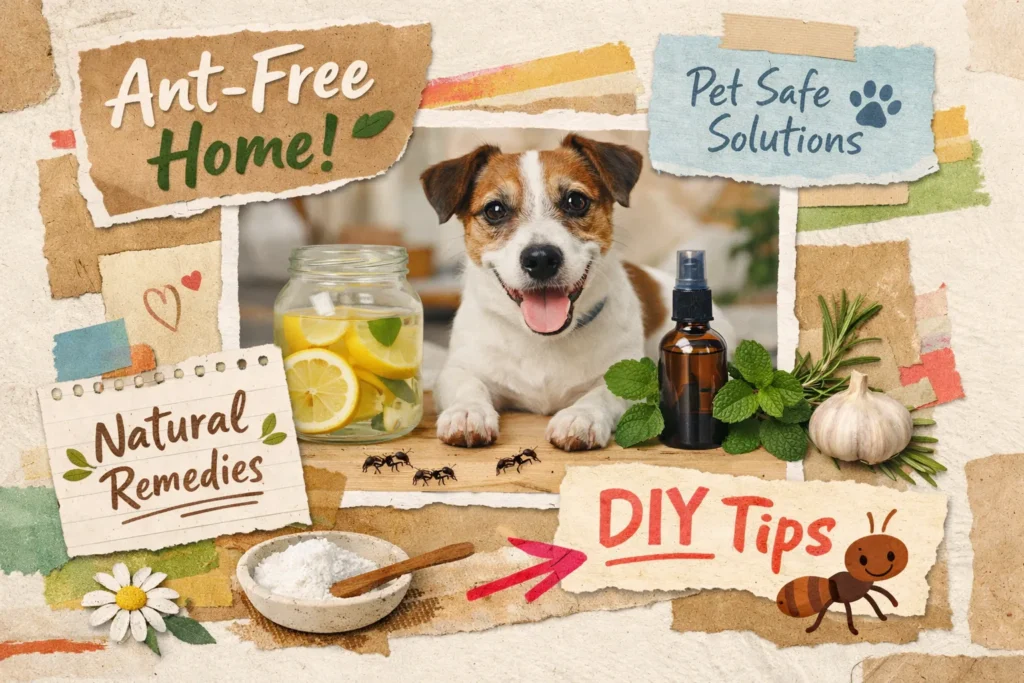
See ants in the kitchen? You can stop them without harsh chemicals.
That line of tiny invaders is stressful, but you don’t need to reach for toxic sprays. Below are the same eco-friendly first-aid fixes our team at Bug Managers recommends before calling in a technician. You’ll get exact recipes, where to place baits, pet and kid safety notes, expected timelines, and a printable checklist you can use while you work.
Quick snapshot: 15 pet‑safe fixes (scan and jump)
- Peppermint essential‑oil spray
- Vinegar + water spray to erase trails
- Soapy spray for on‑contact control
- Cinnamon or lemon‑eucalyptus cotton balls
- Citrus rinds at doors and windows
- Cayenne or black pepper barrier
- Food‑grade diatomaceous earth dusting
- Liquid borax cotton‑ball bait (recipe)
- Boiled‑syrup borax bait (recipe)
- 3:1 sugar‑borax paste (protein tweak option)
- Baking‑soda + powdered‑sugar paste (pet‑friendly)
- Airtight food storage + sanitation routine
- Seal gaps: caulk, door sweeps and copper mesh
- Yard fixes: mulch management, potted peppermint, remove wood/fruit
- Monitor, rotate methods — call a pro if needed
Quick wins: pet‑safe sprays, oils and surface barriers
These remedies work by masking pheromone trails, irritating ants’ senses, or creating a dry physical obstacle. Use them to disrupt foraging and to protect entry points while you set longer‑lasting baits.
Peppermint essential‑oil spray
Mix 10–20 drops of peppermint essential oil with 2 cups of water and, if you like, 1 tsp mild dish soap in a spray bottle. Shake and mist along baseboards, windowsills and door bottoms. Reapply every 5–7 days or after cleaning. Note: keep sprays out of reach of pets and avoid spraying directly on animals.
Vinegar trail cleaner
Combine equal parts white vinegar and water in a spray bottle. Wipe counters, floors and visible trails to erase ant pheromones before you set bait. Vinegar is safe for surfaces and non‑toxic when used in well‑ventilated areas.
Soapy spray
Mix a few drops of dish soap in 2 cups of water for a quick knockdown spray. It removes scent and immobilizes ants on contact. Use for visible workers, not as a colony solution.
Barrier ideas: saturate cotton balls with cinnamon or lemon‑eucalyptus oil and replace weekly; scatter citrus rinds at exterior doors and windows; lay a thin line of cayenne or black pepper (avoid food prep surfaces); dust a light line of food‑grade diatomaceous earth (DE) into dry cracks. Safety note: use food‑grade DE, apply lightly, and avoid creating airborne dust around people or pets. For more on using DE safely and effectively, see this guide to diatomaceous earth for ants: diatomaceous earth for ants.
Baits that reach the colony: exact recipes, placement and timing
Removing every worker won’t stop the colony. Slow‑acting baits let foragers carry poison back to the nest so the queen and brood are affected. Always wipe trails with the vinegar mix first so ants find the bait more easily. For best indoor application methods and bait station tips, see this primer on indoor baiting.
Liquid cotton‑ball bait (simple, highly effective)
Ingredients: 1 cup granulated sugar, 3 tbsp borax, 1 cup warm water, cotton balls, small foil squares or lids.
To make it, dissolve the sugar and borax in warm water. Saturate cotton balls with the solution and place them on foil or in shallow lids. Tape or elevate lids so pets can’t reach them. Position along ant trails, near baseboards and entry points. Replace every 2–3 days or when dry. This is attractive to sweet‑foraging ants and usually shows visible reduction in 24–72 hours; allow up to 1–2 weeks for full colony control. For additional home‑remedy options and step‑by‑step tips, consult this overview on how to kill ants.
Boiled‑syrup borax bait (longer‑lasting)
Ingredients: 1 cup sugar, 1 tbsp borax, 1/2 cup water.
Combine and boil for 3 minutes, cool to a syrup, and pour into shallow lids near activity. The thicker syrup resists evaporation and keeps bait available longer. Replace lids as they dry or become contaminated.
3:1 sugar‑borax paste (sticky pick‑up; protein tweak)
Mix three parts sugar to one part borax, add small water to form a thick paste, and stir in a touch of honey or syrup for stickiness. For ants seeking protein (e.g., some carpenter ant workers), place a tiny dab of peanut butter or canned tuna nearby as an attractant; keep borax in the sugar paste so foragers still carry toxic food back to the nest.
Pet‑friendly (no‑borax) alternative
Equal parts powdered sugar and baking soda mixed to a paste can kill individuals and is safer to handle around pets, but it does not reliably eliminate colonies. Use this if borax placement is impossible, and accept it as a short‑term measure.
Placement and timing tips: hide baits under counters, behind appliances and along wall edges; don’t disturb them for 48–72 hours; expect visible drop in workers within 1–3 days and allow up to 1–2 weeks for colony decline. If ants ignore a bait, rotate attractant type (liquid syrup, paste, or protein) rather than emptying bait stations.
Seal, sanitize and proof: stop ants from coming back
The long game is exclusion and sanitation. Combine physical proofing with routine cleaning so returning ants find nothing attractive.
- Inspect the perimeter: check gaps around doors, windows, dryer vents, plumbing penetrations, foundation cracks and garage thresholds.
- Seal openings: use 100% silicone caulk for small cracks, expanding polyurethane foam for larger voids, and pack cable/pipe chases with copper mesh before sealing. Learn about ourPest & Wildlife Proofing Services, Bug Managersif you’d like professional exclusion work.
- Install door sweeps and weatherstripping on exterior doors and garage entries.
- Pantry & kitchen: transfer dry goods and pet food to airtight containers; clean crumbs, sticky spots and open packages immediately.
- Regular cleaning: wipe counters with vinegar solution, clean drains and mop floors weekly in food prep areas.
How to caulk quickly: clean the joint, cut the nozzle at a 45° angle, apply a steady bead with a caulking gun, and smooth with a wet finger or tool. For exterior joints choose silicone caulk; inside, an acrylic‑latex with silicone works well.
Garden and yard moves that make your property unfriendly to ants
Many house ant problems start outdoors. Small landscape changes reduce routes and harborage.
Keep mulch and soil pulled a few inches from the foundation (a 6″ clear zone). Move woodpiles and stacked materials away from walls and off the ground. Fix poor drainage and remove standing moisture—ants and their prey like damp spots. Keep compost bins sealed and pick up fallen fruit promptly. Plant peppermint or spearmint in pots near entryways (contain roots to prevent spread); lavender and basil can help in borders but don’t rely on plants alone for exclusion.
For small outdoor mounds, a light dusting of food‑grade DE or targeted baiting can be effective. Avoid scalding‑water drenches (risk to plants and inconsistent results). Large colonies or stinging ants should be handled by a pro—see recommendations for sustainable fire ant control for safe outdoor management.
Safety first: protecting pets, kids and when to avoid remedies
Safety is the priority. Use these guidelines when choosing and placing remedies.
Borax baits: effective but ingestible in quantity—keep baits sealed, elevated or enclosed and store leftovers securely. If ingestion is suspected, contact your vet and local poison control.
Essential oils: peppermint and lemon‑eucalyptus are common repellents but concentrated oils can irritate pets (cats are especially sensitive). Apply sprays in pet‑inaccessible areas and never put oils on animals.
Diatomaceous earth: use food‑grade DE, apply lightly, avoid creating airborne dust, and keep pets and children away until dust settles. Wear a mask during application.
Hot water and caustics: burn hazards and plant risks—do not use around children or pets.
When in doubt on product safety for your specific pet (bird, reptile, small mammal), check with your veterinarian before treating indoor areas. Prefer enclosed bait stations or elevated placements in multi‑pet homes.
When to call a pro: clear triggers and how Bug Managers helps
Try DIY for small, recent invasions. Call a professional if you see any of these signs: no improvement after 10–14 days of consistent baiting and proofing; sawdust or hollow‑sounding wood (possible carpenter ants); multiple entry points or infestations in commercial food areas; stinging/biting ants or large outdoor colonies; or infestations spanning multiple units or properties.
We also offer professional rodent services—see our Rat & Mice Removal, Bug Managers page if you suspect mice or rats while addressing ant activity.
Bug Managers offers free inspections and species identification, targeted eco‑friendly baits and exclusion work, humane pet‑sensitive treatments, and follow‑up maintenance plans. Our licensed, insured technicians in Ontario and the GTA (including Pest Control Georgetown, Bug Managers) will provide a written plan, clear estimate and safety guidance for pets and children before any treatment. Learn more about our Ant Control, Bug Managers services and available strategies.
If you’d rather not handle borax or the problem looks large, book a free inspection with Bug Managers or download our printable prevention checklist to try the DIY steps first.
Wrap‑up and next step
Consistent sanitation plus one or two targeted DIY methods usually stops small ant problems: wipe trails, set the right bait, seal gaps, and adjust your yard. Keep safety front of mind—store and place borax baits carefully, use food‑grade DE responsibly, and avoid concentrated oils around sensitive pets.
Want the printable prevention checklist, quick recipes card and a pet‑safety reminder to follow while you work? Visit Bug Managers’ resources or schedule a free inspection in Ontario/GTA — we’ll identify the species, explain the safest strategy for your home, and help you make the problem go away for good.