
An itch is a question — answer it quickly and clearly.
If the marks keep coming, treat the skin now and remove the source next. Short relief and long-term removal are different jobs. You can do the first in minutes. For the second, call professionals. Bug Managers stops the source; this guide shows safe immediate care, which over‑the‑counter options work, and exactly when to get medical help.
Spot the pattern: Is this a bed bug bite?
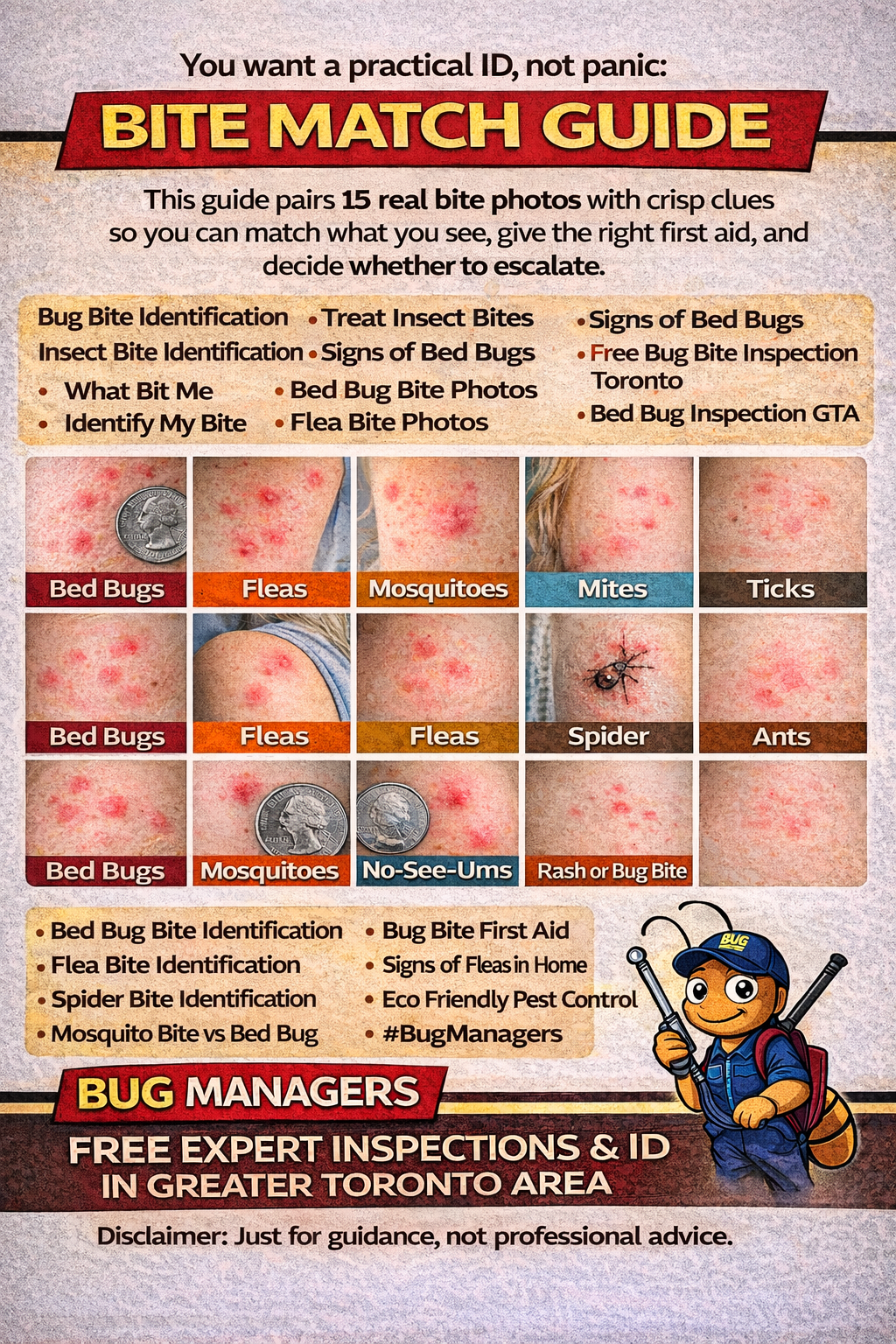
Start by observing. Bed‑bug bites usually appear as small, red bumps. They often cluster or line up across exposed skin — the familiar “breakfast, lunch, dinner” pattern. There may be a tiny central punctum. Reactions vary: some people barely notice; others flare up within hours.
How to tell them apart: mosquito bites tend to be single and random; flea bites favor the ankles; contact dermatitis is patchy, often where cloth or product touched skin and usually lacks a central punctum. Timing helps: bed‑bug reactions can be delayed, so a morning rash after sleeping is a hint.
Do a quick room check. Look for tiny dark fecal spots on sheets, shed skins in mattress seams, rusty blood spots where bugs were crushed, and live bugs tucked in mattress piping, headboards, or nightstands. If you find clustered bites plus bedding evidence, you must treat symptoms now and plan to remove the infestation next.
First 15 minutes: Safe immediate home care that actually works
Order of operations matters. Clean first. Wash the area with soap and water to lower infection risk and remove irritants. Pat dry.
Cool the skin. Apply a cold compress or ice pack (wrap ice in cloth) for 10–20 minutes every couple of hours. Cold numbs nerve endings and lowers swelling.
Soothe and dry. Use calamine lotion on itchy or oozing spots. It’s a simple, low‑risk option that reduces itch and helps dry serous drainage.
Use low‑strength steroid sparingly. For persistent itch, apply 1% hydrocortisone ointment thinly once or twice daily. Prefer ointment over alcohol‑based creams to limit irritation. Don’t cover with tight bandages unless advised.
Stop the damage. Keep nails short. Resist scratching. If needed, cover the bite at night with a loose dressing. Scratching is what turns an itch into an infection.
Avoid unproven fixes. Aloe, baking soda pastes, and many folk remedies lack clinical backing. Clean, cool, soothe — then prevent scratching.
OTC vs. prescription: Which creams and pills, and how to use them
Start with over‑the‑counter measures. They handle the majority of reactions.
Topical: Hydrocortisone 1% ointment is the go‑to. Apply a thin layer to the affected area once or twice daily after cleansing. Limit self‑use to short courses — typically a week — and avoid prolonged application on the face or broken skin. Calamine lotion is safe to use repeatedly and pairs well with hydrocortisone for surface irritation. For detailed patient information on hydrocortisone, see the hydrocortisone patient information.
Oral antihistamines for body‑wide itch: diphenhydramine (Benadryl) is effective at 25–50 mg every 4–6 hours for adults but causes marked drowsiness. Use it at night or when drowsiness is acceptable. For daytime control with fewer sedative effects, take a second‑generation antihistamine such as cetirizine 10 mg or loratadine 10 mg once daily.
Warnings: avoid diphenhydramine in older adults because of fall risk, confusion, and anticholinergic effects. Check drug interactions and talk to a pharmacist if you’re on other medications.
When to escalate: See a clinician if OTC care fails or the reaction is large or widespread. A doctor may prescribe a mid‑potency topical steroid (for example, triamcinolone) or, rarely, a short oral steroid course for pronounced allergic swelling. For professional treatment recommendations, consult the American Academy of Dermatology’s guidance on bed bug treatment. Antibiotics are reserved for clear secondary bacterial infection — increasing redness, pus, warmth, or spreading tenderness.
When to see a doctor: clear red flags
If any of the following occur, seek medical attention promptly; the CDC’s clinical guidance on bed bug bites outlines similar red flags and management steps:
- Increasing redness, warmth, spreading swelling, pus, or oozing — signs of bacterial infection.
- Fever, swollen lymph nodes, or feeling systemically unwell.
- Large blisters, many bites at once, or symptoms that don’t improve after two weeks.
- Signs of a severe allergic reaction: rapid hives, throat or tongue swelling, difficulty breathing, lightheadedness → call emergency services immediately.
- Persistent itchy plaques, scarring, or diagnostic uncertainty — see a dermatologist for evaluation.
For infants, the elderly, or immunosuppressed people, lower thresholds for seeking care are sensible. Small breaks in skin matter when immunity is compromised.
Special situations: pregnancy, babies, elders, and immune‑suppressed patients

Same basic first steps apply across groups: clean, cool, soothe, and avoid scratching. But take extra caution.
Pregnant women should consult their obstetrician before taking systemic medications. Topical hydrocortisone and calamine are generally acceptable for mild reactions, but any systemic drug or persistent infestation should involve the prenatal care team.
Infants and small children require pediatric dosing and close supervision. Avoid adult doses of sedating antihistamines; ask a pediatrician for safe alternatives.
Older adults should avoid diphenhydramine if possible because of sedation and fall risk. Favor non‑sedating antihistamines and topical care.
Immunocompromised patients should contact their clinician early. Preventing secondary infection matters more than in otherwise healthy people.
Stop the comeback: prevention, cleaning, and when to call Bug Managers
Symptom care is temporary if the bugs remain. Kill eggs and hideouts with heat and containment.
Laundry and heat: wash bedding and clothing in hot water and run the dryer on high for at least one full cycle. Heat kills adults and eggs. Bag laundered items separately to avoid recontamination.
Protect the mattress. Use certified mattress and box‑spring encasements. Vacuum seams and baseboards thoroughly; empty the vacuum into a sealed bag and discard outdoors. Declutter sleeping areas and isolate luggage immediately after travel.
When to call a professional: multiple rooms affected, recurring bites, visible live bugs, or anything beyond a small, localized problem. Home sprays and DIY fixes rarely solve an infestation.
We also handle other pests — if mosquitoes are a concern, ask about our Mosquito Control services.
What to expect from a service like Bug Managers: a licensed, discreet inspection; targeted treatment including professional heat interventions and integrated pest management; eco‑aware options; monitoring traps and follow‑up visits; and pest‑proofing advice to prevent return. We serve the Greater Toronto Area, including Pest Control Burlington, and specialize in high‑value properties and urgent, guaranteed solutions. For specifics on our approach to eradicating infestations, see our page on Reliable Bed Bug Exterminators in Toronto.
For more on identifying and preventing future bites, see the practical overview from Harvard Health.
Final takeaway and next step
Short answer for now: wash, cool, calamine or 1% hydrocortisone, and consider an antihistamine for widespread itch. Stop scratching. If you see infection, severe allergy, or signs the infestation persists, get medical care and professional pest control.
If relief is urgent and you suspect ongoing infestation, relieve the skin now and remove the bugs for good. Contact Bug Managers for a prompt inspection and discreet, eco‑aware treatment across the GTA. After booking online you’ll receive a confirmation and next‑step details on our Thank You page.