
Catch Bed Bugs Early: The Simple Detection Playbook
Catch Bed Bugs Early: The Simple Detection Playbook is built around one quick truth — Catch Bed Bugs Early: The Simple Detection Playbook is about finding the problem when it’s still a few small signs, not a building-wide infestation.
Early discovery changes everything: Catch Bed Bugs Early: The Simple Detection Playbook shows that treatments cost less, take less time, and cause less stress. A few stains and a single trapped bug are fixable. A full spread is expensive and slow. Simple monitoring and calm verification beat frantic spraying every time.
Bug Managers, the GTA team, treats detection as prevention. In Catch Bed Bugs Early: The Simple Detection Playbook, we favour interceptors, steady checks, and fast verification over panic spraying. Quiet, methodical work prevents bigger headaches.
Do this now: isolate bedding in sealed bags. Put one interceptor under each bed leg — this is a core step in Catch Bed Bugs Early: The Simple Detection Playbook.
The 9‑step inspection checklist — do this, in order
Follow the list exactly; don’t skip steps.
- Prepare the kit. Flashlight, small magnifier, clear tape, sealable plastic bags, disposable gloves, a jar with rubbing alcohol, and a notepad. Remove pets from the room.
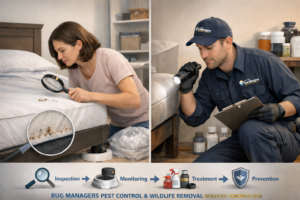
- Strip bedding carefully. Check seams, tufts, mattress tags and under the sheets for evidence: blood spots (rusty red), fecal specks (dark ink‑like dots that smear when wet), eggs (1 mm pale ovals), and shed skins (translucent casings). Time: 10–20 minutes per mattress. For a concise guide to common signs, seesigns of a bed bug infestation.
- Examine mattress and box spring fully. Inspect all seams, the underside, and inside any box spring openings. Probe folds and tags with the light and magnifier.
- Inspect the bed frame and headboard. Look at joints, screw holes, slats, crevices and behind mounted headboards. Bed bugs hide where wood meets metal.
- Check nightstands, lamps and nearby furniture. Soft furnishings conceal eggs and shed skins in seams and under drawers.
- Scan upholstery and sofas. Between cushions, under zippers, in creases, and along back edges—especially on pieces used for sleeping.
- Inspect baseboards, carpets, outlets and wall hangings. Work within a roughly 6‑foot radius of the bed. Remove outlet covers only if you’re comfortable doing so.
- Deploy monitors now. Place pitfall interceptors under each bed leg and sticky traps where appropriate. Run them for at least 7 days for low‑level detection. See theRutgers Extension fact sheet on bed bug detectionfor monitoring tips.
- Document and act. Photograph stains, capture any suspect insect with clear tape or a vial (label it), launder bedding on hot, and seal infested items in plastic. If you find eggs, fecal streaks, or live bugs—escalate to a professional.
Estimated time per mattress: 10–20 minutes. Real evidence looks like: rusty red blood spots, ink‑black fecal dots that smear, 1‑mm pale eggs, and clear shed skins.
Monitors and traps that actually work — pick the right tool
Not all gadgets are equal. Pitfall interceptors win for home monitoring.
Independent tests show large gaps in sensitivity. The most reliable passive cups are far better at catching early movers than cheap sticky pads.
| Model | Type | Independent Detection Rate |
|---|---|---|
| ClimbUp Insect Interceptor | Pitfall | ~88% |
| BlackOut BedBug Detector | Pitfall | ~79% |
| Bedbug Detection System (BDS) | Sticky | ~39% |
Why pitfall traps work: bed bugs climb. Place a barrier around their highway and they fall in. Practical rules: put an interceptor under each leg; use four or more per room for best coverage; run for at least seven days to catch low activity. If beds have no legs, very wide legs, or the frame touches the wall, place interceptors at wall contact points or use adhesive traps along baseboards.
Buying tip: start with ClimbUp or BlackOut for consistent home monitoring. Sticky pads are cheaper but slower and less sensitive. If you’d rather have professionals handle the inspection, see Reliable Bed Bug Exterminators in Toronto | Bug Managers.
How to interpret results: one or two trapped adults or nymphs after 7 days means an active presence—inspect intensively and escalate. No captures but visible stains or eggs still justify professional follow‑up. For published comparisons of detector performance, see this detection accuracy study.
Canine detection — fast, pricey, and imperfect
Dogs can be brilliant and inconsistent at the same time.
Manufacturers tout 95–97% accuracy in controlled settings. Field studies tell a different story: teams vary wildly. Some perform near perfect; others miss infestations or produce false alerts. Mean detection rates in apartments have been reported far lower, with nontrivial false‑positive rates.
Tradeoffs: dogs are fast and can clear walls, ceilings and voids quickly. They cost $200–$600 per visit and their field reliability varies. Use them when speed and coverage matter: multiunit buildings, hotels, or when you suspect wall/ceiling voids.
Always pair a canine alert with visual confirmation or traps before any wholesale treatment.
Ask any provider these questions:
- What certifications does the handler and dog hold?
- Can you show blind‑test results or third‑party evaluations?
- Do you have client references from similar properties?
- Will the handler mark exact locations for follow‑up inspection?
If a dog flags a spot, don’t spray. Place interceptors, do a focused visual check, capture samples if possible, and document the find. Treat the dog’s alert as a lead, not a final diagnosis.
False alarms and look‑alikes — how to tell real signs
Most scares are solvable with a magnifier and a damp swab.
Fleas vs. bed bugs: fleas are tiny jumpers and cluster around pets. Bed bugs are flat, slow, and gather in sewing seams and frames.
Carpet beetle larvae vs. shed skins: larvae are hairy and eat fabrics. Bed bug skins are smooth, hollow casings shaped like a tiny bug.
Rodent droppings (see Rat & Mice Removal, Bug Managers) vs. bed bug frass: rodents leave rice‑shaped pellets much larger than a 1‑mm bed bug stool. Bed bug droppings are tiny ink‑dots that smear when wet.
Cockroach droppings and lint: check texture and location. Roach frass is granular and often in kitchens; bed bug frass clusters near sleeping areas and smears dark.
Simple field tests: use a magnifier, press a damp cotton swab against a dark spot—if it smears dark like ink, it’s probably bed bug frass. Capture suspects on clear tape and seal them in a bag for an expert. Handle samples with gloves; label location and time. Don’t vacuum unknown infestations—vacuuming can spread eggs.
When to call Bug Managers — triage, treatment options, and what to expect
Call a pro when you find eggs, live adults, multiple positive monitors, or spread across rooms. Also call if bites appear on more than one household member, if DIY attempts fail, or if you manage rentals or hospitality where reintroduction is likely. Harvard Health also offers practical steps on how to check for bed bugs and what to do if you find them, which aligns with the actions below.
Here’s what Bug Managers will do next: a full inspection (visual + monitors; canine detection optional), clear documentation of findings, and a treatment plan tailored to the property. Plans may include targeted treatments (heat or chemical where appropriate), steam on contact, mattress and box‑spring encasements, and Pest & Wildlife Proofing Services, Bug Managers using professional materials. You’ll get a timeline and a written guarantee where applicable.
Preparation Bug Managers will ask for: launder bedding on hot, seal loose items in bags, reduce clutter to expose hiding spots, and avoid ad‑hoc pesticides that mask evidence. Keep a simple log of findings and trap results to help technicians.
First‑hour checklist (do these immediately):
- Isolate bedding and soft items in sealed bags.
- Deploy interceptors under each bed leg and in adjacent furniture.
- Photograph stains and any captured specimens.
- Call Bug Managersfor a fast inspection or same‑day advice.
Final note
Early detection wins. Interceptors and a disciplined inspection beat panic. If you see eggs, smeared frass, or live bugs—act. Document, contain, and contact professionals who verify before they treat.
Want a fast, professional inspection in the GTA? Bug Managers does methodical, eco‑minded investigations across the region and will help you stop a small problem from becoming a large one. Seal the bedding. Set the interceptors. Then call for help.