How heat kills bed bugs — the numbers that matter
Short answer: heat will kill bed bugs and their eggs. But only at the right temperature for the right time.
Two lab numbers matter: LT99 and LTime99. LT99 is the temperature that will kill 99% of bed bugs given a short exposure. LTime99 is how long you must hold a lower temperature to reach the same 99% kill rate. These two figures are how professionals plan effective bed bug heat treatments.
Key targets to remember: adults and nymphs die around 48°C (118°F). Eggs are tougher — LT99 for eggs is about 54.8°C (130.6°F). You can also achieve total mortality by holding 48°C (118°F) for about 71.5 minutes.
Professionals don’t aim for the exact LT99 number and call it a day. They target ambient room temperatures near 135°F (≈57°C) and hold them for several hours. That higher ambient temp compensates for the time it takes heat to move into cracks, seams and insulated spots.
Heat moves by conduction and by moving air. Fans push hot air into furniture, walls and closets. Sensors tell a technician where cold pockets remain. Fans and sensors are non-negotiable. Guesswork leaves survivors.
Cold spots happen where you expect them: insulation, stuffed furniture, hollow headboards, electrical voids and clutter. In the field we’ve seen a perfectly heated room fail because a headboard hid eggs. Monitoring prevented a second visit.
Does heat actually beat chemicals? The real-world comparison
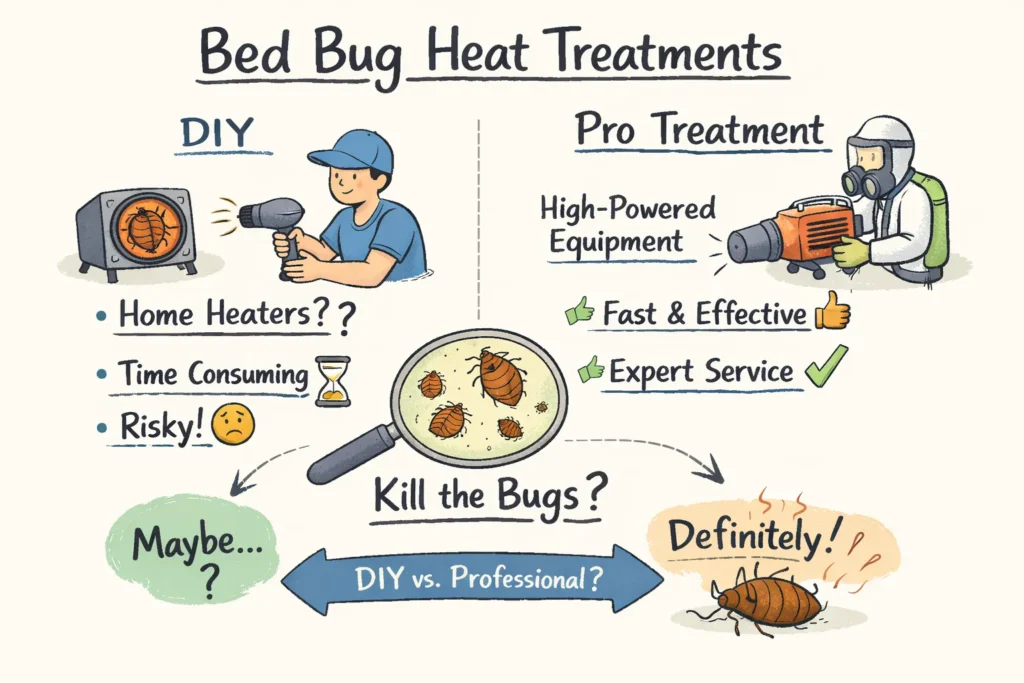
Practical takeaway: when done right, a professional heat job often eliminates an infestation in one visit. Chemical treatments usually need multiple rounds.
Industry and extension reports put single‑treatment success for properly executed heat at roughly 95% or higher. That’s not magic. It’s even heat, aggressive air movement, and careful monitoring. See peer‑reviewed studies for laboratory and field evaluations of thermal remediation.
Advantages of professional heat are straightforward. It’s fast. It reaches all life stages if lethal temps and exposure times are met. There are no lingering insecticide residues to worry about. The house is free of chemical restrictions after cooling.
There are tradeoffs. Heat leaves no residual protection — a new introduction will require another intervention. Heat can damage heat‑sensitive items. Upfront cost is higher than a single chemical spray.
Bottom line: heat and chemicals are tools. Use the right tool. Sometimes a hybrid approach — heat to knock down the infestation, encasements and targeted insecticide barriers to reduce reinfestation risk — gives the best outcome. Laboratory research also helps define the lethal temperature/time relationships technicians document during a treatment; see this laboratory research on lethal temperature/time for more detail.
DIY heat: when it’s sensible, and when it’s dangerous
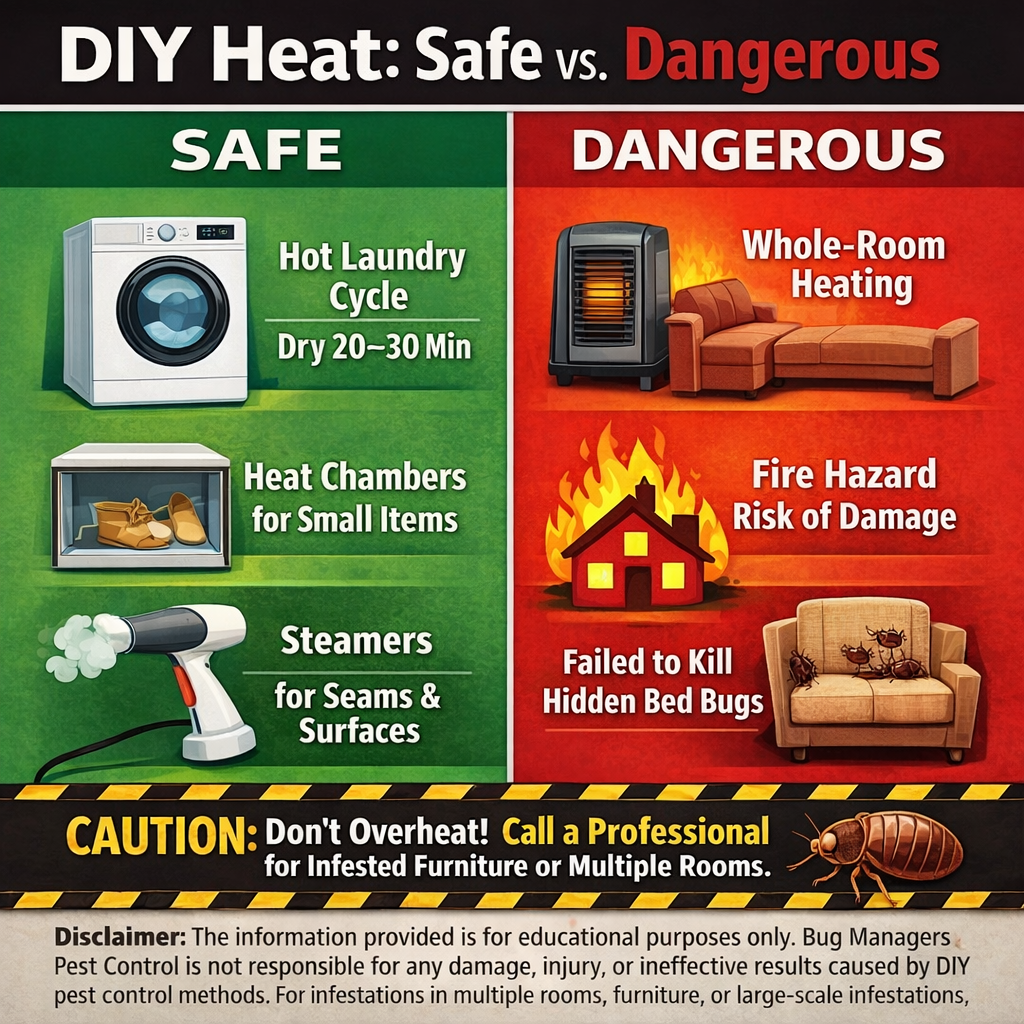
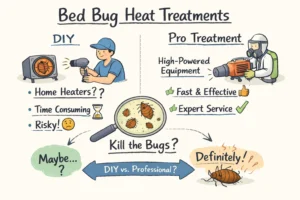
Rule of thumb: do DIY heat for small, contained items. Don’t try to bake an entire house yourself.
- Laundry and dryer. Wash on the hottest permitted setting and tumble dry on high for 20–30 minutes. Seal cleaned clothes in new bags afterward.
- Portable heat chambers or commercial heated boxes for shoes, toys and small items. Follow the manufacturer’s instructions.
- Steamers. Handheld steamers kill on contact and are useful for seams and exposed surfaces. They don’t reach voids or deep hiding spots.
Why whole‑room DIY usually fails: household space heaters and improvised tents rarely maintain consistent temperatures inside furniture or wall voids. That creates cold spots where eggs survive. There’s also a real fire risk and a good chance of warping electronics, vinyl or art.
Practical cautions: never use ovens or enclosed cars to “bake” items with people nearby. Don’t leave improvised heaters unattended. If the infestation is limited to clothing, linens or a suitcase, do the laundry trick and encase the mattress. If bugs are in furniture or multiple rooms, call a professional.
For a quick reference on safe DIY temperature targets for clothing and small items, see what temperature kills bed bugs from a thermal-treatment specialist.
What a professional heat treatment looks like for bedbugs, plus costs and a prep checklist
Work flow is simple and repeatable: inspection → written plan and quote → your prep → set up heaters, ducts, fans and sensors → raise and hold target temps → cool down → post‑treatment inspection and documented follow‑up. For an example of a prep checklist technicians commonly use, review this sample heat preparation checklist.
Equipment and monitoring matter. Technicians use industrial heaters and high‑volume fans to force hot air where it’s needed. Multiple temperature sensors are placed in mattress seams, bed frames, behind baseboards and in closets. Techs watch those readings and reposition equipment until every sensor reaches its target. Post‑treatment inspection and documented follow‑up are part of a professional process.
Typical costs (ranges depend on region and complexity): per room about $300–$1,200. Per square foot roughly $1.50 with common minimums (for example, a $1,000 minimum). Whole‑house treatments commonly run $1,000–$4,000; severe or large jobs can be higher. Size, clutter, infestation severity and travel all push price up.
Day‑of prep checklist — six essentials to follow before techs arrive:
- Remove or relocate electronics, houseplants, medications and perishables.
- Launder all bedding and clothing on high heat and seal in new bags.
- Pull furniture a few inches from walls and empty boxes from under beds.
- Deflate airbeds and drain waterbeds; raise mattresses off walls.
- Unplug small electronics and remove batteries from smoke/CO detectors if instructed.
- Mark heat‑sensitive items and discuss removal or protection with the company.
Heat‑sensitive items include some electronics, vinyl records, musical instruments, medications, plants, oil paintings and antiques. Options are removal, insulated wrapping or using targeted non‑heat treatments for those items.
Example of a reputable provider: a licensed, insured company will provide a free inspection, a written treatment plan, documented sensor logs and a follow‑up guarantee. That combination — planning, monitoring and a warranty — is how you buy one‑visit confidence.
Picking a provider : exact questions to ask and red flags to avoid
Warning: not all heat providers are equal. Ask the right questions before you sign.
Questions to copy into a call or email:
- What ambient temperature do you target, and how long do you hold it? Which lethal temps will you document?
- How many sensors will you use and where will they be placed? Will I get the sensor logs?
- Are you licensed and insured? Can you provide references or local reviews?
- What is included in the price and what are optional extras or extra charges?
- How do you handle damage claims? Is there a warranty or follow‑up visit policy?
Red flags to watch for: no clear temp/time answer; no sensor monitoring or refusal to share data; pressure to add uninspected chemical treatments; vague insurance or no damage policy. Ask for before/after temperature logs and photos. Look up local reviews and references.
Bug Managers meets these checks: licensed and insured crews, free inspections, documented thermal monitoring and follow‑up guarantees. Expect transparency. Anything less is reason to pause.
A short decision guide and next steps — what to do right now
If the problem is limited to laundry, clothing or a single suitcase: wash and tumble‑dry on high heat, seal items, and use mattress encasements. That’s often enough.
If you see bugs on multiple furniture pieces, in several rooms, or find eggs: call a professional for a whole‑room or whole‑home thermal remediation. Don’t gamble on improvised heat.
If your home contains many heat‑sensitive items or antiques: get an on‑site inspection to map options and protect valuables.
When you call a company, have these ready: photos of activity, a list of affected rooms, home size and a list of heat‑sensitive items. Bring the questions from the provider section above.
Heat works. Improper heat fails. If you want reliable, documented results, get an inspection from a licensed provider. If you’re in Ontario, Reliable Bed Bug Exterminators in Toronto — Bug Managers — offers free inspections and documented thermal treatments — we’ll tell you straight what will work and what won’t.
Two final points: remember the numbers (48°C adults; 54.8°C eggs; pros aim ~135°F ambient) and insist on sensor logs. Those two things separate hope from a documented kill. For further technical background and lab data on thermal kill rates, refer to the academic literature referenced above.