A bat in the living room is an emergency. An attic colony is a project. Treat them differently.
We do both. Bug Managers inspects, excludes humanely, and handles attic guano cleanup across Ontario and the GTA. We start with a dusk inspection and a plain plan — no drama, no guesswork.
This guide gives you three things: the immediate safety steps if a bat is inside, how to decide DIY versus professional work, and realistic timing and cost expectations. You’ll also get a short hiring checklist and a practical bat‑proofing checklist to keep them out for good.
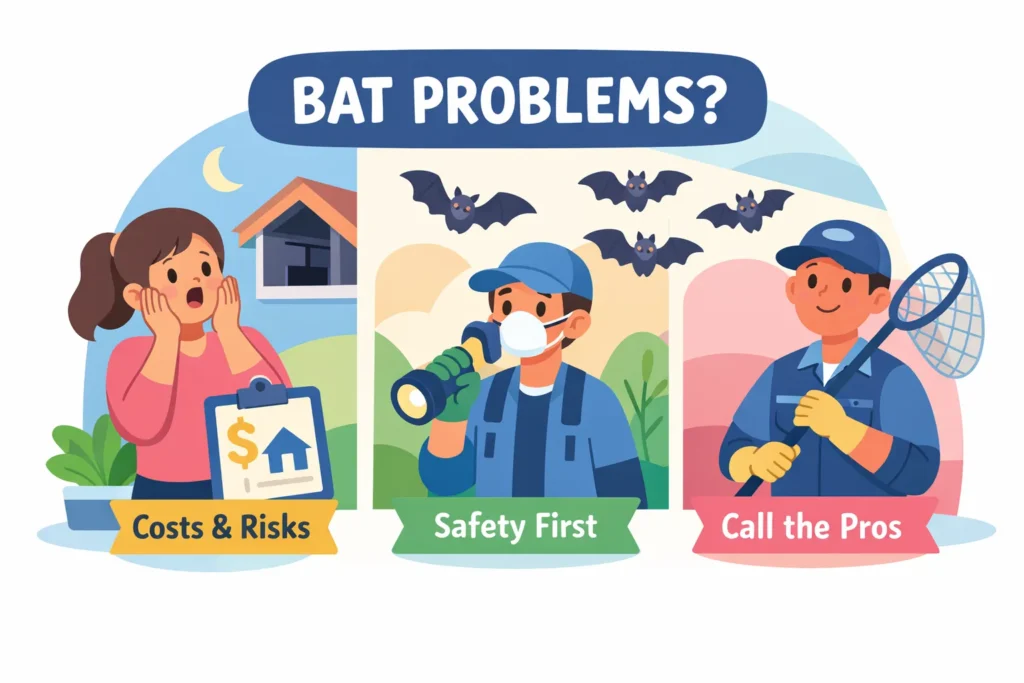
Decide fast: DIY or call a pro?
Don’t linger. Use quick triage rules to choose action now.
- Call a pro if: a bat was in a bedroom, a sleeping person might have been exposed, anyone was bitten or scratched, you see large guano piles, hear squeaking at dawn, or there are dozens of droppings. These are public‑health or structural problems that need trained handling.
- You can try carefully yourself if: it’s a single, daytime stray and you can safely isolate the room and direct it outside at dusk; the house has simple access and it’s outside maternity season. Simple cases can be handled with patience and the right precautions.
Rule of thumb: health concerns always win. Colony signs and complex rooflines lean toward a pro. Bug Managers offers free inspections and will tell you straight whether this is a DIY job or professional work.
If a bat is inside: immediate steps you can and cannot do
- Close doors and isolate the bat in one room. Wedge a towel under the door — bats squeeze through gaps as small as 3/8″. Keep kids and pets away.
- Turn off interior lights and open an exterior door or screened window to the outside. Bats fly at dusk; give it time to find the exit.
- Capture only if you are confident and calm. Wear thick leather gloves. When the bat is motionless, place a box or jar over it, slide cardboard underneath, and secure for transport. Do not touch with bare hands.
- If anyone may have been bitten or exposed, wash wounds immediately with soap and water and contact your doctor or local public health. Rabies is rare but fatal if untreated; post‑exposure treatment is urgent.
- Preserve the bat for testing when possible. Do not kill or discard it before health officials decide. Testing determines whether vaccines are required. For practical, safe handling guidance if you find a bat in your home, see the recommendations fromBat World.
- Who to call: local health unit, animal control, or a licensed wildlife removal service (for example, Bug Managers). They can collect, test, and handle removal safely.
Health, law and timing: why you can’t rush exclusion
There are rules and real hazards. Ignore them at your risk.
Rabies in bats is uncommon. But any suspected bite or exposure is treated as urgent. If there’s a possibility someone was in the same room while sleeping, call public health right away.
Attic guano is more than unpleasant. It can harbor fungal spores that cause histoplasmosis. Cleanup requires PPE, HEPA equipment, and sometimes insulation replacement. Don’t try this without experience and proper gear. If guano attracts secondary pests, consider professional Ant Control, Bug Managers to address infestations safely.
Timing matters. In Ontario, maternity season usually runs roughly mid‑June to early August. That’s when flightless pups depend on adults. Exclusions during that window are often prohibited or require special permits. Dates vary by jurisdiction. Check provincial guidance before taking action.
Some species are protected and white‑nose syndrome has driven tighter rules. Licensed pros know the limits and humane methods. For broader context on bat conservation and threats across the region, see the State of the Bats in North America, and for recent regulatory responses related to white‑nose syndrome refer to the government emergency listing information. Don’t improvise a mass eviction in June.
What removal looks like — humane methods, timeline and costs
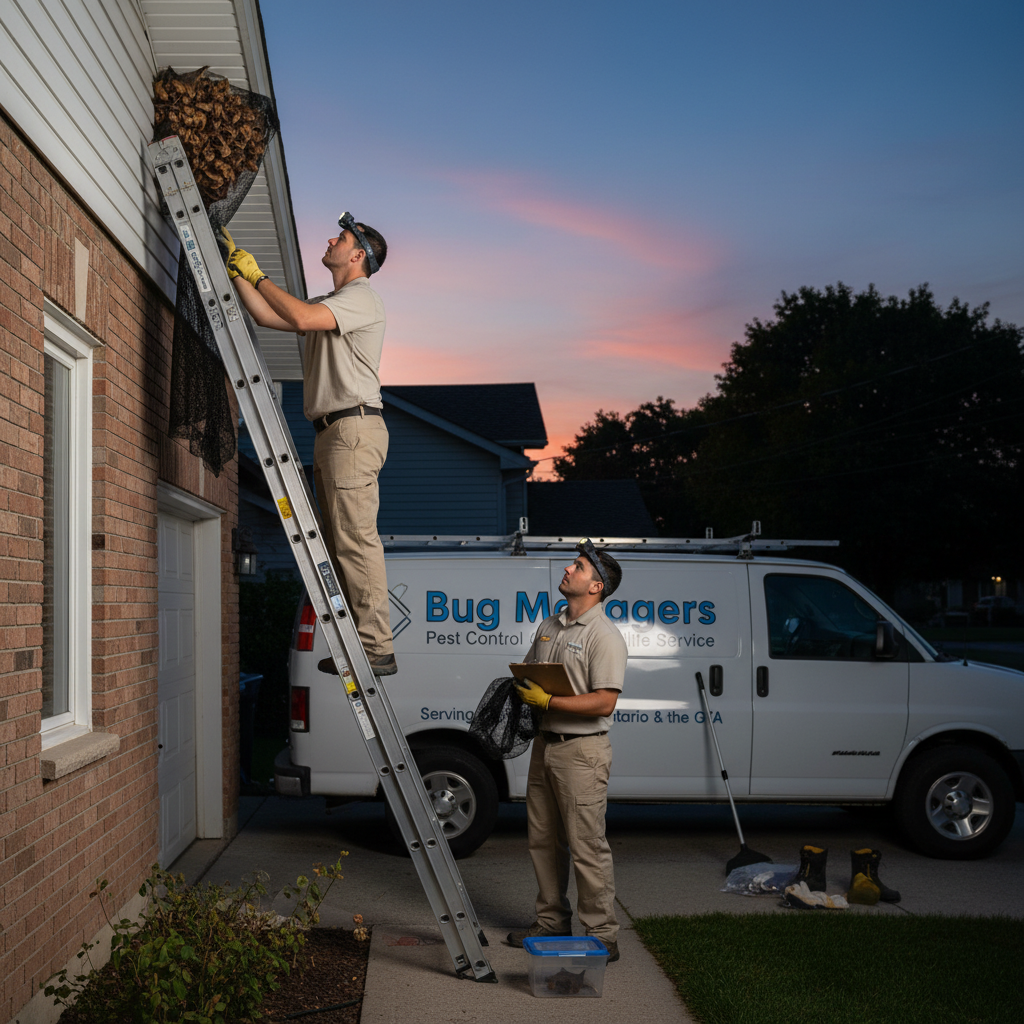
Here’s how a professional job typically flows and what drives price.
Typical workflow: a full inspection at dusk to find active entries; installation of one‑way devices over active points; monitoring for five to seven nights; permanent sealing of all entry points; scheduling guano remediation and repairs; and a follow‑up check.
Pros use one‑way valves, exclusion cones and tubes, chimney caps, stainless hardware cloth, caulk, expanding foam, flashing and soffit repairs. One‑way devices let bats leave at night but prevent re‑entry. They’re left in place for at least 5–7 nights to ensure no bats remain.
Guano cleanup can be simple or extensive. It may involve HEPA vacuuming, odor treatment, removal of contaminated insulation and replacement where needed. That work is a health safety job, not a weekend chore. For homeowner-focused cost references, this bat removal cost guide is a useful starting point when comparing quotes and scope.
| Service | Typical Cost Range (North America / GTA examples) |
|---|---|
| Small exclusion / basic job | $230–$1,500 |
| Standard exclusion (small colony) | $400–$1,500 |
| Large, complex jobs (200+ bats, structural repairs) | $5,000–$8,000+ |
| Attic guano remediation | $500–$8,000 (depending on scope) |
| Typical GTA starting prices (standard jobs) | ~$390–$650 (site quote required) |
What moves the needle: colony size, roof access and complexity, number of entry points, structural repairs, and whether insulation must be replaced. Local labour rates matter too.
DIY limits: you can install temporary one‑way devices if you know what you’re doing and it’s outside maternity season. Don’t attempt guano remediation without PPE and experience.
Get written bids that list inspection fees, exclusion work, sealing, guano cleanup, and warranty. Many companies credit the inspection fee if you hire them for full work.
How to hire a bat removal pro without getting scammed
Hire a trained, insured operator. Ask direct questions.
Credentials to request: NWCOA Bat Standards certification or equivalent, any required wildlife control license in your province, and proof of liability insurance. Certification means the tech has specific bat training — not just general pest experience.
Must‑have contract items: a clear scope of work, timeline, an itemized price breakdown, who handles guano cleanup and insulation replacement, warranty or guarantee, and a scheduled follow‑up inspection. Ask how they will assist with rabies testing if a bat must be submitted to health authorities.
Phone questions that cut to the chase: “Are you NWCOA bat‑trained? Can you document insurance? Do you do guano remediation and replace insulation? Do you follow seasonal exclusion rules?” If they hesitate, move on.
Red flags: no inspection before quoting, cash‑only offers, pressure to kill bats or use pesticides, inability to explain exclusion devices, or no written agreement.
What you should expect from Bug Managers: a free dusk inspection, a written plan showing active entry points, humane exclusion methods, insured technicians, and a follow‑up check. We keep promises simple: inspect, explain, fix, and clean up. For more on the company and services we provide, see our Trusted Wildlife removal company in Mississauga | Bug Managers.
Stop them coming back: a practical bat‑proofing checklist
Prevention is straightforward if you do it right once.
Seal entry points around the roofline, soffits, vents, chimneys, gable vents and eaves. Look for gaps 3/8″ and larger and seal with caulk, foam, or stainless mesh. Replace rotted wood and loose shingles. Install chimney caps and vent screens where needed — for professional roofline screening and chimney work see Bird Proofing Services, Bug Managers.
Attic care matters. Remove guano, replace contaminated insulation, and ensure proper ventilation. Deodorize and HEPA‑clean any affected areas. Trim tree branches away from the roof and remove easy access points.
If you want to help bats, install a bat house at a safe distance from the home. That gives the colony an alternative without inviting them back into your attic. We also handle other avian issues — see our Bird Control, Bug Managers and Bird Removal, Bug Managers services if birds are a concern around your roofline.
Monitor at dusk twice a year and after storms. If you prefer set‑and‑forget, consider a yearly maintenance plan. Bug Managers offers inspection and sealing touchups to keep your house bat‑proof.
Recap and next step
Don’t panic. Act sensibly. If exposure or a colony is likely, call a licensed professional. If it’s a single stray outside maternity season and you’re confident, use the safety steps above.
Want a plain answer and a written plan? Bug Managers will inspect at dusk, explain your options in plain language, and give a transparent quote. Free inspection. Humane methods. Clear warranty. Request service from Trusted Wildlife removal company in Mississauga | Bug Managers to schedule your dusk inspection and written plan.