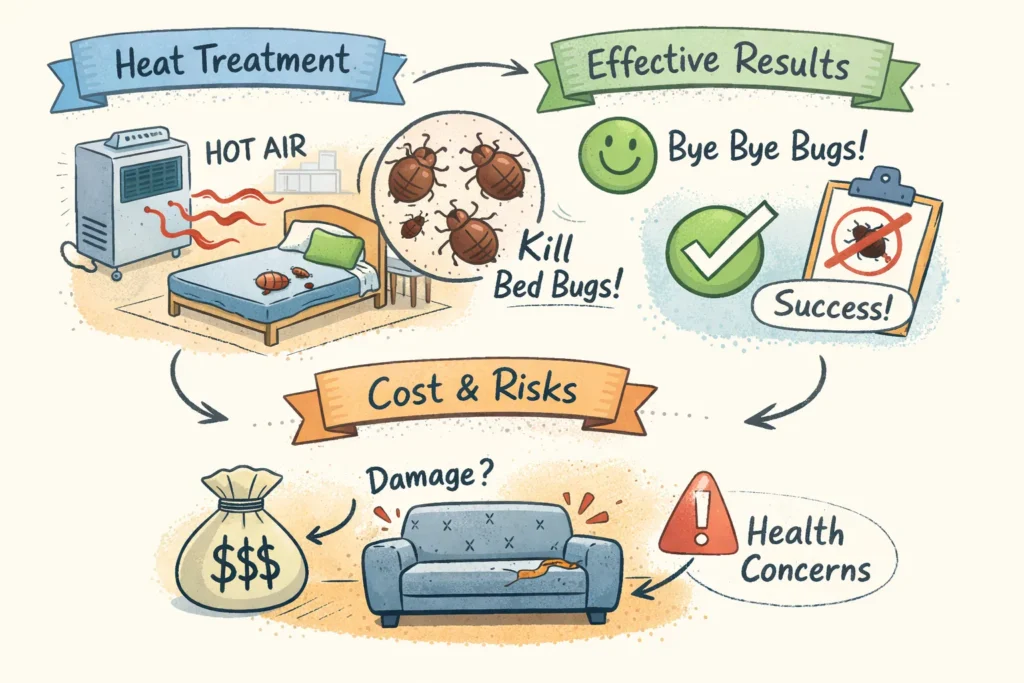
Bed bug heat treatment is one of the most effective pest control methods for eliminating bed bugs when it is done correctly and properly monitored. This professional bed bug heat treatment process uses controlled high temperatures to kill bed bugs at every life stage, including eggs hidden inside furniture, walls, and mattresses.
A properly documented bed bug heat treatment can save weeks of repeated chemical treatments — provided the job reaches lethal core temperatures and preparation instructions are followed carefully. At Bug Managers, we perform monitored whole-home and targeted bed bug heat treatment services in Ontario using sensors, a written treatment plan, and service guarantees.
In this guide, you’ll learn how bed bug heat treatment works, what it costs in Ontario, how to prepare your home, and how to choose a reliable pest control professional.
Cost of Bed Bug Heat Treatment in Ontario and the GTA: What Homeowners Should Expect
Short answer: pick thermal remediation for bed bugs when the infestation is widespread, when you need a chemical‑free option, or when you must remove bugs quickly.
Heat usually wins for multi‑room infestations, mattresses and furniture infestations, allergy‑or chemical‑sensitive households, and time‑sensitive moves. Heat reaches inside mattresses, box springs and sofas in ways sprays often cannot.
Don’t pick whole‑home heat for a tiny, isolated spot that’s cheaper to spot‑treat. Also avoid full‑house heat without a plan if you have many irreplaceable heat‑sensitive antiques and you can’t protect or remove them. And if budget is the overriding constraint, a targeted hot‑box or steam session might be smarter.
Practical rule: if you find bed bugs in multiple rooms, call a pro. If it’s a single couch, suitcase, or a small patch, consider a hot‑box, steam, or targeted treatment first.
Takeaway: heat is powerful and fast. It’s also more expensive. Use it when you need full‑house coverage or a chemical‑free, quick solution.
How heat treatments actually kill bed bugs — temps, times, and the science
The numbers you need: professionals target ambient air between 120–140°F (49–60°C) while verifying that core hiding spots reach at least 122°F (50°C). Typical monitored runs are 6–8 hours at high ambient temps; 24 hours is ideal for deep penetration in complex homes.
Why those higher numbers? lab kills reported at lower temperatures assume direct exposure. Real homes have insulated cracks, packed furniture and cool refugia. So we raise ambient temperatures and sustain them longer to force heat into those hiding spots.
Eggs are tougher than adults. They need higher temps or longer exposure. That’s why pros aim for higher targets and longer soak times rather than trusting a quick blast.
Can bed bugs stand the heat? Sensors are everything. Technicians use high‑capacity heaters and strong fans and place thermocouples in mattresses, baseboards, behind trim and sometimes into wall voids. The team watches temps, repositions equipment, and documents every reading. If you don’t get a temperature report, you don’t have proof the job worked.
For localized items, hot‑box and steam work well. Many teams pair heat with follow‑up inspections or spot pesticides to be certain nothing survives in inaccessible voids.
Real costs — what you’ll pay and what changes the price
Expect a standard house or apartment to fall between roughly $1,200 and $3,000. Many companies charge about $1–$3 per square foot. Smaller one‑bedroom units can run $800–$1,500; severe infestations and larger homes push $3,000 and up.
Prices vary because of home size, infestation severity, building type (single family vs multi‑unit), difficulty of access, and the labour needed to prepare the space. Add‑ons like item hot‑boxing, steam for mattresses, chemical follow‑ups, guarantees and re‑inspections raise the ticket.
How to budget: get 2–3 itemized quotes. Ask for per‑room and per‑service breakdowns. Be wary of bargain flat rates that skip sensors and monitoring — they often cost more in repeat work.
Money‑smart tip: a monitored heat treatment with a written guarantee is usually cheaper than repeated chemical callbacks and the stress of living with an ongoing infestation.
Prep checklist — exact steps to do before and after a heat treatment

Heat has to reach hidden spots. Clutter and sealed items create cool refugia and raise the chance of survivors. Do the prep carefully; it matters.
- Stop using pesticides. Don’t fog or dust before a heat run — it interferes and is pointless when heated.
- Wash and dry bedding and clothing on high heat. Seal a clean set in a new bag for the day of treatment.
- Declutter living areas. Remove trash and open closet and drawer doors so heat circulates.
- Move beds and furniture away from walls per the tech’s instructions. Prop mattresses and box springs for airflow.
- Remove or protect heat‑sensitive items: plants, aerosols, oil/acrylic paintings, old photos, musical instruments, and delicate antiques.
- Arrange pet care. Consult your provider about fish tanks; some steps are required for aeration or temporary removal.
- Unplug non‑essential electronics unless your provider instructs otherwise; sometimes leaving certain electronics in place helps reach bugs inside them.
- Inform building management or neighbours in multi‑unit settings and secure sprinkler heads if necessary.
Day of: you will vacate the home for the duration (typically 6–12+ hours). Technicians place heaters and sensors, then monitor remotely or on site. Expect some noise and hot air movement.
- After the run, let the house cool before re‑entry. Rewash any items you’re unsure of. Plan a follow‑up inspection — many pros schedule at least one re‑visit.
Risks, common failure modes, and how pros prevent damage
There are real risks. Electronics can overheat. Wooden furniture or floors can warp if humidity falls and heat is uneven. Vinyl or thermofoil can distort. Sprinkler heads can activate if not protected.
Common failures happen because of uneven heating. Cool pockets hide survivors. Poor sensor placement or insufficient soak time causes callbacks. In multi‑unit buildings, movement between units can lead to re‑infestation if adjacent units aren’t treated or sealed; consider coordinated multi‑unit pest control in Vaughan when units are connected.
Experienced technicians prevent problems by using multiple thermocouples in known hiding spots and documenting temps. They move fans and heaters during the run to kill cool pockets. They advise removal or wrapping of heat‑sensitive items and take sensible humidity measures where feasible. They also carry liability insurance and provide damage coverage policies.
Ask any provider: Do you carry insurance? Will you document temps and give me a report? How will you protect antiques, electronics and sprinklers? If a company won’t answer those plainly, walk away.
How to hire and vet the right pro — questions, red flags, and what a good contract looks like
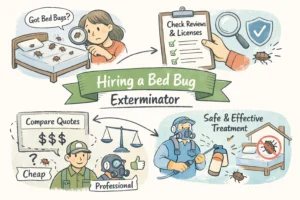
Ask these directly. Do you use sensors and thermocouples? Will I get a temperature report? What target temps and durations do you aim for? Are you licensed and insured? Is there a written guarantee, and what does it cover? How many heat jobs have you done in homes like mine? What prep do you expect from me, and are there extra fees for poor prep?
Red flags: no written plan, no monitoring, bargain flat rates that skip sensors, cash‑only demands, no contract or insurance. Those are the most reliable signs the job will be under‑engineered.
A strong contract lists itemized price, scope (whole‑home vs targeted), exclusions, minimum temps and duration, monitoring and reporting, guarantee terms, and an insurance disclosure. It’s that simple.
If you want local examples of services and pricing while you compare providers, check our pages for Pest Control Services in Milton and other service areas. For quick answers to common questions, see our FAQ, Bug Managers.
As a local, licensed option, Bug Managers offers monitored heat runs, written temperature reports and clear guarantees. Call us and expect a written plan, a pre‑treatment walkthrough, on‑site monitoring, and a follow‑up inspection.
Heat is powerful. The companies that succeed are the ones that measure and document it. If they can’t or won’t show you the numbers, don’t trust them with your home.
Heat treatment removes bed bugs when it is done thoughtfully and documented. Now you know the temps, the costs, the prep, the risks, and the right questions. If you want help in Ontario, Bug Managers will inspect, show you the plan, and put the numbers in writing. No promises without proof.