Introduction
You found roaches. You want them gone—and for good.
At Bug Managers we’ve seen every trick people try. This guide cuts the nonsense, lays out DIY steps that actually work, explains when to call a pro, gives realistic costs and timelines, and ends with a prevention checklist you can follow tonight.
Spot the species and measure the problem
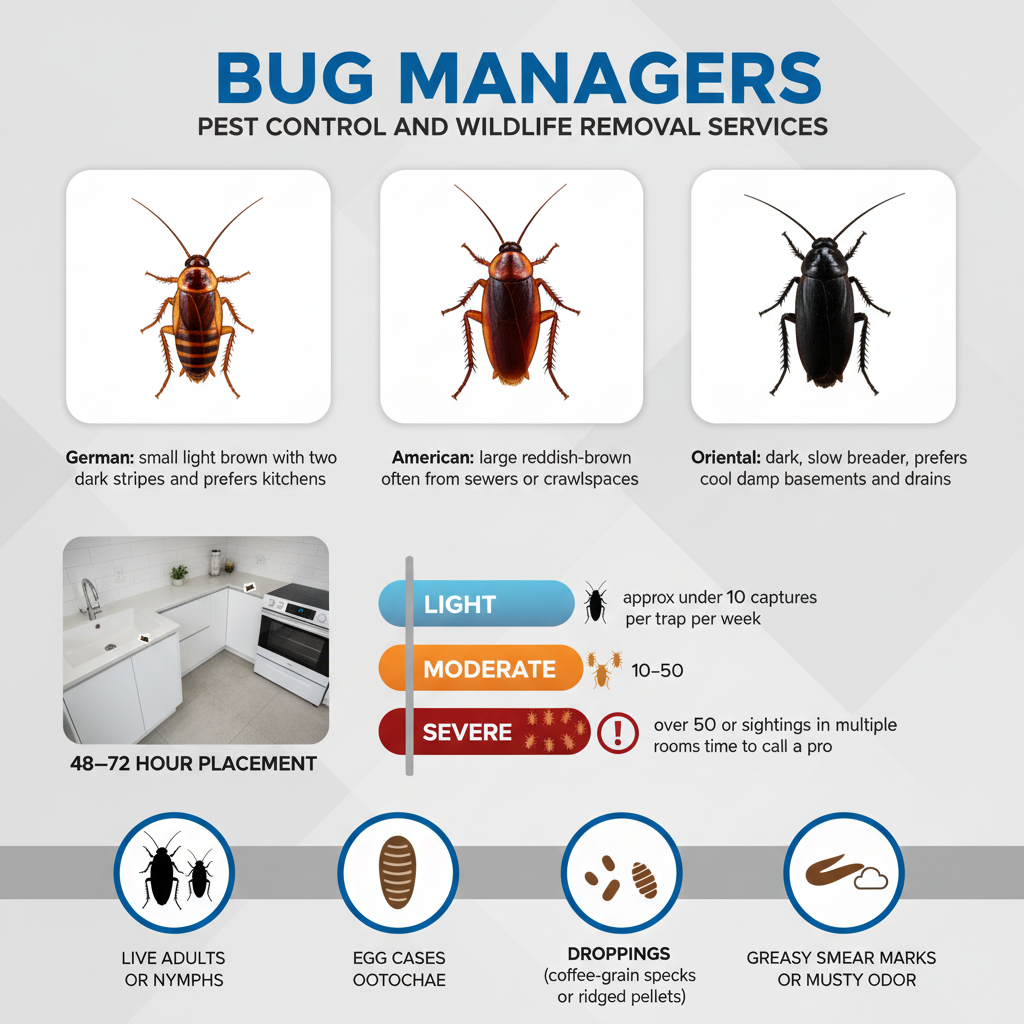
Identification changes the plan. A German roach problem is different from a water‑bug problem.
German: small, light brown with two dark stripes; breeds fast and prefers kitchens.
American: large, reddish-brown; often comes from sewers or crawlspaces.
Oriental (water bug): dark, slow breeder; likes cool, damp spots such as basements and drains.
Quantify the problem with sticky traps in kitchens and bathrooms for 48–72 hours. Under ~10 captures per trap per week ≈ light. 10–50 ≈ moderate. More than 50, or sightings in multiple rooms, ≈ severe and time to call a pro.
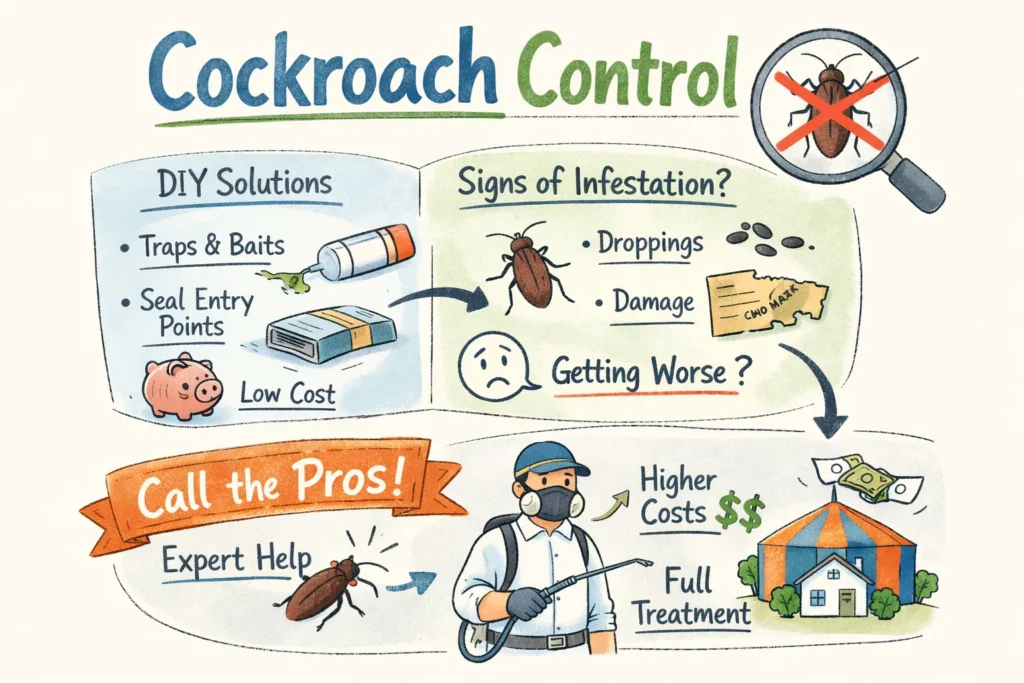
Look for the signs that matter: live adults or nymphs, egg cases (oothecae), droppings (coffee‑grain specks or longer ridged pellets), greasy smear marks, or a musty odor. Take photos and, if safe, a small sample of droppings—pros will ask for those details.
DIY treatments that actually work (and what to avoid)
Do the sensible things first. Sanitation, targeted baiting, and sealing will solve many small problems without pesticides all over the place.
Inspect
Open cabinets, pull out the fridge and stove if you can, check under sinks and around drains, and peer into baseboard voids and behind appliances. Find where they live, not just where you see them.
Sanitation
Remove crumbs, clean up spills, store food in sealed containers, and empty pet food at night. Fix leaky taps and pipes. Removing food and water makes baits far more effective.
Baiting
Use quality gel baits in pea‑size dots placed in cracks, behind appliances, and along baseboards—not on countertops. Place baits where roaches travel, such as inside cabinets and near drains. Gel baits rely on feeding and sharing to reach the colony.
Dusts and IGRs
Boric acid or food‑grade diatomaceous earth applied as a thin, undisturbed dust in voids can help; keep dusts out of reach of children and pets. Insect growth regulators (IGRs) prevent young roaches from maturing and reduce reproduction, but they work slowly and should be part of a broader plan.
Timelines and follow‑ups
Expect initial die‑off in 1–3 days after baiting. Meaningful control usually takes weeks to months. Recheck bait locations and sticky traps every 2–4 weeks and retreat or refresh gels as they dry.
What to avoid
Foggers and broadcast sprays are counterproductive. They scatter roaches, leave residues, and rarely fix the nesting sites. Never spray over bait spots or mix insecticides—do the basics well first.
Professional treatments: what pros do, effectiveness, and how Bug Managers works
Call a professional when the infestation is widespread, persistent, or you’re dealing with German roaches in kitchen areas. Pros have tools and training that matter.
Gel baits (indoxacarb, fipronil, dinotefuran) are a technician’s primary weapon. Properly placed gels deliver colony‑level knockdown because roaches feed and share. Applied correctly, these products outperform consumer bait stations.
IGRs are used alongside baits to stop future generations. They don’t produce instant results but are essential for long‑term control.
Boric acid dusts and crack‑and‑crevice treatments provide long residual control in wall voids and other hidden spaces where gels can’t reach.
Heat treatments and fumigation are thorough but disruptive. They’re reserved for extreme, building‑wide infestations or cases where chemical options won’t reach all life stages.
A typical pro workflow is straightforward: inspect, map harborage, place baits/dusts/IGRs in targeted spots, advise on sanitation and sealing, then follow up every 2–3 weeks until counts drop. Most cases require 3–4 visits to reach control.
Why pros beat DIY on tough jobs: access to professional formulations, precise placement into voids, experience reading harborage patterns, and disciplined follow‑up.
At Bug Managers we’re licensed, insured, and eco‑minded. Learn more on our About Bug Managers page. Our technicians use integrated pest management (IPM) principles and targeted baits, provide free inspections and written plans, and offer proofing estimates plus a warranty on follow‑ups. We cover the GTA (see our Pest Control Vaughan service area page) and focus on solutions that are safe for families and pets.
For help identifying species that change treatment plans, consult Orkin’s guide to cockroach species.
Costs and timelines: real numbers and what drives price
Price depends on three things: severity, property size, and the treatment chosen. Here are realistic ranges.
- Small/light infestations: DIY supplies $20–$100; a pro single visit $100–$250.
- Moderate infestations: pro packages typically $200–$600 with 2–4 visits.
- Severe or building‑wide infestations: costs can climb into the thousands depending on fumigation, heat, and repeated treatments.
Price increases when multiple units are involved, the home is large, fumigation or heat is needed, or structural proofing work is required. DIY can take weeks to months; a pro usually gets visible results in days and control in weeks, with follow‑ups every 2–3 weeks until counts fall.
Get a reliable price by insisting on an on‑site inspection, a written scope of work, and a follow‑up guarantee. Bug Managers offers free inspections and clear written quotes so you know what you’re paying for. For a national cost overview, see This Old House’s roach exterminator cost guide.
Safety rules and protecting kids, pets and food
Labels are law. Follow them.
Regulations require child‑resistant packaging for many residential pesticides. Read the label and follow re‑entry times and protective instructions exactly. For federal pesticide rules and requirements, consult the EPA’s FIFRA overview.
In food prep areas, residual insecticides should be confined to cracks and voids. Clean exposed surfaces after treatment and keep food sealed during application.
In addition to label directions, cockroaches can pose health risks for sensitive people; see the National Center for Healthy Housing’s guidance on cockroach health hazards and prevention for more information.
Avoid foggers and broadcast sprays indoors; they’re often more hazardous than helpful. If a pro is treating, ask for the product names and safety data sheet and follow their prep checklist. Check our FAQ, Bug Managers for common prep questions.
Homeowner checklist before treatment: seal or remove food, cover aquariums, securely confine pets, and ventilate treated areas if instructed. Professionals should explain re‑entry times and provide documentation of products used.
Bug Managers favors eco‑friendly options where practical and always explains safety steps before and after service.
Long‑term prevention checklist — keep roaches out for good
- Clean nightly: no exposed food, crumbs, or standing pet food.
- Control moisture: repair leaks, improve ventilation, and remove condensation.
- Seal entry points: caulk cracks, install door sweeps, and use mesh around vents and pipes.
- Declutter: remove paper piles, cardboard, and compost near foundations.
- Monitor: keep a couple of sticky traps in key spots and check them monthly.
- Schedule maintenance: quarterly or bi‑annual inspections if you live in a multi‑unit building or have had prior infestations.
- Professional proofing: for a warranty, have a company perform physical proofing—seal gaps, fit door sweeps, and treat voids. Bug Managers offers proofing and maintenance plans for lasting protection, and can bundle other services likeAnt Control, Bug Managers.
If sticky traps show multiple captures, you find egg cases, or DIY hasn’t dented the problem, call a licensed pro. Book a free inspection with Bug Managers and get a written plan—not band‑aids. After you book, you’ll receive confirmation and next-step information (see our Thank You, Bug Managers page).