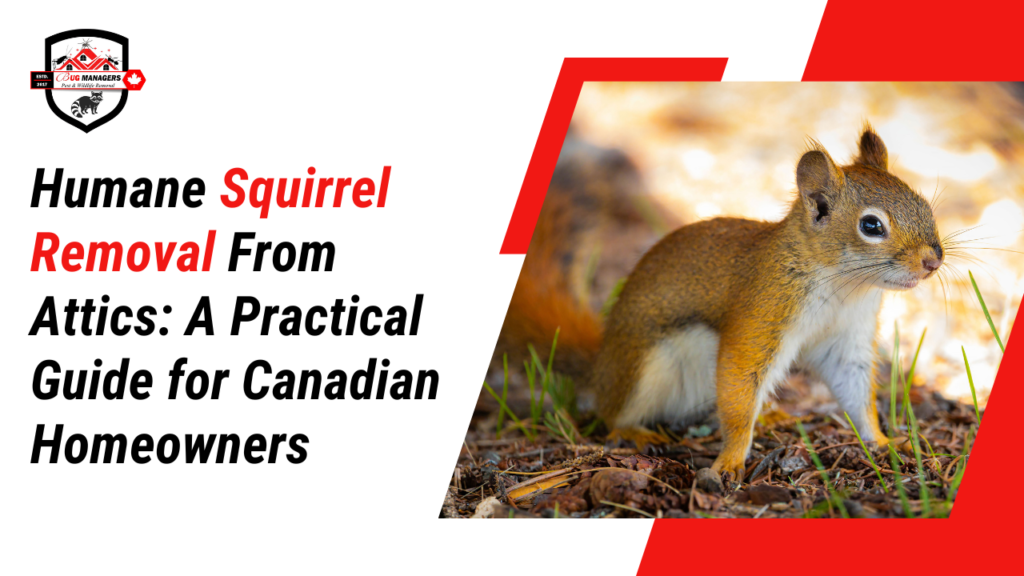
If you hear quick scratching, running, or light thumping in your attic, it could be squirrels.
In Canada, this is very common. Squirrels are smart. They climb well. They can squeeze through weak spots on roofs and vents. And once they find warmth, they may stay.
This blog explains how to deal with attic squirrels in a humane way. It also explains what not to do. The goal is simple. Get them out safely, and stop them from coming back.
Why Squirrels Choose Attics in Canada
Squirrels do not enter homes “for fun.” They usually want shelter.
Common reasons include:
- A warm place during cold weather
- A quiet nesting spot
- A safe place to raise babies
- Protection from wind, rain, and predators
In Alberta’s guidance on red squirrels, the province notes they can live in buildings and cause real damage, including destroying insulation and chewing electrical wires.
That is one reason you should take attic squirrels seriously, even if they seem harmless.
Clear Signs You Have Squirrels in the Attic
Squirrels are usually active in the daytime, especially early morning and late afternoon.
Common signs include:
- Fast running or scratching sounds above the ceiling
- Chewing sounds
- Small bits of insulation or wood debris near attic access
- Damage around roof vents, soffits, and roof edges
- A strong, dusty or “animal” smell in the attic
- Droppings in one area (often near a nest spot)
If you are unsure, do not guess. Mice, rats, raccoons, and squirrels all need different handling and timing.
Why “DIY Quick Fixes” Often Make It Worse
Many homeowners try one of these first:
- Seal the hole right away
- Put out loud music or bright lights
- Use strong smells
- Try to trap and relocate the squirrel far away
These moves often fail for two big reasons.
First, you might block the exit while the squirrel is still inside.
That can lead to panic chewing and more damage.
Second, you might separate a mother from her babies.
That is where humane removal matters most.
The Toronto Wildlife Centre warns that one-way doors can be risky during baby season. They explain that one-way doors are a better option between November and February, when tiny babies are unlikely, and that between February and October you can accidentally lock the mother out and trap babies inside.
So the biggest mistake is rushing.
What Humane Squirrel Removal Means
Humane squirrel removal means:
- The squirrels leave safely
- Babies are not left behind
- The entry points are sealed the right way
- Your home is protected so the problem does not repeat
In most attic cases, the most effective humane approach is called exclusion.
Exclusion means you allow the animal to leave and then you block re-entry with solid repairs.
The Legal Reality: Relocation Is Not a Simple Option
A lot of Canadians still think, “I’ll trap it and drive it far away.”
In many places, that is not allowed.
Ontario’s rules for dealing with wildlife damaging private property say captured live wildlife must be released within 1 kilometre of where it was captured.
The City of Toronto’s wildlife trapping page also lists the same “within 1 kilometre” requirement and adds you need permission to release on private property.
The City of Mississauga says trapping and relocating healthy squirrels from their home territory is illegal in Ontario.
This matters for two reasons.
- Driving it “far away” may break rules.
- Even if you release it close by, it may come back if the entry point is still open.
That is why humane exclusion is often the best long-term answer.
The Humane Step-by-Step Plan That Works
Step 1: Find the True Entry Point
This is the most important step.
Common squirrel entry points include:
- Roof vents with weak or damaged covers
- Soffits (especially loose corners)
- Gaps where roof lines meet
- Fascia boards weakened by water damage
- Openings near chimneys
- Construction gaps that were never sealed well
If you only “patch what you see,” you can miss the real entry.
Step 2: Check for Baby Season Before You Use Any One-Way Door
In Canada, baby timing can vary by region and weather.
But the risk window is large.
Toronto Wildlife Centre’s guidance is very clear about timing. They describe one-way doors as a good option mainly between November and February because babies are unlikely, and they warn about mother-baby separation risks from February to October.
If you suspect babies, the plan must be different.
The focus becomes safe reunification and removal without leaving young behind.
Step 3: Use a One-Way Exit Only When It Is Safe
A one-way exit can work well when:
- You have found the main entry
- You have checked for other openings
- It is not a high-risk baby period, or you have confirmed no babies
- You are ready to seal everything once the squirrels are out
The City of Ottawa’s wildlife conflict guidance describes one-way doors as a way to let animals leave but prevent re-entry, followed by sealing entry points.
A simple but important point is this.
If there are other open routes, a one-way door will not solve the problem. The animal can just use another gap.
Step 4: Seal and Reinforce After You Confirm They Are Out
Do not rush this step.
Once you are confident the attic is empty, you seal and reinforce.
A strong “wildlife-proof” repair often includes:
- Heavy-gauge metal screening for vents
- Solid soffit and fascia repairs
- Proper roof-vent guards
- Closing small gaps along roof edges
- Reinforcing weak corners that squirrels can pry or chew
This matters because squirrels are persistent. If a repair is weak, they may reopen it.
Also remember the risk of damage. Some squirrels chew building materials. Alberta notes that red squirrels can damage insulation and chew electrical wires.
Step 5: Clean Up Safely (Treat Droppings as a Health Risk)
Squirrels are rodents.
Rodent droppings and nesting material should be handled carefully.
The Government of Canada’s hantavirus prevention page gives clear cleaning safety steps for rodent droppings. It advises wearing gloves, not sweeping or vacuuming droppings, and wetting them with disinfectant or a bleach-water mix before cleanup.
Some Canadian public health units also repeat the same idea: gear up, spray first, avoid dry sweeping or vacuuming, then wipe carefully.
Even if your main worry is “just squirrels,” safe cleanup protects your lungs and reduces the chance you spread contaminated dust through the home.
What You Should Do Today If You Hear Squirrels
If you need a simple plan you can follow immediately, do this:
- Keep pets away from the attic access area
- Do not seal openings yet
- Walk around the home and look for damage at roof vents, soffits, and roof edges
- Listen for repeating patterns (daytime activity is common with squirrels)
- If you suspect babies, do not install a one-way door on your own
- Plan for humane exclusion and proper repairs
If you are tempted to climb on the roof, be careful. Roof work can be dangerous, especially in winter or after snow.
Safety Tips for Families and Pets
Most of the time, squirrels avoid people.
But any wild animal can bite or scratch if stressed.
Canada’s public health guidance on rabies prevention says to stay away from sick or dead animals and supervise children around animals.
This is general advice, but it is still smart. The safest approach is no direct contact.
If a bite or scratch happens, treat it seriously and contact local health services.
How to Know the Problem Is Truly Solved
You can feel confident when:
- You no longer hear activity for several days
- The main entry point is repaired with durable materials
- Nearby weak areas are also reinforced
- Any droppings and nesting material were cleaned safely
- You have reduced “attractants” like easy food sources outside
If only one piece is missing, the problem can return.
Conclusion
Humane squirrel removal is not about tricks or quick sprays.
It is about correct timing, safe exclusion, and strong repairs.
It also means respecting local rules, because in places like Ontario, relocation is tightly limited and long-distance relocation may be illegal.
When you focus on exclusion and prevention, you usually get a cleaner and longer-lasting result.
If you want this handled through a humane inspection-and-exclusion approach, you can consider Bug Manager once you are ready.