
Intro
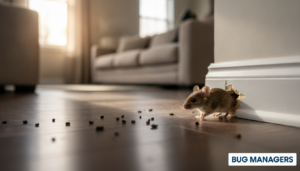
Rats are a serious household risk, capable of spreading disease, contaminating food, and damaging wiring and insulation. Acting quickly—but safely—is critical. Keep children and pets away from affected areas, document signs like droppings or gnaw marks, and avoid risky DIY methods that can worsen the problem.
When you need to stop rats fast, hiring a licensed exterminator near you ensures safe, effective rodent control. Professionals use exclusion-first methods—sealing entry points, removing infestations humanely, and providing follow-up—to protect your home long term.
Five‑minute action plan: what to do now
- Safety first: keep children and pets out of affected rooms; don’t touch droppings with bare hands. This prevents disease exposure and accidental spread.
- Contain food sources: move pet food into sealed containers, close garbage lids and secure compost. Remove incentives so rats stop visiting while you wait for help.
- Preserve evidence: don’t sweep or vacuum droppings; photograph activity areas and runways for the technician. Photos speed diagnosis and cut inspection time.
- Temporary controls: if you’re comfortable, place snap or electronic traps along walls, perpendicular to the wall, baited with peanut butter. Avoid scattering loose poison — it creates secondary poisoning and hidden carcasses.
- Clean safely: ventilate first, then wet surfaces with disinfectant; wear gloves and a mask while removing droppings. Dry sweeping spreads particles into the air.
These steps limit harm and make the professional diagnosis faster and cheaper.
Where to search and how to vet local rat pros
Search local maps for Effective Rodent Control Services in Brampton | Bug Managers and read websites, reviews, and photos. Proximity helps for emergencies, but credentials and method matter more for long‑term success.
Verify licensing and insurance. Ask for license numbers and proof of liability coverage. Confirm the technician’s certifications. A true pest control company will share these without hesitation.
Look for Integrated Pest Management (IPM) language: inspection, trapping first, exclusion, sanitation and minimal chemical use. Avoid companies that pitch poison as the primary answer.
Confirm scope up front: a proper quote includes inspection, exclusion (sealing), carcass removal if needed, cleanup recommendations, and scheduled follow‑ups. Guarantees should be written and time‑limited.
Quick questions to ask on the phone or at the door
- Are you licensed and insured? Can I see the certificate?
- What exact methods will you use in my situation?
- Do you offer exclusion (sealing entry points) and is that included in the quote?
- What are your follow‑up terms and guarantee?
- Can you provide references or before/after photos?
Prefer written answers. Get two itemized quotes and don’t hire on price alone.
Local example: the ideal vendor in the GTA lists certifications, offers same‑day inspection, uses eco‑minded traps and exclusion materials, and provides a written pest‑proofing guarantee — this is the profile to prioritize (Affordable Pest Control Services in Mississauga | Bug Managers is an example of this approach in the Greater Toronto Area).
What reputable companies do: inspection → treatment → follow‑up (and realistic timeline)
Inspection
A pro inspects to identify species, entry points, droppings, runways and nests. That matters because Norway rats and roof rats behave differently, and treatment, materials, and time estimates change accordingly. For industry guidance on monitoring and inspection best practices see the Rodent Inspection and Monitoring guide.
Treatment options explained
Trapping. Snap and electronic traps deliver immediate results and avoid dead‑rat odor when carcasses are retrieved promptly. Placement is along known runways and walls—rats hug edges.
Baiting. When used, rodenticides go inside tamper‑resistant bait stations and are documented. Baiting is effective but carries secondary‑poisoning risks and is a second‑line tool in many IPM plans.
Exclusion. Steel mesh, flashing, caulk and proper chimney/vent covers block re‑entry. Exclusion is the investment that prevents repeat calls.
Sanitation and cleanup. Remove attractants, decontaminate droppings, and replace contaminated insulation if needed. Cleanup reduces disease risk and discourages survivors from returning.
Realistic timelines
Expect initial activity reduction within 24–48 hours. Noticeable control in 1–2 weeks. Full clearance for severe infestations often takes 2–4 weeks with follow‑ups. Typical on‑site visits run 30–120 minutes; multiple visits are common.
A good plan names outcomes and dates — demand both on paper. For a practical breakdown of how long treatments typically take, see this overview on how long pest control takes.
Costs decoded: what you’ll likely pay and why prices vary
Rat control pricing varies by region, severity and access. Here are typical ranges you should expect:
Inspection: $75–$150, often deducted from the total if you proceed.
Initial treatment: $200–$600 for common residential jobs using traps and targeted measures.
Full eradication for severe cases: $450–$1,200+; complex properties cost more.
Rat‑proofing/exclusion: $150–$800+ depending on openings, materials and labor.
Follow‑ups and plans: Single follow‑up visits $60–$100; quarterly service $75–$150; annual plans $250–$450.
Why prices rise: infestation severity, home size, attic/roof access, required repairs, emergency/same‑day response, and local labor rates. Ask for itemized estimates. Check if follow‑ups and exclusion are included or billed separately.
For additional cost guidance and average pricing by project type, consult HomeAdvisor’s rodent removal cost guide. Beware very low quotes. They often skip exclusion or monitoring, which means you pay again later.
Safety, eco‑friendly choices and guarantees you should demand
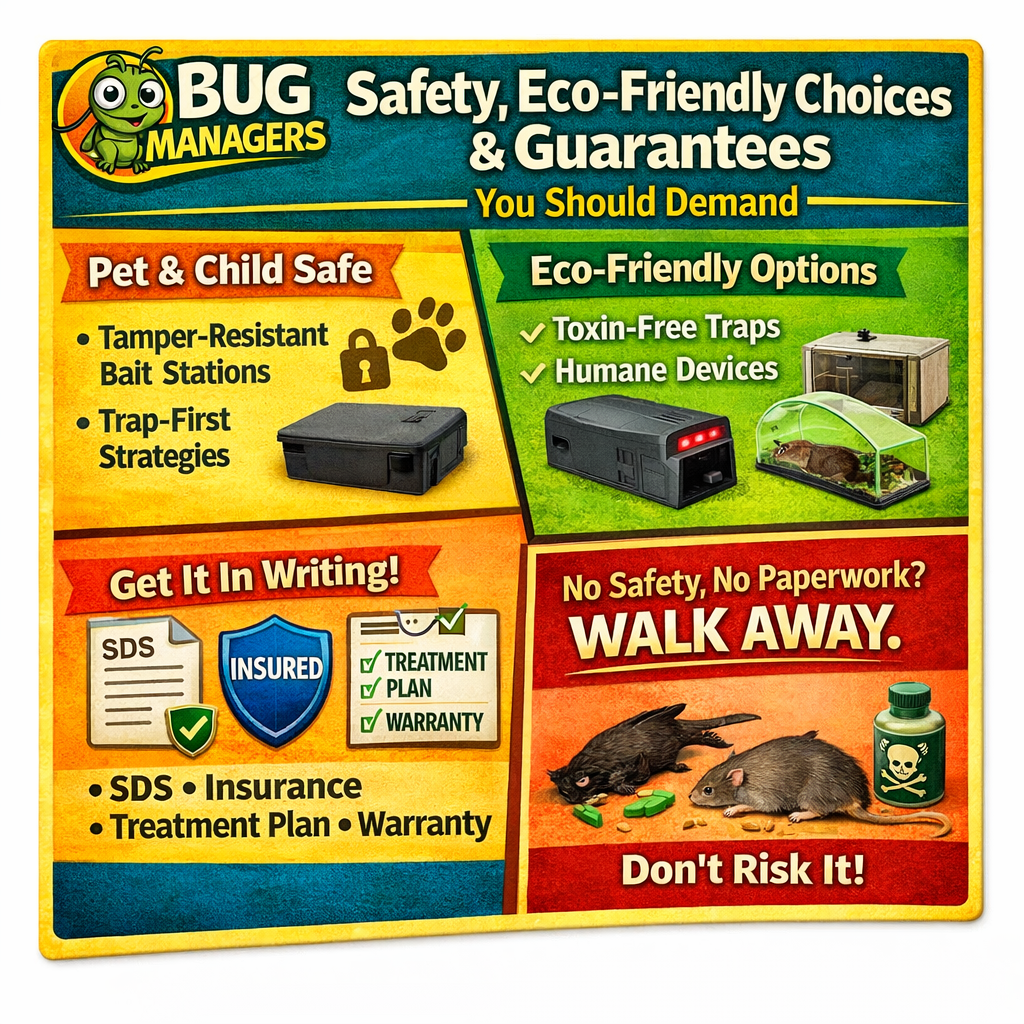
Safety is non‑negotiable. Ask about pet‑ and child‑protections: tamper‑resistant bait stations, locked boxes, and trap‑first strategies. If technicians dismiss this, leave.
Eco options that work: electronic quick‑kill traps and humane devices (e.g., automatic toxin‑free traps) reduce chemical use and secondary risks. Targeted trapping combined with exclusion is often as effective as broad‑spectrum poisons and safer for families and wildlife. For specific pet‑safe bait and trap recommendations see pet-safe rat and mouse baits and traps.
Conventional poisons carry two main risks: secondary poisoning of pets and wildlife, and hidden carcasses that create ongoing odor and sanitation problems.
Before work begins demand the paperwork: product SDS (safety data sheets), proof of insurance, a written treatment plan, and a clear re‑treatment warranty (for example, free follow‑ups for a specified number of days).
If a company won’t discuss safety or refuses to put guarantees in writing — walk away.
Stop the next one: rat‑proofing checklist and when to hire a pro
DIY fixes to do now: Seal gaps larger than 1/2″ with steel wool stuffed into the hole and caulked over. Install door sweeps and repair vents. Store food and birdseed in sealed metal or thick plastic bins. Secure trash and compost. Trim tree branches away from the roof and keep woodpiles off the foundation.
When to call a pro: rooftop penetrations, soffit or eave damage, chimney and flue work, foundation gaps, and contaminated attic insulation are pro jobs. These require metal mesh, flashing and trade‑level sealing — skills and materials typical homeowners don’t carry; for structural proofing and wildlife‑specific work see Pest & Wildlife Proofing Services, Bug Managers and, if raccoons or similar wildlife are involved, Safe Raccoon Removal Services in Brampton | Bug Managers.
Long‑term routine: seasonal inspections, remove attractants promptly, keep landscaping maintained and maintain a monitoring plan with traps or sensor devices. Prevention is cheaper than repeated extermination.
Conclusion
Stop Rats Without Guessing – Choose Smart, Safe, and Proven Solutions
Dealing with a rat infestation doesn’t have to be a guessing game. The key to effective and long-term rat control in the GTA is following a structured, professional approach rather than relying on temporary fixes. Start by securing the affected area—identify entry points, remove food sources, and limit access to nesting zones. This first step alone can significantly slow down rodent activity.
Next, always request at least two detailed, itemized quotes from reputable pest control providers. Ensure these quotes clearly include exclusion services—such as sealing entry points, repairing gaps, and reinforcing vulnerable areas. Exclusion is critical because without it, even the best treatment will only provide short-term relief.
When selecting a provider, prioritize hiring a licensed and insured pest control professional in Ontario who offers:
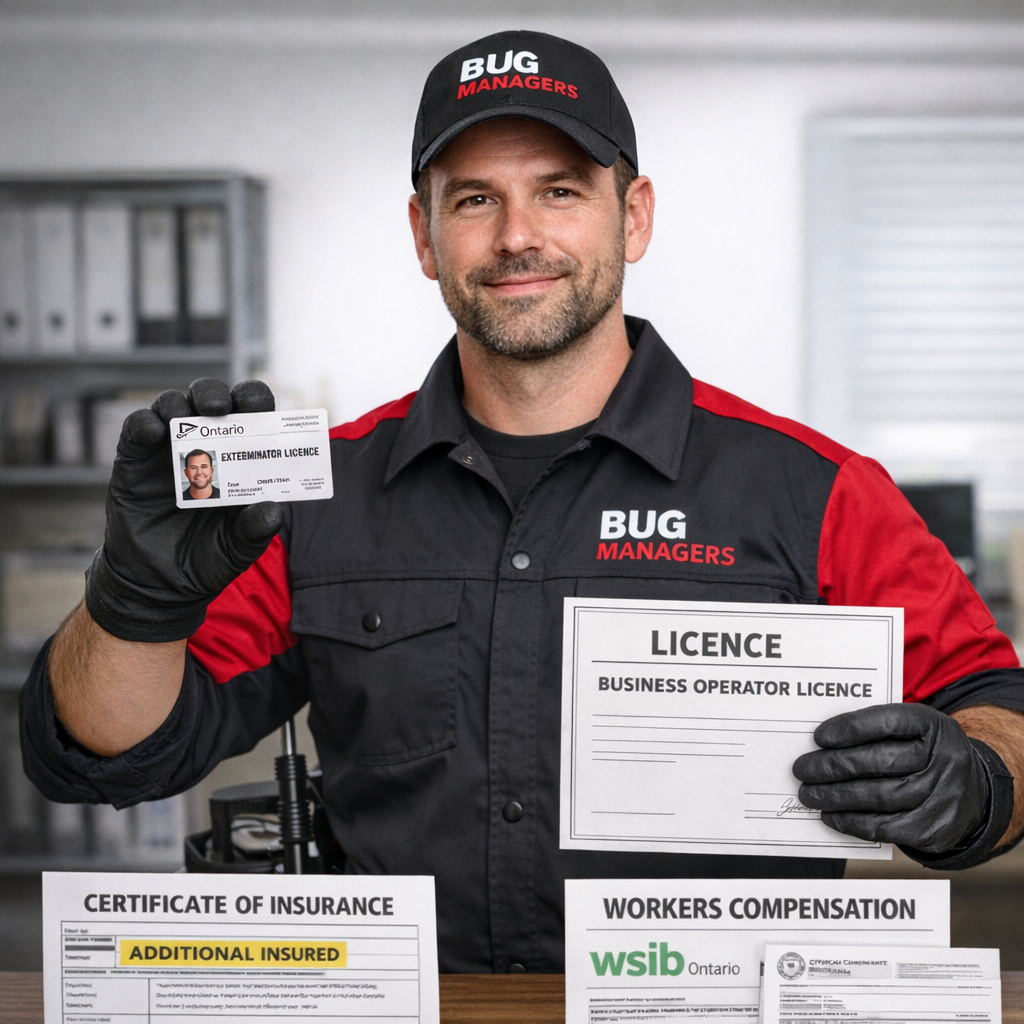
- A clear treatment plan
- Defined timeline for results
- Written warranty or guarantee
- Safe, eco-conscious treatment methods
In the Greater Toronto Area (GTA)—including Toronto,Brampton, Mississauga,Vaughan,Markham, Richmond Hill,Oakville, Burlington,and Scarborough—it’s especially important to choose a company that understands local pest pressures and urban wildlife behavior.
An eco-minded approach is no longer optional—it’s essential. Modern solutions like trap-first strategies, tamper-resistant bait stations, and toxin-free rodent control reduce risks to children, pets, and the environment while still delivering strong results. This is where trusted providers like Bug Managers –Pest Control Services in GTA stand out, combining eco-friendly pest control, advanced exclusion techniques, and reliable follow-up support.