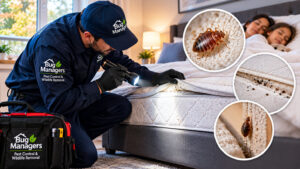
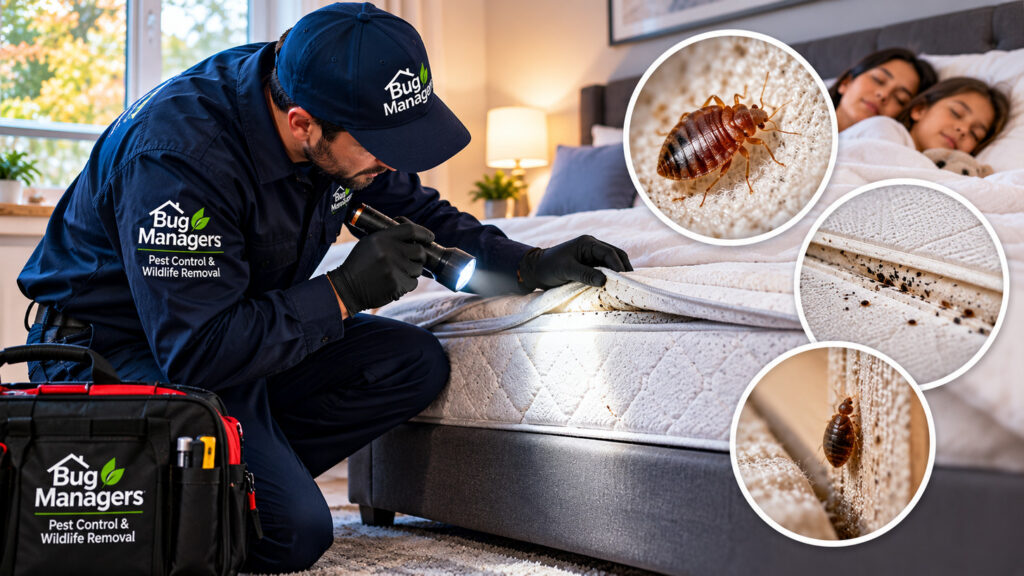
A flat, reddish-brown insect about the size of an apple seed is the clearest visual clue. Bed bugs can look different after feeding or at younger life stages, so one suspicious mark alone does not confirm a problem at home. A dark speck is easy to mistake for proof, but check for an insect or other physical evidence before drawing conclusions. What you find can help you decide whether to inspect more closely or ask for an identification.
Appearance is only part of the picture. The way a bed bug looks changes with age and whether it has recently fed, while spots and shed skins offer clues about its activity. Looking at several signs together gives you a more reliable starting point than reacting to a single mark or itchy patch. Here is what to look for as you check your home.
Key Takeaways
- Adult bed bugs are about the size of an apple seed.
- Young bed bugs can be pale and especially hard to spot.
- Dark specks need a closer look, not an instant conclusion.
- Several physical signs together are more convincing than one mark.
- Skin reactions alone cannot confirm the cause.
A closer look at adults, young bed bugs, and eggs can help you judge what you have found.
What Do Bed Bugs Look Like at Each Life Stage?
An unfed adult is flat and oval, while one that has recently fed looks plumper and redder. To the human eye, the change can be striking, so shape and color depend partly on when the bug last had a blood meal.
A nymph is an immature bed bug that has not yet become an adult. Bed bugs pass through five immature stages, and the smallest newly hatched nymphs are easiest to miss. An adult is about 1/4 inch (6 mm) long, roughly the size of an apple seed. Eggs do not feed, so they have no before-and-after feeding appearance.
Feeding can make a bed bug look plumper and redder than its unfed form, while the smallest newly hatched nymphs are easiest to overlook.
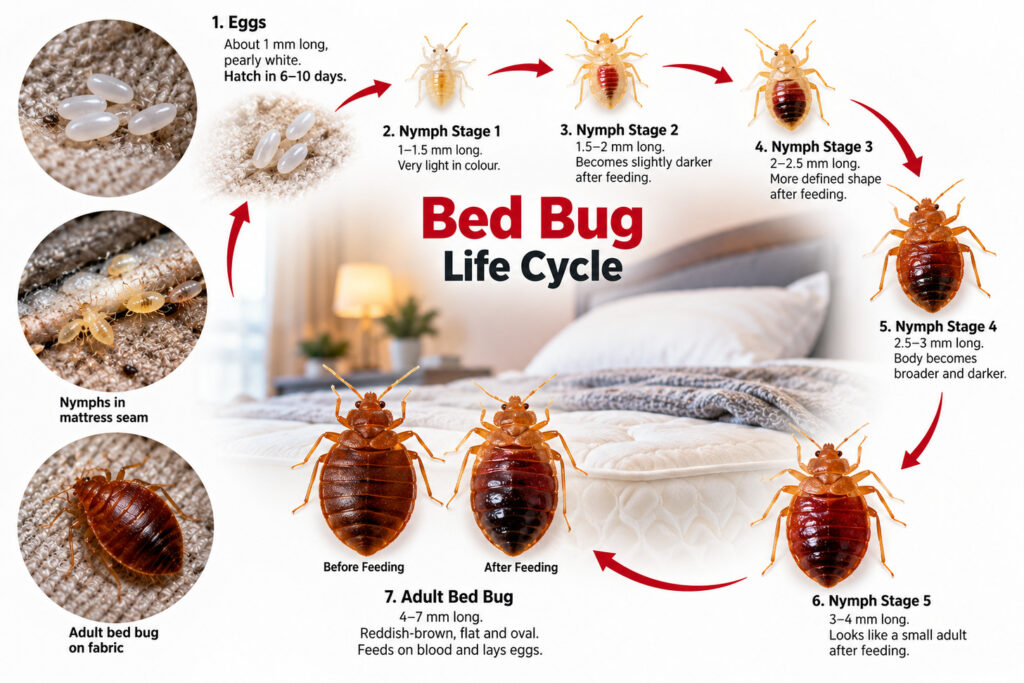
| Stage | Approximate size | Color before feeding | Identifying appearance |
|---|---|---|---|
| Adult | About 1/4 inch (6 mm) | Reddish brown | Flat and oval when unfed; plumper and bright red after a recent meal |
| Nymph | Varies across five stages | Pale or translucent yellow-white | Small and hard to see when newly hatched; may look bright red after feeding |
| Egg | About 1 mm | Pearly white | Roughly pinhead-sized; eggs older than five days can show eyespots |
When people ask what do bed bugs look like to the human eye, the answer depends on life stage and feeding. An adult can appear very different after a meal, while a pale nymph may blend into light fabric. The table gives you useful size and color clues, but an insect’s shape also matters when you compare it with possible lookalikes.
Move from what the insect looks like to the physical clues it may leave around a bed.
What Early Signs Should You Check on a Mattress and in a Room?
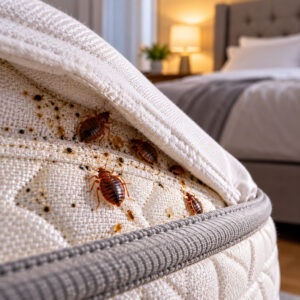
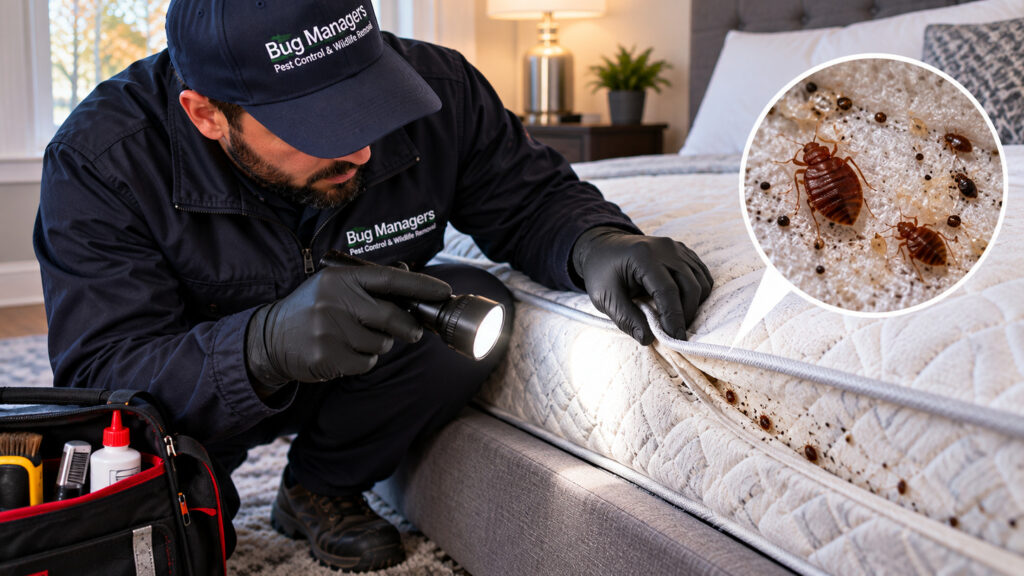
Start at the mattress seams and tags, where small dark spots or pale empty shells can be easier to notice. What do bed bugs look like on a mattress? Look for live insects, fecal spots, eggs, or shed skins, rather than treating one speck as a sure sign.
Fecal spots are black marks made of digested blood waste. They may appear in groups of 10 or more, though a small infestation may leave just one or two spots in a location. Fecal spots are evidence to investigate, not proof on their own. A clearer picture comes from finding different signs close together.
Inspect the Mattress and Sheets
Check mattress seams, tags, and folds with good light. For what do bed bugs look like on sheets, look for dark fecal spots, eggs, or a live insect, not just a single mark. A shed skin is a translucent, empty shell with the shape of the bed bug that molted. It is not a live insect, but it can be part of the evidence.
Check the Bed Frame and Nearby Hiding Places
A group of bed bugs and related evidence is an aggregation. It can include live bed bugs, fecal spots, shed skins, and live or hatched eggs. Several different clues in one area are more persuasive than one isolated mark. Check these places carefully:
- Mattress seams and tags
- Bed frame and box-spring joints
- Behind the headboard and baseboards
- Curtain folds or nearby wall cracks
These are useful early signs of bed bugs, but a single dark spot can have another cause. Compare marks with other evidence before deciding what you have found. Once physical clues are clear, itchy skin alone still cannot confirm the cause.
What Do Bed Bug Bites Look Like on Skin?
Can Bed Bug Bites Confirm an Infestation?
Itchy red welts after sleeping can raise suspicion, but skin reactions vary too much to confirm bed bugs. Some people experience no visible reaction, while others develop itchy welts or more noticeable skin irritation. According to Health Canada, bite reactions can take several days to appear.
Bed bugs feed on blood and inject saliva during feeding. Because reactions may be delayed, the appearance of a skin mark does not necessarily indicate when the bite occurred. The Centers for Disease Control and Prevention (CDC) explains that reactions can range from no visible marks to itchy bumps and, occasionally, more serious allergic reactions.
Bed bug bites alone cannot confirm an infestation. Mosquito bites, flea bites and certain skin conditions can produce similar symptoms. The U.S. Environmental Protection Agency (EPA) recommends looking for physical evidence rather than relying on bite patterns alone.
If you suspect bed bugs, inspect mattress seams, bed frames and nearby furniture for live insects, eggs, shed skins or dark fecal spots. A professional bed bug inspection can help identify the problem and determine appropriate treatment options.
Bug Managers Pest Control & Wildlife Removal provides professional bed bug inspections, chemical treatments and heat treatment services across Mississauga, Brampton, Toronto and surrounding GTA communities.
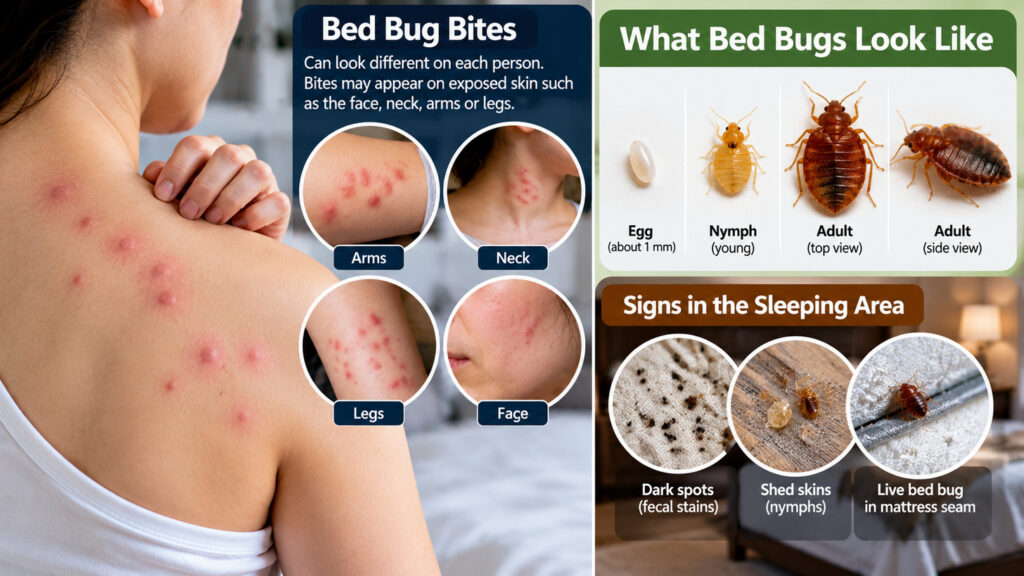
“Bed bug bites on arms, neck, face and back, with images of bed bug eggs, nymphs, adults and infestation signs including mattress stains and shed skins.”What bed bug bites look like can vary from person to person. The welts are not a signature pattern that proves the cause, and some people show no marks at all. Bites may appear on exposed skin, including the face, neck, arms, or legs. No single body area is affected most for everyone.
What do bed bugs look like on skin? There is no reliable skin mark that identifies the insect by itself. Bed bugs do not need to remain on a person after feeding, so finding no insect on your body does not settle the question either. Skin reactions and insect activity are separate clues.
Compare symptoms with physical evidence in the sleeping area, rather than relying on bites alone. If you find an insect, its appearance can help distinguish bed bugs from other bugs that people commonly confuse with them.
What Bugs Can Be Mistaken for Bed Bugs?
A bat bug is one of the closest lookalikes, while a flea is easier to separate by its jumping movement. Appearance alone may not settle every identification, especially when a suspected insect resembles a bed bug closely.
Bat bugs are close relatives that live with and feed on bats. They may bite people when their usual hosts are unavailable, but they do not typically infest beds or couches. Bat bugs may need expert identification because they closely resemble bed bugs. The host and setting can help provide context.
| Candidate | Typical appearance | Movement or host clue | Useful distinction |
|---|---|---|---|
| Bed bug | Oval, reddish brown | Feeds on people; may hide near beds | Look for the insect alongside related physical evidence |
| Bat bug | Closely resembles a bed bug | Lives with and feeds on bats; may bite people if bats are unavailable | Does not typically infest beds or couches; expert identification may help |
| Flea | Smaller and laterally flattened | Jumps | Jumping movement and a different body shape help distinguish it |
Tropical bed bugs are another close relative. A live specimen is more useful to identify than a bite pattern because skin reactions vary and do not show which insect caused them. If you can safely keep the insect intact or take a clear photo, that gives an identifier something concrete to examine.
A flea’s jump and different body shape can make it easier to separate from a suspected bed bug. Bat bugs are harder to tell apart by sight, so avoid relying on a quick glance when the distinction matters. After checking that the insect may be a bed bug, take careful first steps to contain the problem.
What Should You Do After Finding a Bed Bug?
Finding one suspected bed bug calls for careful inspection and containment rather than immediately spraying every surface. Keep potentially affected belongings in sealed bags while seeking identification, and avoid moving loose items between rooms to reduce the risk of spreading bed bugs.
There is no single bed bug spray or instant solution that reliably reaches every hiding place. According to Health Canada, pest control products must be used according to their approved label instructions, including application restrictions and safety precautions.
The U.S. Environmental Protection Agency (EPA) recommends an integrated approach combining inspection, monitoring, appropriate treatment and prevention.
If you discover signs of an infestation, consider a professional bed bug inspection before attempting DIY treatments. Depending on the infestation, Bug Managers may recommend targeted chemical bed bug treatment or professional bed bug heat treatment to address bed bugs and their hiding places.
Professional treatment may also include preparation instructions, follow-up inspections and practical prevention recommendations to help reduce recurring activity.
Bug Managers Pest Control & Wildlife Removal provides customized bed bug inspections, chemical treatments and heat treatment services throughout Mississauga, Brampton, Toronto, Oakville, Burlington, Vaughan and surrounding GTA communities.
If you suspect bed bugs in your home, early identification and appropriate treatment can help prevent the problem from spreading.Finding one suspected bed bug calls for careful containment, not a rushed spray of every surface. Keep items contained while you seek identification, and avoid carrying loose belongings into other rooms.
There is no single bed bug spray or instant fix that reaches every hiding place. Pesticide labels set rules for where a product can be used and who must stay away during use. Follow the label, including restrictions on surfaces and people. If the infestation is established, contact a qualified pest control professional.
No single spray reaches every hiding place, and pesticide labels must be followed for each product and surface.
Contain Items Without Spreading Bugs
Keep potentially affected belongings together, and do not move loose items to another room. Place washable items in a contained load for high-heat laundering or drying when their care labels allow it. This helps avoid spreading bugs while you work out how to get rid of bed bugs safely.
Choose Treatment Safely
Spiders and ants are natural predators, but they are not dependable for clearing an established household infestation. A qualified pest control professional can inspect and help shape a treatment plan. Use this short action list after a suspected find:
- Save a specimen or clear photo for identification.
- Keep potentially affected belongings contained.
- Follow care labels when laundering or drying items.
- Ask pest control about an inspection and treatment plan.
Resist the urge to apply a bed bug spray across every surface. Products have different permitted uses, and a single application cannot be assumed to reach hidden insects. Prevention begins with understanding how these hitchhiking bugs enter a home.
How Do Bed Bugs Get Into a Home?
Bed bugs can enter even the cleanest homes by travelling unnoticed in luggage, clothing, backpacks and secondhand furniture. These insects are excellent hitchhikers and can move between homes, hotels, apartments and other locations through personal belongings.
According to Health Canada’s bed bug guidance, bed bugs can be transported in luggage, clothing, furniture and other personal items. Their presence is not a sign of poor housekeeping.
A clean home is not automatically protected from bed bugs. However, finding one suspected insect does not necessarily mean an established infestation exists. Proper identification and inspection are important before deciding on treatment.
After travelling, inspect suitcase seams, pockets and luggage compartments. Carefully examine secondhand mattresses, sofas, bed frames and upholstered furniture before bringing them indoors.
The U.S. Environmental Protection Agency’s bed bug prevention guidance also provides practical advice for reducing the risk of bringing bed bugs home.
If you suspect bed bugs have travelled into your home, avoid moving potentially affected belongings between rooms. Keep suspicious items contained and check mattresses, headboards and nearby furniture for live insects, eggs, shed skins or dark spotting.
For professional help, Bug Managers Pest Control & Wildlife Removal offers bed bug inspection and removal and professional bed bug heat treatment for homes across Mississauga, Brampton, Toronto and the GTA.
Learn more about how heat treatment works in our article, Bed Bugs: Understanding Heat Treatment Techniques.
If you find a suspected bed bug, identifying it before treating your home can help you avoid unnecessary pesticide applications and choose the right next steps.
Call Bug Managers for a professional inspection.
Conclusion
Finding a suspected bed bug can be unsettling, but there is no need to panic. Early identification, careful inspection and appropriate treatment are essential to managing an infestation effectively.
Remember, bites alone do not confirm bed bugs. Look for physical evidence such as live insects, eggs, shed skins and dark spots around mattresses and furniture. If you discover a suspicious insect, take a clear photograph or preserve the specimen for professional identification.
Avoid unnecessary pesticide applications or moving potentially infested belongings between rooms. A professional inspection can help determine the extent of the problem and identify the most suitable treatment options.
At Bug Managers Pest Control & Wildlife Removal, our licensed and insured professionals provide comprehensive bed bug inspections, targeted chemical treatments and specialized heat treatment solutions tailored to your property.
We proudly serve Mississauga, Brampton, Toronto, Oakville, Burlington, Vaughan and surrounding GTA communities.
🛡️ Don’t let bed bugs disrupt your comfort and peace of mind. Take action early and get professional guidance.
📞 Call or Text: 647-326-4888
🌐 Website: www.BugManagers.com
📩 Contact Bug Managers today for a FREE estimate and professional bed bug treatment consultation.