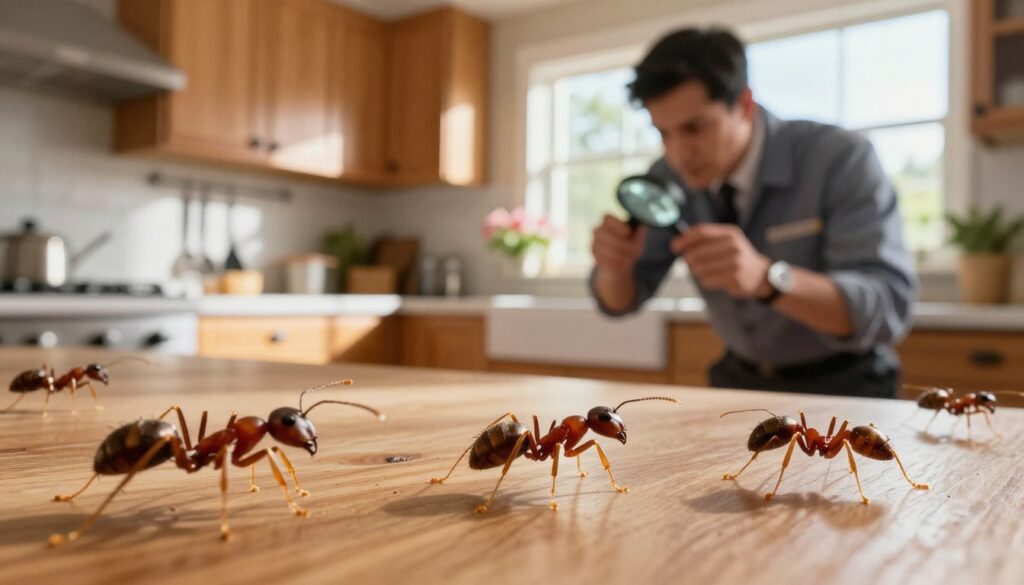
Searching for pest control near me in Mississauga or the GTA? Mice, bed bugs, cockroaches, and wildlife can disrupt home life.
A mouse in a cupboard or ants returning to the kitchen can make home feel unsettled. These problems can interrupt routines and leave you unsure what to do next.
Bug Managers serves Mississauga and several GTA communities. This page offers practical advice on choosing a provider, understanding service, and requesting an estimate.
A nearby company may be able to assess the issue and suggest a suitable next step. A reliable choice starts with knowing what kind of help the problem calls for.
Key Takeaways
- Ask how the technician will identify the pest and its source.
- Choose a plan that fits the pest, property, and affected areas.
- Follow product labels and service directions around children and pets.
- Compare quotes by work scope and follow-up, not price alone.
- Share clear details when requesting an estimate.
How to Choose Pest Control Near Me in Mississauga
A reliable pest control company should explain what it found and why its proposed treatment fits the problem. Choose a provider that identifies the pest, outlines the plan, and discusses prevention alongside treatment.
Integrated pest management combines monitoring and prevention with targeted control measures chosen after identifying the pest. It helps focus work on the cause, rather than treating every space the same way.

A useful consultation should cover an inspection, pest identification, treatment options, preparation, safety directions, and follow-up. You should understand what the service includes before work begins.
Ask how the technician will look for access points, food sources, and places pests may hide. A regular pest inspection can help find activity and possible damage early.
Residential and commercial needs can differ. A home may need attention to kitchens, basements, and entry gaps, while a business may need records and plans for shared work areas.
Look for clear answers, not pressure to accept a large package before anyone has assessed the issue. A provider should explain what they know, what remains uncertain, and how they will check the result.
Once the selection criteria are clear, identify the pests a local technician may be asked to handle.
Which Pests Can a Local Exterminator Treat?
A technician needs to identify the pest before choosing a suitable response. Treatment choices depend on the species and its habits, not just on where you found it.
Local pest removal may address mice and rats, bed bugs, cockroaches, ants, and wasps. These are different problems: rodents, insects, stinging insects, and wildlife call for distinct plans.
| Pest | Example of activity | Why identification matters |
|---|---|---|
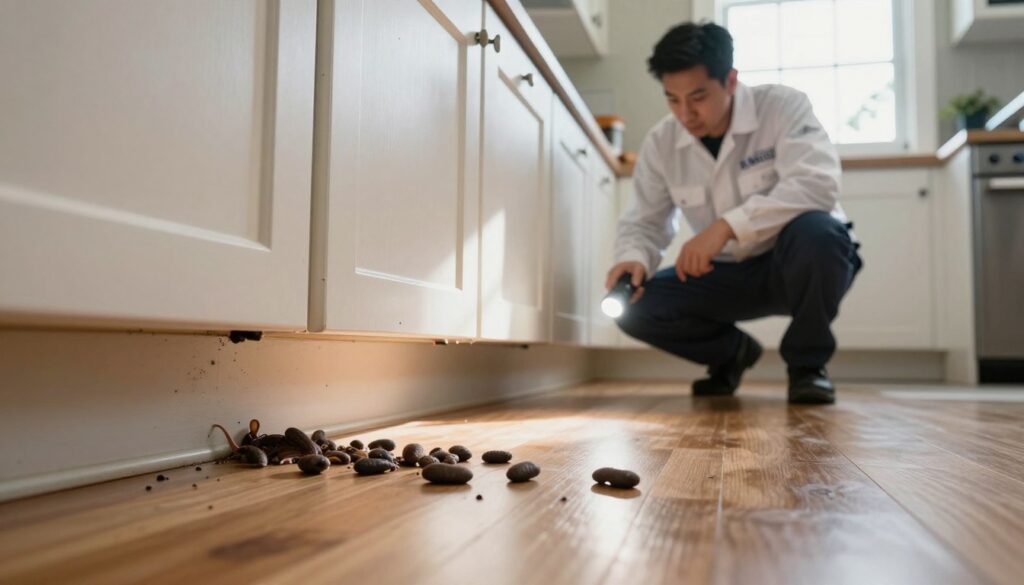
| Mice or rats | Droppings or gnaw marks | Species and entry routes shape control and sealing. |
| Bed bugs | Live bugs, dark spots, or shed skins | Harbourage and room spread affect the treatment plan. |
| Cockroaches | Live insects near warm, damp areas | Species and hiding places guide targeted control. |
| Ants | Repeated trails leading toward food | Ant type and nest location can change the approach. |
| Wasps | Repeated flight to one point outdoors | Nest location and insect type affect safe work. |
A pest that looks similar to another can behave differently. For example, bees and wasps are not interchangeable, so a technician should identify the insect before planning action.
Wildlife removal may need a different approach from insect or rodent control. The animal, access point, and building all matter when deciding how to remove it.
A technician can also assess whether activity comes from one pest or more than one. That distinction can prevent a plan from missing a second source.
Recognizing the likely pest is useful, but the next step is checking whether the signs point to an established infestation.
What Warning Signs Mean You Have an Infestation?
A few droppings in a cupboard or repeated insect sightings in the same room are more useful clues than a single unexplained bite. Repeated activity or several kinds of evidence deserve attention, though one sighting cannot show the infestation’s size.
Scratching or scurrying sounds in walls may point to rodent activity. Droppings and gnaw marks can add useful context, especially when they appear in more than one place.
Repeated ant trails can lead toward food or water. Cockroaches or their droppings near cupboards may also show activity in kitchens or other warm spaces.
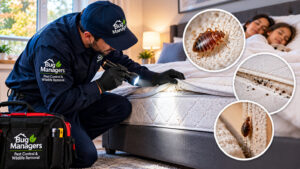
Bed bug signs can include live bugs, dark spotting, and shed skins around mattress seams. Bites alone do not confirm bed bugs because other causes can look similar.
Record four details before you clean or move items. These notes can help a technician understand where activity happens and whether it is spreading.
- Note where signs appear, such as a cupboard or bed seam.
- Write down when activity occurs, including time of day.
- Track whether the evidence recurs in the same place.
- Check whether food or water sources are nearby.
Seeing one pest does not prove how large an infestation may be. Repeated evidence, multiple signs, or activity across rooms gives a clearer reason to investigate.
Use the pattern and persistence of the evidence to decide whether professional help is timely.
When Should You Call an Exterminator?
Repeated signs in more than one spot are a good reason to stop guessing and ask for an inspection. Call when activity recurs, spreads, causes damage, or does not respond to reasonable first steps.
Droppings, gnaw marks, scratching in walls, or a nest can point to a pest problem that needs closer review. Rodents can chew wiring, insulation, stored goods, and other parts of a property.
An infestation hidden in wall voids may be hard to locate without an inspection. A technician can look for access points and signs beyond the spot where you first noticed activity.
Ask for prompt professional advice if you suspect stinging insects near an entrance. An animal inside a living area also deserves professional advice; do not handle nests or wildlife yourself.
Call when pests move between rooms or units, or when initial steps have not worked. In a shared building, activity in one unit may connect to nearby spaces.
For recurring issues, professional pest inspections can check for pests and possible damage. Early attention may help you address a problem before repairs become more involved.
If the issue seems limited, consider which safe steps you can take yourself and where professional help is more appropriate.
Can DIY Pest Control Solve the Problem?
A small, clearly identified problem may respond to basic prevention, but repeated activity calls for a closer look. DIY pest control is best kept to a limited issue you can identify and manage safely.
Clean up food or water sources, reduce clutter near activity, and close accessible gaps. These steps can support prevention, but they may not reach a nest or pest hidden inside a wall.
For any pesticide, follow the product label directions. Never apply more product or use it in more places than the label allows.
Use these four checks before choosing a DIY response. If one answer raises concern, pause before applying a product or moving items.
- Can you positively identify the pest?
- Is activity limited to one small area?
- Does the label allow the intended use?
- Do pests keep returning after your first steps?
Bed bugs, recurring rodents, extensive cockroach activity, wasp nests, and wildlife inside a building can be difficult or risky to manage alone. A limited fix may not reach the source.
Do not mix products or use a pesticide for a pest or location that its label does not name. When activity continues, a professional can assess what is happening and suggest a fitted plan.
If a professional visit is the better option, knowing what an inspection covers makes it easier to prepare.
What Happens During an Inspection and Treatment?
An inspection should look beyond the pest you can see to the conditions that may be supporting it. A pest inspection checks for evidence, entry points, and features that support activity.
The technician should explain what they find and how it affects the proposed control plan. The work usually follows a clear sequence, from checking affected areas to discussing follow-up.
- Inspect affected areas, such as cupboards, basements, or wall gaps.
- Identify the pest and likely source, including nearby food or water.
- Agree on a treatment approach suited to the pest and property.
- Carry out the work in the areas and access points discussed.
- Explain prevention steps and whether follow-up is needed.
Preparation differs by pest and treatment. Follow the technician’s specific directions rather than assuming every appointment needs extensive preparation.
Ask what the technician found and which areas the work will cover. If the source is uncertain, ask how the company will check those areas during the visit.
The visit may also reveal conditions that make pests more likely to return. Food spills behind appliances or a gap around a pipe can matter as much as the visible activity.
For more detail on what a home inspection can cover, learn how checks can find activity and possible damage. The likely source and scope help the technician choose work that fits the property.
Once the likely source and scope are understood, the method chosen should fit the pest and the property.
How Do Treatment Methods Differ by Pest?
The right treatment is aimed at the identified pest and its hiding places, not simply the option that sounds strongest. No method suits every infestation, and follow-up may depend on pest type, extent, and access.
Rodents may call for targeted baiting or traps, depending on the site and activity. Cockroaches and ants may need bait or treatment in cracks and other specific spaces.
| Method | Example use | What to confirm |
|---|---|---|
| Baiting or traps | Rodents, when access and activity suit them | Where will devices go, and who can reach them? |
| Targeted application | Cracks or crevices with cockroach or ant activity | Which areas need preparation or limited access? |
| Heat treatment | One bed bug option for suitable areas | What must you prepare, and is follow-up planned? |
| Exclusion or sealing | Closing accessible pest entry points | Which gaps will be sealed, and who will do it? |
Heat treatment is one option for bed bugs, not a fit for every room or property. Ask how the plan addresses hiding places and whether other steps are part of the work.
Exclusion means blocking access through gaps or other entry points. It can support prevention, though sealing alone may not resolve activity already established indoors.
Method, access, and follow-up should match the pest and the site. A technician should explain why the proposed approach suits the areas affected.
Whatever method is proposed, ask how it will be used safely around people, pets, food, and belongings.
How Can You Keep Children and Pets Safe?
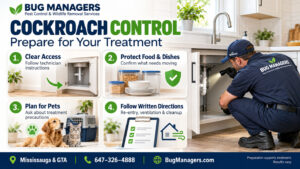
Before treatment begins, tell the technician who lives in the home and where food and pet supplies are kept. Safety and re-entry directions depend on the specific product and service.
Disclose children, pets, aquariums, food-preparation areas, and other sensitivities before treatment. Ask what to move, cover, or leave in place, since needs can vary by method.
Follow the product label and the technician’s written directions for access and re-entry. A general promise of “safe for pets” does not replace directions for the specific treatment.
Use these four checks before and after work. Keep the written instructions where everyone in the home can follow them.
- Confirm which rooms or areas will receive treatment.
- Secure food and dishes as instructed.
- Keep children and pets away as directed.
- Wait for the stated re-entry conditions.
Tell the technician about aquariums and sensitive items, even if they are outside the main work area. Ask whether they need to be moved or protected.
Do not rely on a blanket claim about safety for every pet or every product. The label and written service directions give the instructions for your particular situation.
After safety needs are clear, compare providers on the work and follow-up actually included in their quotes.
How Do You Compare Pest Control Quotes?
Two quotes are comparable only when they describe similar work for the same pest and areas. Compare scope, method, preparation, safety directions, and follow-up rather than the first figure alone.
A quote should name the pest, areas covered, proposed method, preparation, and safety directions. It should also state follow-up plans and any limits or exclusions.
| Pest issue | Scope details to compare | Follow-up question |
|---|---|---|
| Mice or rats | Rooms, basement, and entry points | Are return visits included if activity continues? |
| Bed bugs | Affected bedrooms, beds, and nearby rooms | What happens if bed bugs remain after treatment? |
| Cockroaches | Kitchens, cupboards, and connected rooms | Does the plan include a check after treatment? |
| Ants | Trails, nest area, and likely entry points | Will the plan address the source as well as trails? |
| Wasps | Nest location and access around the structure | Does the quote cover the nest location described? |
A quote for one room is not equal to one that covers the full property. Check whether access, preparation, and extra visits are included in each description.
Do not assume a low initial figure includes follow-up. Ask what happens if the same activity remains or returns after the agreed work.
If a quote leaves out an important detail, ask for the scope in writing before accepting it. That gives you a clearer basis for comparing the proposed service.
With the work scope aligned, the next question is what circumstances make the final amount vary.
What Affects Pest Control Prices?
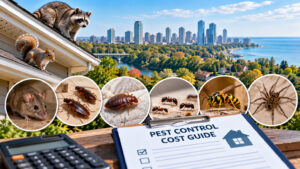
A small ant issue in one room and bed bugs affecting several rooms are different jobs, so their estimates can differ. Pest type, infestation extent, property size and access, treatment method, and follow-up can affect a quote.
A larger property or hard-to-reach space may take more work to inspect or treat. A pest that affects several rooms may also need a wider plan than activity in one contained area.
Follow-up needs can affect the work described in an estimate. Ask whether a return visit is part of the quote or a separate service.
Pest control near me prices are not directly comparable unless the same work and follow-up are included. A low first figure may cover less than another provider’s estimate.
Affordable pest control means a suitable scope and clear terms, not simply the lowest first amount. A plan that misses the source may not address the problem you need solved.
You can read more about Ontario pest control cost factors and how service needs shape estimates. Keep your own comparison focused on the same pest and affected areas.
Before accepting an estimate, make sure the provider is qualified for the work and can explain its terms.
What Should You Check Before Hiring a Licensed Exterminator?
A professional should explain who will do the work and what qualifications apply to it. Ontario has licensing requirements for commercial pesticide extermination, so ask what licence applies to the proposed work.
Ask for proof of liability insurance and details about the technician’s qualifications. Request written treatment instructions and ask how the company handles follow-up.
Ontario’s rules cover pesticide licensing and permits under the Pesticides Act and O. Reg. 63/09. The Ontario pesticide licence guidance explains licensing requirements for commercial work.
Use this short checklist when narrowing down providers. A clear answer matters more than a polished promise.
- Confirm the licence that applies to the proposed work.
- Ask for confirmation of liability insurance.
- Get a clear written scope of work.
- Choose a technician who can explain the plan.
The phrase best pest control near me may help you find nearby options, but proximity alone does not prove a good fit. A provider should answer direct questions about the work and qualifications.
For more tips, see this guide to choosing a pest control company. Use it to shape questions about inspection, training, and clear service terms.
Once basic qualifications are confirmed, customer feedback can help assess how clearly a company communicates.
How Do Reviews and Guarantees Help You Choose?
Reviews are most useful when they describe the service process, not just a star rating. Look for comments about punctuality, clear explanations, thorough work, and follow-up.
Bug Managers has 300+ Google five-star reviews. Individual customer experiences can offer useful context, but they do not guarantee that you will get the same result.
Read for details that match your needs, such as how well the company explained preparation or responded to questions. A short review with a specific example can tell you more than praise without detail.
A guarantee is useful only when its written terms are clear. Check which pests or work it covers, how long it lasts, what exclusions apply, and what happens if activity returns.
Ask for the guarantee terms before you agree to service. A spoken promise can be hard to assess if the written scope says something different.
Reviews and written terms can help you judge how a company works with customers. They cannot promise that every property or pest problem will have the same outcome.
Match the provider’s experience and service plan to the kind of property needing treatment.
Is Residential or Commercial Pest Control Right for Your Property?
The same pest can require a different service plan in a detached home, a shared building, or a food business. Pest management plans can be tailored to residential, commercial, and multi-unit properties.
Homes, condos, and rental houses may need attention to kitchens, basements, and individual units. Restaurants, offices, warehouses, and retail spaces have different access and work needs.
| Property type | Typical areas to assess | Planning consideration |
|---|---|---|
| Home or apartment | Kitchens, bedrooms, basements | Plan around household access and belongings. |
| Multi-unit building | Shared spaces, hallways, neighbouring units | Coordinate tenant notices and access. |
| Commercial premises | Food areas, storage, waste spaces | Fit work around operations and staff access. |
Multi-unit buildings may need coordinated communication and access planning. Shared spaces or neighbouring units can matter when a problem crosses property lines.
Businesses that handle food need careful attention to kitchens, food storage, and waste areas. The Canadian Food Inspection Agency explains how food businesses can plan, monitor, and document pest control through its food business pest control guidance.
Commercial pest control should suit the type of business and the people using the space. A restaurant may have different operating needs from an office or warehouse.
After confirming the property type, check that the service area includes your community.
Which Mississauga and GTA Areas Does Bug Managers Serve?
Bug Managers lists service in six communities across Mississauga and the GTA. The named areas are Mississauga, Brampton, Toronto, Oakville, Burlington, and Vaughan.
Availability depends on your specific address, so share your city and neighbourhood when you contact the company. A community name alone may not show whether a particular location can be served.
Pest control near Ontario is too broad to establish local availability. Ontario covers many communities, while the listed service areas are specific places.
Pest control near Toronto, ON is a more location-specific request. Give the company your address or neighbourhood so it can confirm whether the service area fits.
Mississauga residents can state their neighbourhood and property type when asking about availability. Readers in the other listed cities can provide the same details.
Do not assume a nearby community is included just because it borders a listed city. Confirm your location directly before planning a visit.
If your community is listed, the next step is to request an estimate and share details of the pest activity.
How Can You Book a Free Estimate?
Have your observations ready so the estimate can start with the pest, location, and length of the problem. Bug Managers offers a free estimate, and you can call to discuss the issue.
Share the pest or suspected pest, where activity appears, and how long it has been happening. Tell the company whether the property is a home, apartment, or business.
Mention any children, pets, aquariums, or other safety needs. Those details can help the company understand what instructions may matter if treatment is proposed.
For pest-specific service details, visit Rodent Control, Bed Bug Removal, Cockroach Control, or Wildlife Removal.
When you call, explain what you have seen and where it happened. The company also accepts requests by email or through its contact page.
Keep your notes close during the call, including when the activity first appeared and whether it keeps coming back. Clear details can help start a useful conversation about the next step.
Take that information into the call, and invite Bug Managers to help you assess the problem.
Conclusion
A clear plan starts with identifying the pest and understanding what the proposed work includes. Recurring signs are a reason to seek an assessment, especially when activity spreads or causes damage.
Treatment and safety directions should match the pest, property, and people who use the space. A written scope can make the work and follow-up easier to understand.
Proximity matters, but a nearby provider should also explain its findings and plan. Call Bug Managers for a free estimate as your next step.