Every season in Canada brings new visitors to your home. Some are welcome, but others have four legs and can squeeze through tiny gaps.
Fall is the busiest time for pests in Mississauga, Brampton, and the GTA. As nights get cooler, mice, rats, raccoons, and squirrels look for a warm place to stay. Your attic, garage, and basement are perfect for them.
This guide will help you protect your home from pests without guessing. You’ll learn why pests come inside, which ones visit each season, and how to spot them early.
We’ll share easy pest control tips for each season. You can start this weekend. Also, we’ll cover home pest prevention strategies that work all year. If you hear scratching sounds or find droppings, act fast.
Bug Managers is a local team ready to help homeowners. We use Integrated Pest Management (IPM) to keep families and pets safe. If you hear something in your ceiling, we can help quickly.
Prevention is cheaper than fixing problems later. A few hours of sealing and inspecting can save you from costly repairs. Start protecting your home before winter.
Key Takeaways
- Fall is peak infestation season in the GTA because rodents and wildlife seek warm shelter for winter.
- Mice, rats, cockroaches, squirrels, and raccoons are common cold-weather intruders in Canadian homes.
- Scratching noises, droppings, damaged insulation, and foul odours are early signs worth acting on immediately.
- Sealing entry points around vents, rooflines, foundations, and utility lines blocks most pests before they get in.
- Smart food storage, tidy garbage habits, and a trimmed yard remove the attractions that draw pests close.
- A season-by-season plan keeps protection steady all year instead of reacting to emergencies.
- Licensed professionals bring the tools, training, and safe products needed for infestations that are already underway.
Why Seasonal Pest Activity Spikes in Mississauga, Brampton and the GTA
Pests in southern Ontario follow the weather. Warm, humid summers help insect populations grow fast. When autumn arrives and ground temperatures drop, pests like mice, rats, spiders, and cluster flies start hunting for shelter. Your heated home is the most inviting spot on the block.
Local geography plays a big part in seasonal pest activity patterns. Ravine and creek systems like the Credit River and Etobicoke Creek act as natural highways for rodents and wildlife. Mature tree canopies give squirrels and raccoons easy roof access. Ongoing construction disturbs soil and pushes established colonies into nearby yards.
Housing type matters too:
- Older homes: settled foundations, cracked mortar and gaps around old wiring create easy entry points.
- Newer builds: unsealed weep holes, utility penetrations and vent gaps are common weak spots.
- All homes: green bin and organic waste programs offer a steady food source when bins aren’t secured.
Freeze-thaw cycles widen small cracks each winter, opening new routes indoors. One warm basement or attic can support mouse breeding straight through to spring, turning two visitors into dozens.
This is exactly why fall pest control Mississauga homeowners schedule works so well, and why pest control Brampton residents book before the first frost pays off. Preventing pest infestations by season means acting on the calendar, not on the first sighting. Understanding these rhythms is the foundation of protecting homes from pests all year long.
Common Fall Pests Every Canadian Homeowner Should Watch For
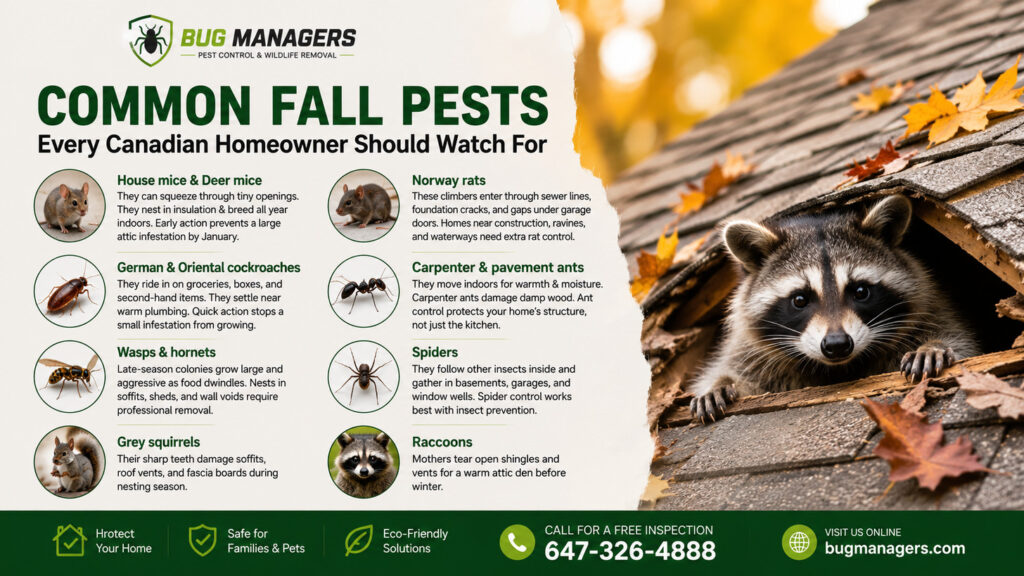
As the cold weather comes to Mississauga, Brampton, and the GTA, pests seek warmth. Knowing which pests arrive first helps with seasonal control.
- House mice and deer mice — They can squeeze through tiny openings. They nest in insulation and breed all year indoors. Early action prevents a large attic infestation by January.
- Norway rats — These climbers enter through sewer lines, foundation cracks, and gaps under garage doors. Homes near construction, ravines, and waterways need extra rat control.
- German and Oriental cockroaches — They ride in on groceries, boxes, and second-hand items. They settle near warm plumbing. Quick action stops a small infestation from growing.
- Carpenter and pavement ants — They move indoors for warmth and moisture. Carpenter ants damage damp wood. Ant control protects your home’s structure, not just the kitchen.
- Wasps and hornets — Late-season colonies grow large and aggressive as food dwindles. Nests in soffits, sheds, and wall voids require professional removal.
- Spiders — They follow other insects inside and gather in basements, garages, and window wells. Spider control works best with insect prevention.
- Grey squirrels — Their sharp teeth damage soffits, roof vents, and fascia boards during nesting season.
- Raccoons — Mothers tear open shingles and vents for a warm attic den before winter.
Squirrels and raccoons are protected in Ontario. Humane removal uses one-way doors and repairs, not extermination.
Early Warning Signs of a Pest Infestation You Shouldn’t Ignore
Pests often sneak up on us. They leave hints before we see them. Knowing these signs lets you act fast, saving time and money.
Watch for these warning signs at home:
- Droppings: Look for rice-shaped pellets along baseboards or under sinks. These are signs of mice or rats. Cockroaches leave tiny specks that look like pepper.
- Sounds: Scratching or scurrying sounds in walls or ceilings are a clue. Raccoons sound heavy, squirrels are busy during the day, and mice move at night. Sounds from above might mean you need attic pest removal.
- Odours: A musky smell means rodents are around. A sharp decay smell suggests a dead animal inside a wall or vent.
- Damage: Look for gnawed wiring, chewed food packaging, or shredded insulation. Small sawdust piles are signs of carpenter ants.
- Grease and rub marks: Dark smudges on walls or beams show where rodents travel at night.
- Nests: Shredded paper, fabric, or leaves in storage boxes or quiet spots are nests.
- Extra spider webs: More spider webs mean other insects are nearby.
Seeing a mouse or rat in the daytime means there’s a big problem. They’re out of food and shelter, making them more visible.
Get a professional pest inspection at the first sign. If you’re looking for an exterminator near me, choose a licensed team. They should handle rodent control, sanitizing, and repairs, not just trapping.
How to Protect Your Home from Seasonal Pest Infestations Step by Step
Spotting warning signs is key. But acting on them keeps pests out. Here’s a simple guide to follow over a weekend.
- Walk your perimeter. Slowly circle the house and note every crack and gap. Look at spots where pipes, wires, or dryer vents pass through the wall.
- Seal what you found. Use the right materials to close those openings. The next part of this guide will tell you which ones work best.
- Cut back the greenery. Keep shrubs and tree limbs at least two metres away from your roofline. This stops squirrels and raccoons from getting in.
- Dry things out. Fix leaky taps, clear eavestroughs, extend downspouts, and run a dehumidifier in damp basements.
- Lock down food and waste. Use airtight containers for food inside and tight-fitting bin lids for waste outside.
- Declutter storage. Replace cardboard boxes with sealed plastic bins in the garage and crawl space.
- Add barriers. Door sweeps, chimney caps, and mesh vent covers are cheap ways to protect your property.
- Monitor quietly. Place traps or bait stations far from kids and pets.
- Book an inspection. Have a licensed technician check your home before the first frost.
Protecting your home from pests is about rhythm, not effort. Consistency is more important than intensity.
Homeowners in Mississauga and Brampton who follow these steps each year can significantly reduce the risk of serious pest problems. Combining seasonal prevention with professional pest control services, mice and rat control, and wildlife removal when needed can help keep your home protected throughout the winter.Homeowners in Mississauga and Brampton who follow these steps each year rarely face major pest problems. By following these seasonal pest control tips every year, your home will stay pest-free all winter.
Pest-Proofing Your Property: Sealing Entry Points That Matter Most
Mice can fit through gaps as thin as a pencil. Raccoons can open soffits with their hands. To keep pests out, you need to find and seal these hidden openings.
Start by walking around your home. Look for these common entry points:
- Foundation cracks and weep holes — fix with hydraulic cement or mortar. Use stainless steel mesh guards on weep holes for drainage.
- Utility penetrations — cover gas, water, cable, and air conditioning lines with copper mesh. Seal with silicone or foam.
- Garage doors — check the bottom seal and side weatherstripping. Rodents can squeeze through gaps here.
- Dryer, kitchen and bathroom vents — replace plastic covers with rodent-proof ones. Make sure they have backdraft flaps.
- Roof vents, soffits, fascia and roof-wall junctions — squirrels and raccoons use these as doors. Use galvanized steel mesh to block them.
- Chimneys — a good chimney cap keeps birds and raccoons out.
- Windows, screens and door sweeps — fix any damage. Replace broken parts. Install sweeps on all exterior doors.
Don’t use steel wool. It rusts and falls apart. For lasting protection, use metal flashing, hardware cloth, and copper mesh.
Wildlife exclusion also means using one-way doors. These let animals leave but not come back. Make sure to seal your attic only when it’s empty. A professional pest control Mississauga service can check for animals before sealing.
Smart Food, Garbage and Yard Habits That Keep Pests Away

Remove Food, Waste and Outdoor Attractions
Manage Garbage and Compost Carefully
- Choose garbage and organic-waste bins with secure, tight-fitting lids.
- Rinse bins regularly to reduce lingering food odours.
- Keep garbage containers secured until collection day.
- Put garbage at the curb on the morning of collection whenever local collection rules allow, rather than leaving it accessible overnight.
- Keep compost securely covered and avoid adding meat, bones, fish and dairy products to backyard composters.
- Remove uneaten pet food rather than leaving it outdoors overnight.
Make Your Yard Less Attractive to Pests
Small Habits Can Make a Big Difference
Inspecting Attics, Garages and Basements Before Winter Arrives
First, clean up your yard and garbage habits. Then, inspect your home indoors. A pest check in early autumn finds problems before animals settle in.
Attic: Use a flashlight to look for signs of pests. Check for flattened insulation, droppings, and chewed wiring. Squirrels might be entering through gaps in the roof.
Shredded paper or leaves in the attic are bad signs. Raccoon droppings can spread diseases. It’s best to get a professional to clean and remove pests safely.
Garage: Check the door seal and sweep corners. Store pet food and birdseed in sealed containers. Open car hoods to find mouse nests early.
Basement and crawl space: Look for signs of pests around plumbing and floor drains. Webs in corners mean you need spider control. Cockroaches near the water heater indicate moisture issues.
Don’t forget these areas:
- Cold rooms and unfinished storage areas
- Sheds and detached garages
- Under decks, porches and stairs, where skunks and raccoons love to den
Found signs of pests? Call for squirrel or wildlife removal in GTA. Acting early prevents bigger problems later.
Year-Round Pest Management: A Season-by-Season Prevention Plan
After checking your attic and basement, it’s time to make a plan. Pest activity across Mississauga, Brampton and the GTA changes throughout the year. A simple prevention calendar, combined with professional pest control services, can help you stay one step ahead.
Here’s a practical plan for preventing seasonal pest infestations:
- Spring (March–May): Carpenter ants and pavement ants become more active, while wasp queens begin searching for nesting locations. Squirrels and raccoons may also seek protected attic and roof spaces. Inspect your roof, check potential entry points and seal foundation cracks. If you notice persistent ant activity, professional ant control services can help address the infestation.
- Summer (June–August): Wasps, mosquitoes, spiders and ants become increasingly active. Repair damaged window screens, remove standing water and regularly inspect decks, sheds and rooflines. Active nests around entrances or frequently used areas may require professional wasp control rather than attempting to disturb the nest yourself.
- Fall (September–November): Fall is an important time for rodent prevention because mice and rats begin searching for food, warmth and shelter. Complete exclusion work, install door sweeps, protect vents and inspect openings around utility lines and foundations. Professional rat and mice removal services can help identify rodent activity and potential entry points.
- Winter (December–February): Mice, rats and cockroaches can remain active indoors throughout winter. Inspect attics, basements, garages and storage areas. Watch for droppings, gnaw marks and nighttime scratching sounds, and keep storage areas free of unnecessary clutter. If cockroaches are present, professional cockroach control may be needed.
Integrated Pest Management (IPM) combines inspection, monitoring, sanitation, exclusion and targeted treatments when appropriate. This prevention-focused approach helps address the conditions that allow pests to enter and thrive.
A consistent year-round pest management plan can help homeowners in Mississauga and Brampton reduce seasonal pest problems before they become established.
When to Call a Licensed Pest Exterminator or Wildlife Removal Specialist
DIY traps and sprays only go so far. If the problem keeps coming back, a licensed exterminator can save you money and stress. They also protect your property from damage.
It’s time to call for professional help if you see these signs:
- Repeat sightings weeks after your own treatments
- Mice or rats active during daylight hours — a sign of a large colony needing real rodent control
- Droppings turning up in more than one room
- Scratching, thumping or squeaking inside walls, ceilings or the attic
- Wasp nests beside doorways or hidden in wall voids
- Cockroaches, which rarely respond to store-bought products
- Chewed wiring, insulation damage or gnawed structural wood
- A sour smell pointing to dead animal removal inside a wall or duct
In Ontario, laws protect raccoons, squirrels, and skunks. So, animal removal must be humane and licensed. During spring, sealing a den without checking for young is cruel and illegal. Trained wildlife removal technicians use one-way doors so mothers and kits exit together.
Bug Managers serves Mississauga, Brampton, and the GTA with licensed, insured technicians. Looking for an exterminator near me or pest control near me? You’ll find a team that starts with a full inspection. They follow Integrated Pest Management principles and use targeted, low-impact treatments. These are safe for children and pets.
Services include professional rodent proofing, rat removal, attic restoration, dead pest cleanup, and humane exclusion. Every job comes with clear quotes, follow-up visits, and prevention guarantees. Book pest control Brampton homeowners trust while there is time this season.
Conclusion: Protect Your Home Before Winter Pests Move In
Pests follow seasonal patterns. As temperatures drop, mice, rats and wildlife begin searching for warm, sheltered spaces. Small openings around your foundation, garage, roof or attic can give them an easy way inside.
Fall is one of the best times to focus on prevention. Sealing entry points, securing garbage, reducing clutter and inspecting your attic and basement can help prevent problems before winter arrives.
Before the first snowfall, look for droppings, gnaw marks, greasy trails, damaged insulation and unusual scratching sounds. These may indicate rodent or wildlife activity.
If you find signs of mice or rats, learn more about Bug Managers’ professional rat and mice removal services.
For raccoons, squirrels or other animals entering attics and roof spaces, our wildlife and rodent removal services focus on removal, exclusion and prevention.
Need professional help? Bug Managers Pest Control & Wildlife Removal serves Mississauga, Brampton and surrounding GTA communities.
Call 647-326-4888 for a free quote, or contact Bug Managers online to request service.