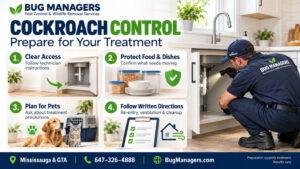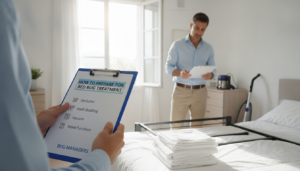
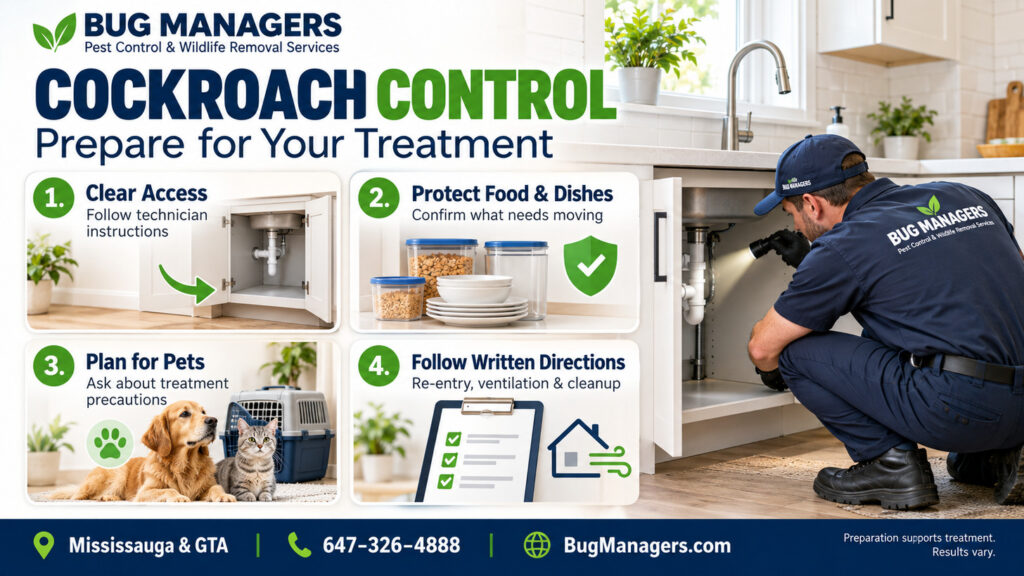
A few practical preparation steps can make cockroach treatment easier and give the technician better access. Whether you manage a Mississauga condo, apartment, restaurant, office, or GTA property, professional pest control starts with an inspection to identify harbourage areas and determine which belongings need to be moved.
Preparation supports treatment, sanitation, exclusion, and long-term control, but it does not guarantee a pest-free property. Instructions vary by product and provider, so follow your technician’s directions for safety, re-entry, and cleanup. If anything is unclear, ask before the service. Need professional pest control or wildlife removal in Mississauga or the GTA? Contact Bug Managers at 647-326-4888 for an inspection or service estimate.
Key Takeaways
- Clear belongings from areas the technician needs to inspect or treat.
- Follow product-specific preparation and safety instructions.
- Ask about timing for people, pets, fish, and re-entry.
- Clean food-contact surfaces only as directed after treatment.
- Contact the technician before service if any safety step is unclear.
Cockroach Treatment Prep Checklist: What to Clear Before Service
The first preparation steps for cockroach treatment are to clear the storage and work surfaces the technician needs to inspect. Move removed items out of the treatment room in bags or boxes. This gives the technician access to cabinets, drawers, counters, and under-sink areas where a cockroach may hide. Do not place items on a nearby counter or in another affected room, since this can limit access or spread roaches.
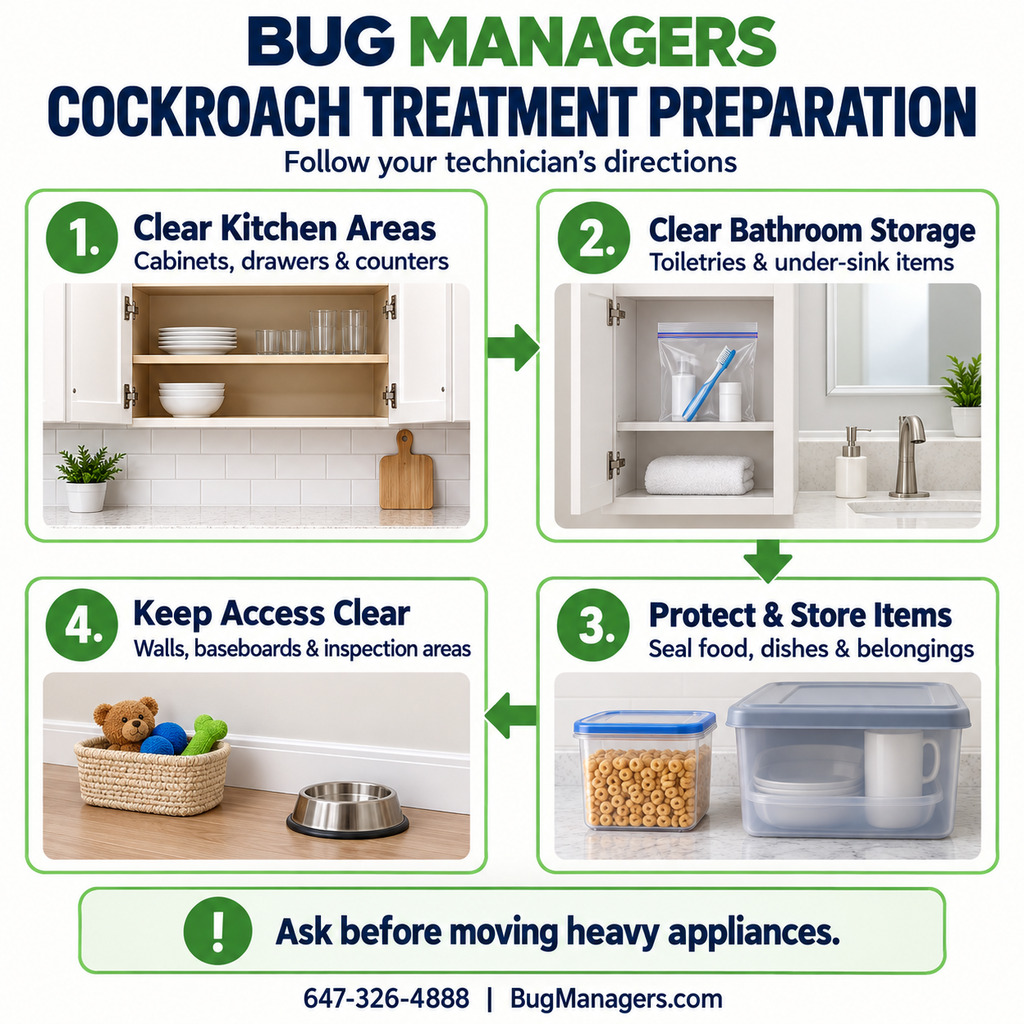
Clear the storage areas the technician needs to reach, then keep those belongings outside the rooms being treated.
Empty Kitchen Cabinets, Drawers, and Counters
Remove dishes, utensils, pots, pans, open food, and drawer contents from kitchen cabinets. Clear under the sink and wipe exposed surfaces as directed. Place items in sealed containers, sealed plastic bags, or clean boxes and move them outside the kitchen. Make sure food and pet food are protected, and do not put them on another treatment surface.
Leave small appliances such as toasters, microwaves, and coffee makers available for inspection unless your provider says otherwise. Ask before moving heavy appliances. These steps can help prepare a condo kitchen, rental unit, restaurant staff kitchen, or office break room for treatment.
| AreaItems to removeTemporary storageAccess needed | |||
| Kitchen cabinets and counters | Dishes, utensils, open food, and drawer contents | Bags or boxes outside the kitchen | Clear cabinet interiors and counter edges |
| Bathroom storage | Toothbrushes, water glasses, toiletries, and under-sink items | Bags or boxes outside the bathroom | Open access to bathroom cabinets and sink area |
| Other rooms with roaches | Belongings near walls, toys, and pet dishes | Boxes or a room not being treated | Clear baseboards and treated areas |
Clear Bathroom Storage and Other Rooms
Bag bathroom toothbrushes, water glasses, toiletries, and personal items stored under the sink. Clear bathroom cabinets, closets, shared laundry areas, and other rooms where you have seen cockroach activity. Move belongings away from walls and baseboards so the technician can inspect additional treatment areas.
Put children’s toys away and move pet food and water dishes out of treated areas. Reduce clutter, then place items where they will not block inspection. A professional pest inspection may identify hiding places that occupants have not noticed.
How to Clear Baseboards and Reach Behind Appliances
A refrigerator, stove, or dishwasher pushed against a wall can limit access to a potential hiding place. Move clutter and furniture away from baseboards, and clear accessible space behind appliances only when you can do so safely. Cockroaches may use cracks, plumbing penetrations, wall voids, motor compartments, or warm appliance areas, but an inspection is needed to determine which areas require treatment.
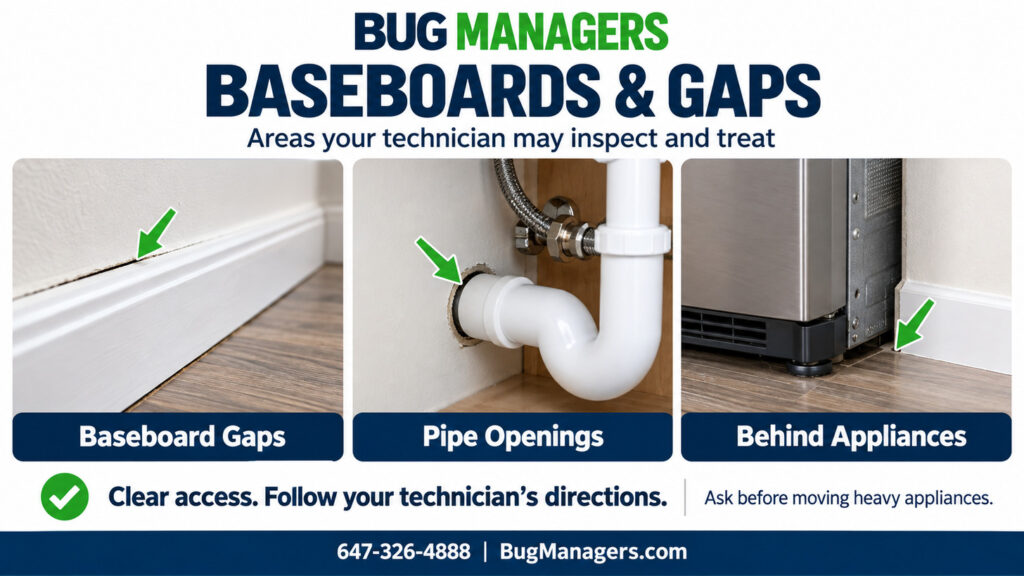
Preparation directions for appliance spacing vary. Some recommendations call for about 1 foot of clearance, while others call for 2 feet. Confirm the right clearance with your technician instead of treating either distance as a universal requirement. Make sure accessible walls, baseboards, and floor edges are free of stored items before the service.
Do not strain or risk injury while moving a heavy refrigerator or stove. Never disconnect gas, water, or electrical appliances yourself for preparation. If you cannot move an appliance safely, tell the technician when scheduling or before the appointment so the provider can explain whether access is needed.
Small countertop appliances are different from major appliances. Leave toasters, microwaves, and coffee makers available for inspection, as directed for the kitchen. Clear the floor and wall edges around them without packing them away. Property managers should coordinate access to utility rooms, garbage areas, shared kitchens, and adjoining units when appropriate.
Good access helps the technician inspect more than open floor space. After the service, ask whether sealing gaps or other exclusion work is appropriate; do not seal active access points before inspection unless instructed. This is especially relevant in Mississauga condos and older GTA buildings with shared walls and utility penetrations. Then plan separately for the people, pets, and fish who may need to leave during application.
How to Keep People, Pets, and Fish Safe
The technician’s product-specific instructions determine when people and pets can return. The re-entry interval is the time people and pets must stay out after treatment, based on the product label and the technician’s directions. Ask for clear, preferably written instructions before the service.
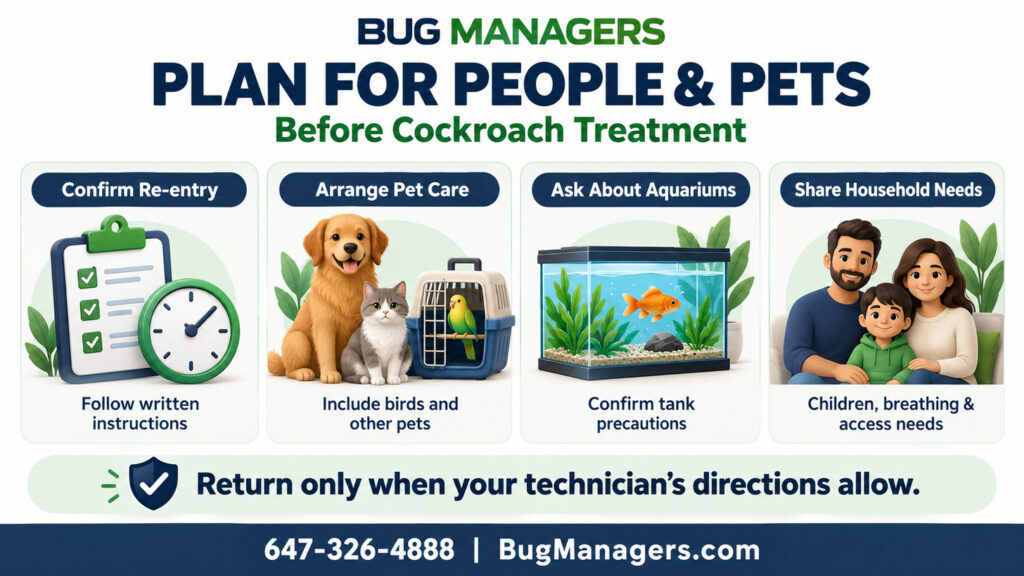
Timing varies by product, property, and provider. Some instructions may give a stay-out period of 2 to 4 hours, while another may specify at least 4 hours. Do not assume one wait time applies to every pest control service.
Use this safety checklist before the technician arrives:
- Leave during application and return only after the confirmed re-entry interval.
- Ask how to manage each pet, including birds, during treatment.
- Confirm aquarium directions in advance, including whether to cover the tank or turn off its filter.
- Tell the provider about children, household members with respiratory or access needs, and anyone using the treated room.
For a condo, childcare setting, office, restaurant, or other commercial property, coordinate access restrictions with occupants, staff, tenants, and building management. Ask whether bathroom, kitchen, or shared-room access must be limited.
Follow the provider’s directions for your service rather than relying on a general rule. A technician can explain product-specific precautions and when it is safe to resume normal use.
What to Do When You Return Home
Return home only after the re-entry interval confirmed by your Bug Managers technician has passed. Ventilate the home as directed before putting stored belongings back. Follow your exterminator’s written instructions about ventilation and which surfaces to clean. Some residual treatments are intended to remain on specific surfaces to provide ongoing pest control, so cleaning those areas too soon may reduce their effectiveness. If you are unsure what to clean or when to unpack, contact Bug Managers for after-treatment guidance.
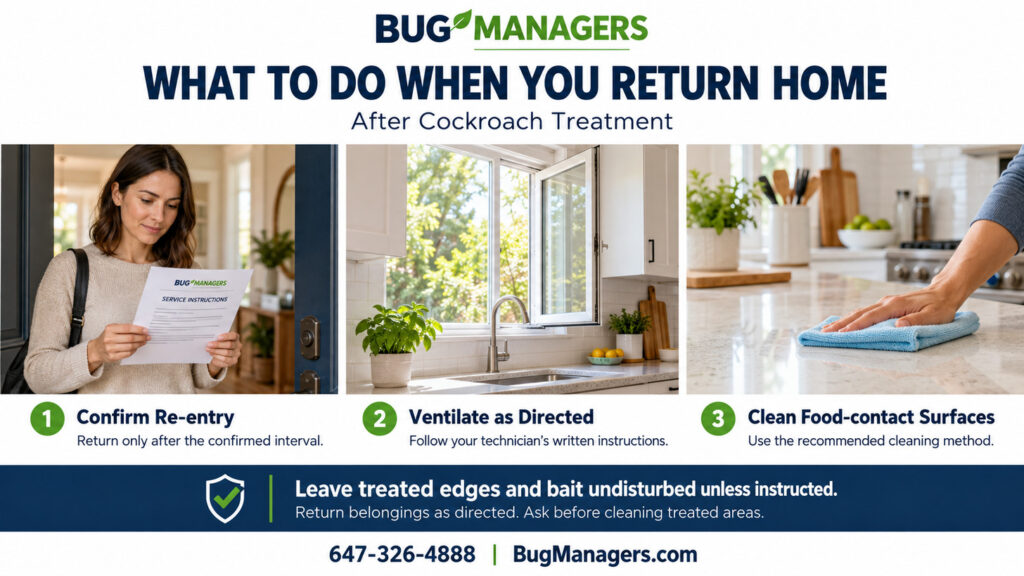
Ventilate Before Resuming Normal Use
One set of post-treatment instructions calls for opening doors and windows for at least 30 minutes. Use fans only as directed, and follow the product label and technician’s instructions if they specify a different approach. Ventilation cannot replace the required stay-out time.
After re-entry, ventilate as instructed before returning belongings or resuming normal use of the treated rooms. Make sure stored items are clean and suitable to return before placing them in cabinets, drawers, or containers.
Clean Food-Contact Surfaces Carefully
Clean food-contact surfaces before preparing or serving food. This includes countertops, dining tables, appliance handles, and other kitchen surfaces that contact food. Ask which cleaner and method your technician recommends for this service.
| SurfaceCleanup approachCaution | ||
| Food-contact counters and tables | Clean thoroughly before preparing or serving food | Ask which cleaning method the technician recommends |
| Cabinet interiors | Follow the technician’s product-specific directions | Some instructions may differ on whether to wipe them |
| Baseboards or other treated edges | Leave undisturbed unless told to clean them | Wiping may remove residual treatment |
Cabinets, treated edges, cracks, and bait placements need product-specific care. Do not assume plain water is suitable for cabinets or that every service uses the same wait before mopping. Businesses should document re-entry and cleaning instructions for staff.
After cleaning food-contact surfaces, return belongings according to the provider’s directions. Continue reporting roach activity and following the technician’s instructions while treatment results are assessed.
How Long Does Cockroach Treatment Take to Work?
Results from Bug Managers cockroach treatment may develop over several weeks, while more persistent infestations can require ongoing management for months. There is no guaranteed elimination timeline. Your Bug Managers technician will explain what to expect based on the cockroach species, infestation severity, treatment plan and building conditions.
A single sighting does not necessarily mean treatment has failed, but continued activity should be reported. Follow-up inspections, monitoring, sanitation and sealing entry points may be needed. In Mississauga condos and GTA rental properties, coordination with property management and neighbouring units may also be necessary. For practical prevention advice, see Health Canada’s cockroach control guidance. Canada.ca
Record the date and location of any sightings, and photograph the cockroach without handling it. Contact Bug Managers with your observations so your technician can assess progress and advise on the next steps.Cockroach treatment results can take weeks and, in some homes or businesses, longer. Examples may range from 3 weeks to 2 months in one case and 3 weeks to 6 months in another, but these are not promised timelines. The technician’s plan, the pest involved, the level of infestation, and building conditions affect what to expect.
Do not judge a service by one sighting or expect every roach to disappear immediately. Follow-up inspections, monitoring, sanitation, exclusion, and cooperation between units may be needed in a Mississauga condo or GTA rental property. Report continued activity, record the date and area, and photograph a roach from a safe distance rather than handling it.
What Kills Small Cockroaches?
The appropriate way to address small cockroaches depends on professional identification and the treatment plan. Small roaches may be immature insects or a different species, so size alone does not identify the pest. A professional inspection helps determine suitable bait, targeted treatment, monitoring, and exclusion.
Avoid adding DIY sprays, foggers, or bug bombs around professional service unless the technician directs you to do so. These products can interfere with treatment. Share what you see and ask before applying anything else.
How to Get Rid of Brown Cockroaches
To address brown cockroaches, tell your Bug Managers Exterminator where and when you see them, and request species identification. Colour alone cannot confirm the species, and identification helps determine the appropriate treatment plan.
German cockroaches are typically about ½ to ⅝ inch long, tan to light brown, with two dark stripes immediately behind the head. They often hide in warm, humid kitchen areas near sinks, stoves and dishwashers. For identification and prevention information, see Health Canada’s cockroach guide.
Cockroaches can contaminate food-preparation surfaces, and their droppings and shed skins can contribute to indoor allergens. While your Bug Managers cockroach control plan continues, keep food sealed, remove crumbs and grease, address leaks and reduce clutter. Follow your technician’s written cleaning instructions to avoid disturbing treated areas or bait placements.
How to Prevent Roaches and Use Bait Wisely
An open pet-food bag, leaking pipe or damp sink can continue supplying cockroaches with food and water. Long-term cockroach control combines inspection, sanitation, sealing entry points, monitoring and follow-up treatment when needed. Store pet food in sealed containers, repair leaks and keep sinks dry when practical. These steps support your Bug Managers exterminator’s treatment plan, but they do not replace professional assessment or guarantee elimination.
Reduce Food, Water, and Hiding Places
Small routine changes can make a home or business less inviting to roaches. Keep up with these practical steps:
- Reduce clutter and unnecessary storage in areas where a cockroach could hide.
- Keep food and pet food in sealed containers, or store suitable items in the refrigerator or freezer. Do not leave food on the floor or in open bags.
- Clean sinks, drains, appliances, dishes, and food-contact surfaces regularly.
- Repair leaks and maintain plumbing, floors, walls, bathrooms, and door sweeps. Ask a professional to assess active harbourage before sealing plumbing gaps.
- Keep garbage containers covered and in good condition.
How Many Cockroach Bait Stations Do I Need, and Where Should I Put Them?
The appropriate number of cockroach bait stations depends on the product label, infestation level and your Bug Managers technician’s assessment. Use only the amount and placement specified for your property as part of your cockroach control plan.
Follow the product label and your technician’s written instructions. Do not add sprays or bug bombs unless your technician directs you.
Place bait near observed activity or likely travel routes only where the label permits. Do not move, cover or spray technician-placed bait. Keep bait away from food-contact surfaces and inaccessible to children and pets, following all label precautions. Avoid placing belongings over bait placements or blocking access to monitoring stations.
Record sighting dates, locations and patterns, and share them with Bug Managers or your property manager. In multi-unit buildings, neighbouring units may also need inspection to address recurring activity.
For Mississauga homes and GTA rental properties, contact Bug Managers about prevention and sealing entry points. Restaurants and offices can explore our commercial pest control services.
Conclusion
Preparation and service-specific instructions work together for effective cockroach control. Clearing access helps your Bug Managers technician inspect areas that need attention, while product-specific directions guide treatment, re-entry and cleanup.
Before your appointment, confirm how to prepare belongings, cabinets, dishes and bags, and ask about pets, water sources and cleaning treated surfaces. Follow your technician’s written preparation and after-treatment instructions. These steps help homeowners, landlords, condo managers and businesses establish a clear service plan.
Need professional cockroach control, pest control or wildlife removal in Mississauga or the GTA? Contact Bug Managers at 647-326-4888 to arrange an inspection or request a service estimate.