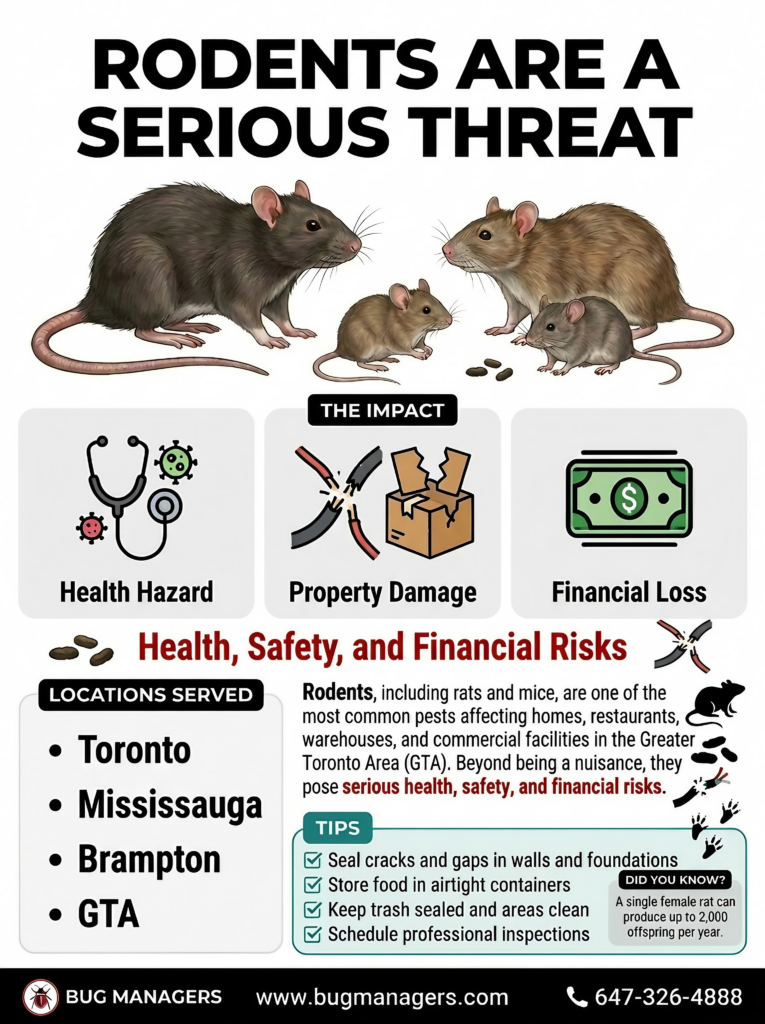
Rodents — including rats and mice — are one of the most common pests affecting homes, restaurants, warehouses, and commercial facilities in the Greater Toronto Area (GTA). Beyond being a nuisance, they pose serious health, safety, and financial risks.
This guide shares proven rodent control tips, interesting “Did You Know?” facts, and expert strategies to prevent infestations and protect your property.
Why Rodent Control is Critical
Rodents cause more than minor headaches — they can threaten health, safety, and business operations. Key risks include:
- Health hazards: Spread diseases through droppings, urine, and fleas
- Rapid population growth: A single female rat can produce up to 2,000 offspring annually
- Property damage: Chewing wires, insulation, drywall, and inventory
- Operational risks for businesses: Restaurants and warehouses can face closures, fines, and lost revenue
Did You Know?
Rats can fit through holes as small as 0.8 inches (2 cm) — meaning even tiny cracks in walls or foundations can be an entry point.
Why Rodent Infestations Can Close Restaurants & Facilities
Rodent infestations are a major reason for restaurant and facility closures across the GTA. They pose legal, health, and financial risks that cannot be ignored.
1. Health Code Violations
- Rodent droppings and urine contaminate food prep areas and surfaces
- Regulatory authorities (like Toronto Public Health) can issue fines or order immediate closure
- Even a single sighting during inspection may trigger mandatory corrective action
2. Food Safety Risks
- Rodents carry dangerous pathogens, including Salmonella, Hantavirus, and Leptospirosis
- Contaminated ingredients can lead to foodborne illness outbreaks
- Loss of customer trust and reputational damage is common after such incidents
3. Inventory and Property Damage
- Chewed packaging, wiring, and insulation can destroy stock and cause fire hazards
- Damage to warehouse or kitchen equipment is costly and disrupts operations
4. Financial Losses
- Closure due to health violations or insurance requirements leads to lost revenue
- Businesses face cleanup costs, re-inspections, and downtime before reopening
5. Legal & Liability Issues
- Owners may be liable if customers or employees are harmed by rodent contamination
- Lawsuits, insurance claims, and compliance fines can arise from infestations
Did You Know?
A rodent infestation in a restaurant can cost tens of thousands of dollars, sometimes forcing permanent closure.
Top Rodent Control Tips for Homes and Businesses
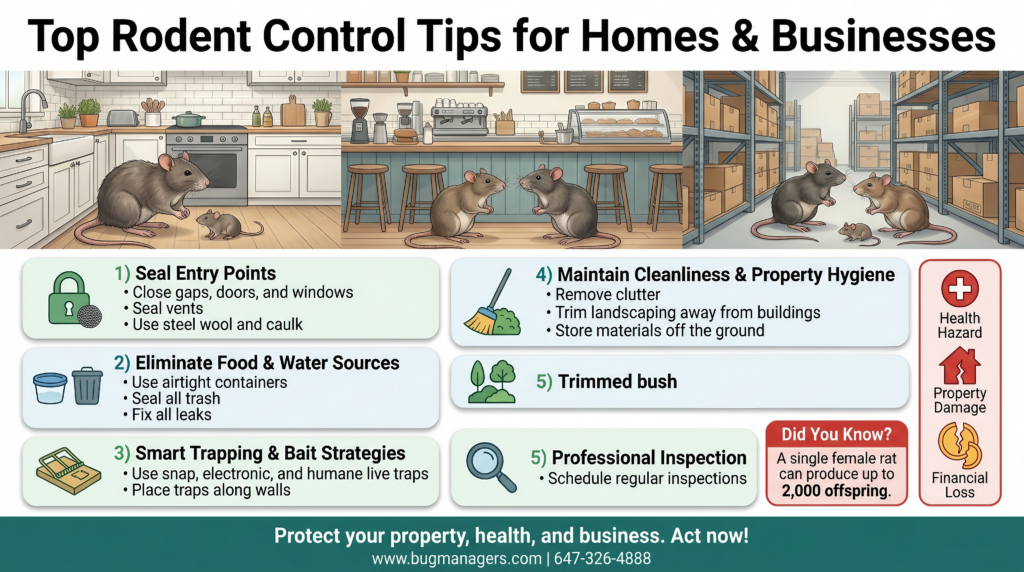
Effective rodent control combines prevention, monitoring, and removal. Here’s what works:
1. Prevention: Stop Rodents Before They Enter
Seal Entry Points
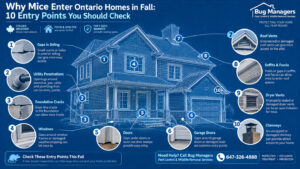
- Inspect and seal gaps around doors, windows, foundations, and vents
- Use steel wool + caulk for durable sealing
- Install door sweeps and weather-stripping
Eliminate Food & Water Sources
- Store food in airtight containers
- Keep trash bins closed and clean
- Remove standing water and fix leaks
Did You Know?
Rodents can climb walls and jump up to 18 inches (45 cm), making exterior protection crucial.
2. Smart Trapping and Bait Strategies
Traps and baits can reduce rodent populations, but proper placement and variety are essential.
Types of Traps:
- Snap traps – fast and effective
- Electronic traps – instant kill
- Live-capture traps – humane removal
- Glue boards – low-traffic areas only
Tips for Effective Use:
- Place traps along walls and rodent paths
- Use multiple traps for best results
- Rotate bait types: peanut butter, chocolate, oatmeal, or dried fruit
Professional Note:
DIY traps may catch a few rodents, but professional solutions ensure long-term control and prevent re-infestation.
3. Maintain Sanitation and Property Hygiene
Clean environments reduce rodent attraction:
- Remove debris and clutter inside and outside
- Store firewood and materials elevated off the ground
- Keep shrubs and landscaping trimmed away from buildings
- Avoid compost piles near structures
Did You Know?
Rodents are nocturnal and very cautious; often, signs like droppings and gnaw marks are the only proof of their presence.
4. Commercial Rodent Control Strategies
For restaurants, warehouses, and offices:
- Implement a written rodent control plan
- Schedule routine inspections with a licensed pest control company
- Use rodent-proof barriers and traps indoors and outdoors
- Adopt Integrated Pest Management (IPM): a combination of monitoring, sanitation, exclusion, and treatment
Fact: IPM is proven to reduce infestations more effectively than DIY methods alone.
5. Signs of a Rodent Infestation
Detecting an infestation early saves money and headaches:
- Droppings in cupboards, pantries, or along walls
- Gnawed wires, boxes, and insulation
- Scratching or squeaking sounds at night
- Footprints or tail marks in dusty areas
- Greasy rub marks along baseboards
6. Common Rodent Species in the GTA
- Norway rats: Prefer basements, sewers, and lower levels
- Roof rats: Excellent climbers; found in attics, rafters, and upper floors
- House mice: Small, stealthy invaders; often overlooked until populations grow
7. Health Risks From Rodents
Rodents can carry:
- Leptospirosis
- Hantavirus
- Salmonella
- Rat-bite fever
Even without direct bites, droppings and urine can contaminate food and surfaces, posing serious health risks.
8. Rodent Myths vs. Facts
| Myth | Fact |
|---|---|
| Rodents only invade in winter | Rodents enter buildings year-round |
| One trap is enough | Multiple traps and professional intervention are required |
| Natural repellents always work | Limited effectiveness; evidence-based methods work best |
| Seeing rodents is the only sign | They are nocturnal and elusive |
9. Seasonal Rodent Control Advice
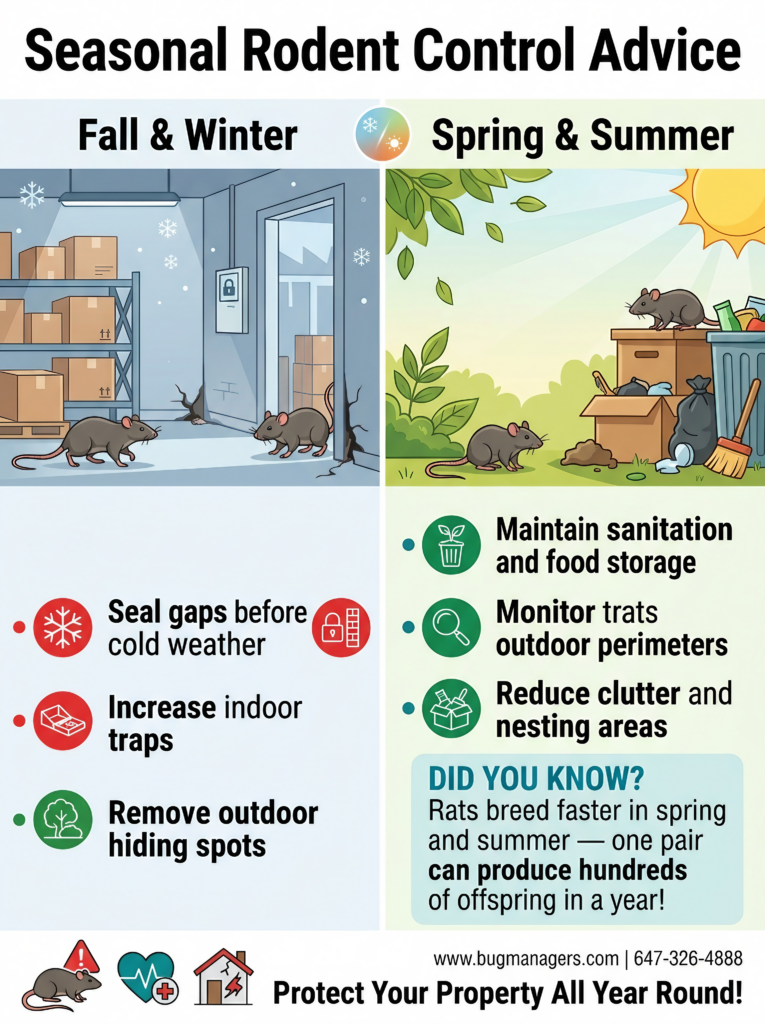
Fall & Winter:
- Seal gaps before cold weather
- Increase indoor traps
- Remove outdoor hiding spots
Spring & Summer:
- Maintain sanitation and food storage
- Monitor outdoor perimeters
- Reduce clutter and potential nesting areas
10. Eco-Friendly & Humane Rodent Control
Many property owners prefer eco-friendly methods:
- Humane live traps
- Exclusion barriers
- Non-toxic baits for sensitive areas
- Habitat modification
Professional pest control services can balance effectiveness with environmental safety.
11. DIY vs. Professional Control
| Approach | Best Use Case |
|---|---|
| DIY traps/bait | Small, early infestations |
| Sanitation | Always necessary |
| Professional control | Large infestations, commercial facilities |
| Structural exclusion | Long-term prevention |
12. Choosing the Right Rodent Control Partner
When hiring, ensure your provider:
- Is licensed and experienced
- Offers guaranteed services
- Provides eco-friendly options
- Has positive local reviews
Local GTA providers respond faster and understand regional rodent behavior.
Conclusion: Take Action Before It’s Too Late
Rodent infestations and pest problems are completely preventable when you combine prevention, proper sanitation, regular monitoring, and professional support. Protect your home or business before small issues become costly infestations.
Pest control isn’t just about elimination — it’s about ensuring safety, prevention, and long-term peace of mind.
At Bug Managers, we provide expert solutions for every pest problem:
- Rodent Control – Prevent rats and mice from damaging your property.
- Rat Control – Targeted solutions to eliminate rat infestations.
- Bed Bug Control – Safe, effective treatments to protect your home and guests.
- Wildlife & Bird Removal – Humane solutions for raccoons, squirrels, and birds.
- Insect & General Pest Control – Control ants, cockroaches, and other household pests.
Don’t wait — schedule a consultation with Bug Managers today and keep your property pest-free all year round.
Call-to-Action: Protect Your Property Today
If you’re in Toronto, Mississauga, Brampton, or anywhere in the GTA, don’t wait until pests become a serious problem. Bug Managers provides licensed, professional, and eco-friendly solutions to safeguard your home, business, or property year-round.
Take action now by contacting Bug Managers for fast, humane, and effective pest control services, including rodent control, bed bug control, wildlife & bird removal, and insect & general pest control — ensuring your property stays safe, clean, and pest-free.
Schedule a consultation today and experience the peace of mind that comes from having your property protected by GTA’s trusted pest control experts.