

Hearing scratching noises in your walls at night? Finding mouse droppings in your kitchen or garage? As winter approaches in Mississauga and Brampton, mice seek warmth, food and shelter inside homes. These unwanted visitors can contaminate food, damage insulation and chew electrical wiring. Discover 7 early warning signs, common entry points and effective winter rodent prevention tips before a small mouse problem becomes a costly infestation. House mice do not hibernate and can remain active indoors through winter.
A mouse sighting alone does not establish the size of an infestation. Entry-point exclusion means sealing gaps and openings to prevent rodents from entering a building. You can check for fresh activity, reduce access and choose a suitable next step without assuming how many mice may be present.
Key Takeaways
- House mice can stay active indoors throughout winter.
- Fresh, repeated signs give you more useful information than one old mark.
- Small openings can allow mice to enter your home.
- Wet contaminated material before wiping it up.
- Pair activity monitoring with access control and safe food storage.
A single sighting calls for a careful check, not an assumption about how many mice may be present.
Why Are Mice in House in Winter?
A heated home with accessible food and quiet nesting spaces can be more appealing than the exposed outdoors as temperatures fall. Warmth, shelter, food and water let mice stay active indoors through the colder months. In Ontario, mice in a house in winter can still find resources indoors when outdoor food becomes less available.
Mice do not hibernate, so indoor activity can continue through winter rather than pausing until spring. Mice winter activity often shifts indoors during fall, commonly from August to November. The timing depends on local climate and changing temperatures.

Wall voids, attics and storage areas offer protected places to shelter away from regular household activity. A warm home can also provide steady access to food and water, even when outdoor sources become harder to find.
For local service information, explore Bug Managers’ rodent control in Mississauga and its Ontario pest forecast. Both can help you understand seasonal pest activity and local prevention options.
Changes in temperatures do not always mean activity will stop. Mice can remain active after a cold spell, especially where a home continues to offer protected spaces and dependable resources.
Indoor activity can continue after outdoor conditions begin to improve, so do not assume a seasonal change has ended the problem.
What Are the Seven Warning Signs of Mice?
A dark pellet beneath a kitchen cabinet or a faint scratch behind a wall can be the first visible clue. Fresh, repeated signs are more useful than one old mark because they can show ongoing activity. Look for evidence in cupboards, along baseboards and near places where food or household items are stored.
Check rooms at different times, since mice may be easier to hear at night. Nests can be tucked into attics, walls, basements, ductwork or under appliances, often out of sight during a quick walk-through.
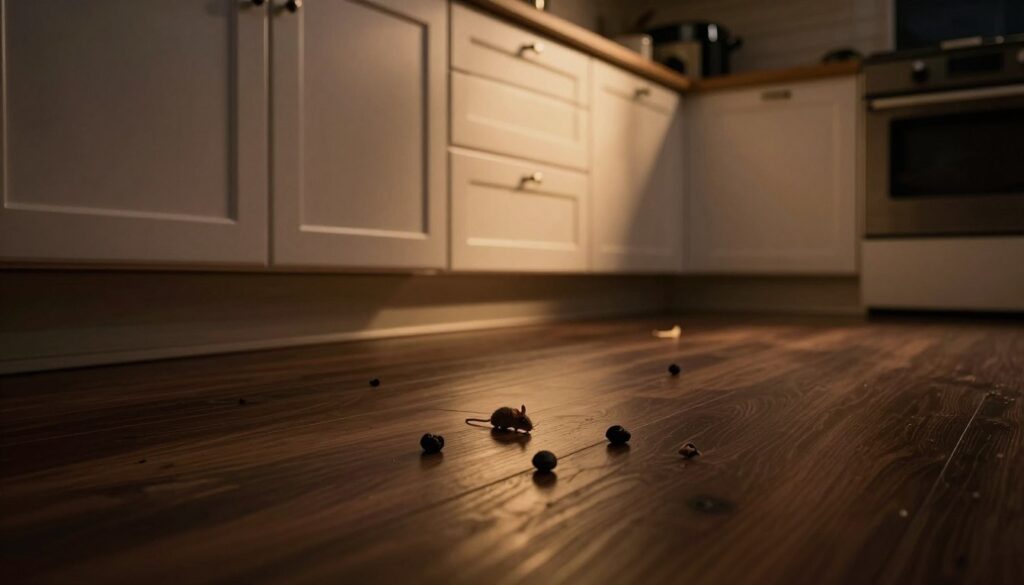
- Droppings in cupboards or along baseboards can point to regular mouse activity.
- Night-time scratching or scurrying may come from walls or ceilings.
- Gnaw marks and damaged food packaging are separate clues; inspect both hard surfaces and stored goods.
- Shredded paper or insulation can be nesting material pulled into a hidden space.
- A musty odour may linger near a place where mice gather.
- Grease marks along travel routes can form where mice repeatedly brush against surfaces.
One mark can be old or left by a single visit, while new evidence in the same area deserves closer attention. Attics may conceal nests, but signs around an appliance or cupboard can also help reveal where activity is happening.
Record where fresh signs appear, since their locations can help reveal a repeated route through the home.
Bug Managers explains humane mouse control options, including prevention and monitoring. A location log can make it easier to compare new evidence with earlier observations.
Where Can Mice Get Into a Home?
A mouse does not need a large hole: a gap about the width of a pencil can be enough. A house mouse can squeeze through an opening about 6 mm wide. Inspect the places where building materials meet or services pass through walls.
Check foundation cracks, wall and siding joints, utility penetrations, vents, damaged screens, chimneys and door or window edges. A small opening around a pipe can be easy to miss from indoors, so inspect the same area outside when you can do so safely.
Choose a closure material suited to the opening. Wire screening, steel wool, metal flashing or cement can seal common holes, while damaged screens and weather seals need proper repairs.
| Entry point | Inspection cue | Suitable closure approach |
|---|---|---|
| Foundation or wall cracks | Visible opening in masonry or joint | Steel wool, metal flashing or cement |
| Utility penetrations | Gap around a pipe or cable | Steel wool with an appropriate seal |
| Vents or screens | Torn screen or unprotected opening | Wire screening |
| Doors or windows | Daylight or visible frame gap | Repair the screen or weather seal |
Bug Managers’ rodent control guidance covers common access routes and control options. You can also review its advice on Ontario pest entry points when checking the outside of your home.
Check exterior door sweeps in daylight, where a visible strip of light can reveal a gap beneath the door.
Are Mice in a House Dangerous?
Health Risks and Property Damage Caused by Mice in Winter
Rodent contamination can affect household surfaces, food storage areas and hidden spaces behind walls or appliances. Mice in your house during winter can pose health concerns when droppings, urine or saliva contaminate food and surfaces. Rodents may carry pathogens associated with illnesses such as leptospirosis, hantavirus infection and salmonellosis.
According to the Public Health Agency of Canada, hantavirus infections are rare, and the overall risk of infection in Canada is low. However, avoiding direct contact with rodent waste remains important.
Rodents may also introduce fleas, ticks and mites into living spaces. Rodent allergens can contribute to asthma or allergy symptoms in susceptible individuals.
Beyond health concerns, mice and rats can chew insulation, food packaging, wood and electrical wiring. Health Canada’s guide to rats and mice explains common infestation signs, including droppings, scratching noises, gnaw marks and damaged food packaging.
Damaged electrical wiring can create fire hazards, while chewed cables may interrupt internet, telephone or other household services. Suspected electrical damage should be assessed by a qualified electrician.
How to Clean Mouse Droppings Safely
The Public Health Agency of Canada’s rodent contamination cleanup guidance recommends the following precautions:
- Never sweep or vacuum dry rodent droppings.
- Wear rubber or plastic gloves.
- Wet contaminated materials using a Health Canada-approved surface disinfectant or a mixture of one part household bleach to nine parts water.
- Allow the disinfectant to soak for 10 minutes before wiping up the material.
- Use paper towels or a wet mop to remove contaminated waste.
- Double-bag contaminated materials and dispose of them according to local bylaws.
- In confined spaces, use an appropriately fitted NIOSH-approved N95 or Canadian-approved CA-N95 respirator.
Always follow disinfectant label instructions. Never mix bleach with ammonia, vinegar or other cleaning chemicals. See Health Canada’s household chemical safety guidance.
For extensive contamination in attics, basements, crawl spaces or other difficult-to-access areas, avoid disturbing the materials and seek professional assistance.
Bug Managers Pest Control & Wildlife Removal provides professional rodent inspections, mice and rat control, entry-point identification and prevention services across Mississauga, Brampton, Toronto and surrounding GTA communities.
Contact Bug Managers to request a professional rodent inspection or free estimate.
Which DIY Steps Help Prevent Mice in Winter?
The most useful DIY routine removes easy food and water while checking for continuing activity. Inspect traps and bait stations daily, and track fresh signs for five consecutive days. Any new evidence restarts the count at day 1.
For the five-day rule, look for triggered traps, fresh droppings, missing or disturbed bait, new gnaw marks or mouse sounds. If any appears, the five-day count starts over. Replace bait in undisturbed stations every 3 to 5 days.
- Store dry goods and pet food in sealed containers.
- Clean crumbs and spills from food-preparation and storage areas.
- Secure garbage and compost in closed containers.
- Remove standing water and fix leaks.
- Clear yard debris and keep firewood away from the home.
- Inspect traps and bait stations daily for signs of activity.
Domestic-class rodenticide products in Canada must be used in bait stations and sold packaged with a compliant station. Commercial-class bait for structural use must be in tamper-resistant stations or kept inaccessible to children, pets, livestock and non-target wildlife.
DIY control can fail when traps are poorly placed, activity continues or openings remain accessible. A pest-control professional can help assess persistent activity and choose suitable control methods. Never use loose bait.
Do not use rodenticide bait outside the station and access rules that apply to its class and use.
What Does Professional Mouse Control Cost in Ontario?
A routine mouse-control package in Canada typically falls between $200 and $650, while severe infestations can cost $650-$1,500 or more. A standard package typically includes an initial inspection, trapping setup and 1 or 2 return visits.
These are general Canadian market ranges, not Bug Managers’ prices or a guaranteed quote. The condition of the property, treatment scope, access, follow-up and included repairs affect an estimate.
| Service or situation | Typical Canadian range | Usual scope |
|---|---|---|
| Standard package | $200-$650 | Initial inspection, trapping setup and 1 or 2 return visits |
| Severe infestation | $650-$1,500 or more | More extensive treatment |
| Entry-point exclusion | $200-$1,000 or more | Sealing work |
| Sanitation and droppings removal | $200-$600 additional | Cleanup |
Entry-point exclusion billed separately typically costs $25-$75 per entry point. A programme may need 2 or 3 visits, and extra visits typically cost $40-$80 when not included in a package or warranty.
Ontario generally requires an exterminator licence for commercial pesticide application on property the applicator or employer does not own or farm, unless an exemption applies. Licences last 5 years; applicants generally must be at least 16 and have passed an approved course within the previous 12 months.
Bug Managers offers licensed and insured services across Mississauga, Brampton, Toronto and the GTA. Explore its Ontario pest-control cost information, then request an inspection and free estimate.
Before agreeing to treatment, request a written scope that identifies exclusion work, follow-up visits and any sanitation charges.
Conclusion
Protect Your Home from Winter Mouse Infestations
A winter mouse problem is easier to resolve when both active rodent activity and potential entry points are addressed together. Early professional inspection can help identify the source, assess property damage and develop an effective rodent control and prevention plan.
Bug Managers Pest Control & Wildlife Removal provides licensed and insured mice extermination, rat control, rodent inspections and entry-point sealing services across Mississauga, Brampton, Toronto and the GTA.
🏠 Don’t wait for mice to damage your insulation, electrical wiring or contaminate your home!
📞 Call Bug Managers: 647-326-4888
📩 Request Your FREE Pest Control Estimate
Contact Bug Managers today to schedule a professional rodent inspection and protect your home with a customized prevention plan.
FAQ
Do mice go dormant in winter?
What smell do mice absolutely hate?
How many mice do you have if you see one?
What is a mouse’s worst enemy?
Is my house dirty if I have mice?
What will mice not cross?
What kills mice immediately?
Where do mice hide in a house during winter?
How do mice get into a house in winter?
Can mice climb walls and enter through the roof?
How long can mice survive inside a house?
Are mice more active at night?
Can mice chew through electrical wires?
Can mice live behind a refrigerator or stove?
Will mice leave my house when winter ends?
Can mice damage attic insulation?
How much does mouse extermination cost in Mississauga?
How do I know if mice are gone for good?
When should I call a professional mouse exterminator?
Bug Managers Pest Control & Wildlife Removal provides licensed and insured mouse extermination, rat control, rodent inspections and exclusion services across Mississauga, Brampton, Toronto, Oakville, Burlington and the GTA.