
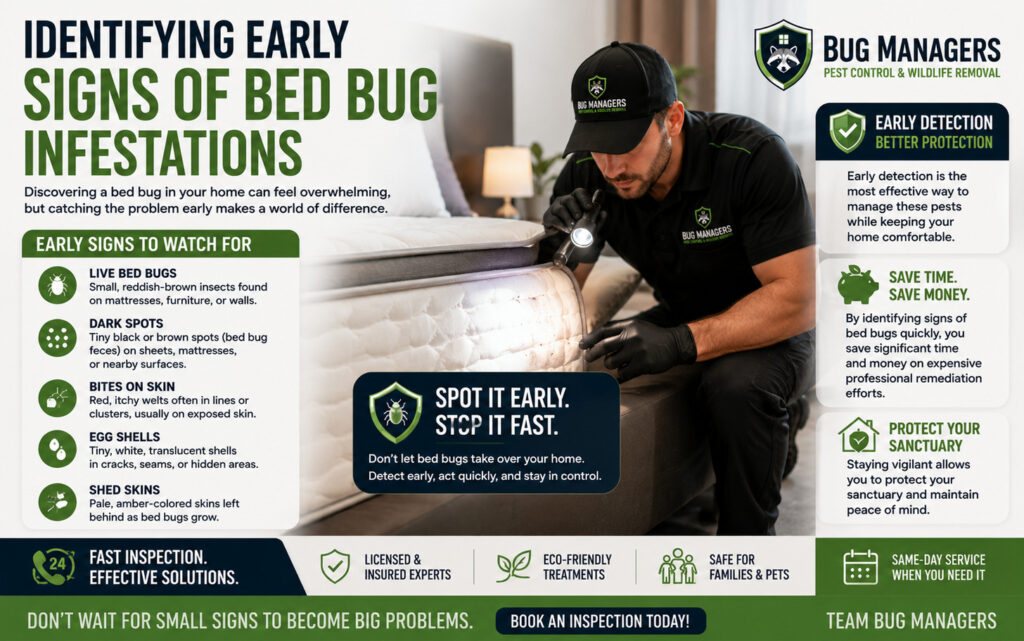
Discovering bed bugs in your home can be stressful, but early detection is the key to preventing a minor issue from becoming a major infestation. Bed bugs are skilled at hiding in mattresses, box springs, furniture, and cracks around sleeping areas, making them difficult to detect until their population grows.
Learning to recognize the early warning signs can help protect your home, reduce treatment costs, and restore peace of mind. Common indicators include itchy bite marks, small dark stains on bedding, shed skins, tiny white eggs, and live bed bugs hiding near mattress seams or furniture joints.
For homeowners and tenants across Mississauga, Brampton, Toronto, Oakville, Vaughan, Markham, Richmond Hill, and the GTA, prompt action is essential. Delaying treatment allows bed bugs to spread throughout bedrooms, living spaces, and adjoining units, making elimination more challenging.
At Bug Managers Pest Control & Wildlife Removal, our licensed technicians provide professional bed bug inspections, targeted treatment solutions, and long-term prevention strategies designed to eliminate infestations safely and effectively. We use proven methods to identify hidden activity, stop bed bugs at the source, and help protect your home from future infestations.
The sooner bed bugs are detected, the easier and more cost-effective they are to eliminate. Staying vigilant today can save you significant time, money, and frustration tomorrow.
Protect Your Sleep. Protect Your Home. Detect Bed Bugs Early with Team Bug Managers.Discovering a bed bug in your home can feel overwhelming, but catching the problem early makes a world of difference. When you learn to spot the subtle indicators of a bed bug infestation, you take control of your living space before the situation escalates.
- Early detection prevents widespread household issues.
- Recognizing subtle clues saves on professional costs.
- Proactive monitoring keeps your living space comfortable.
- Quick action limits the spread of unwanted pests.
- Knowledge is your best tool for effective home management.
Understanding the biology and behavior of the bed bug
Bed bugs are among the most persistent household pests affecting homes, apartments, hotels, and rental properties throughout Mississauga, Brampton, Toronto, and the GTA. Understanding their biology and behavior is essential for early detection and effective bed bug control.
Why Bed Bugs Are Masters of Concealment
The common bed bug (Cimex lectularius) has evolved to live alongside humans for thousands of years. Their flat, oval-shaped bodies allow them to hide in extremely narrow spaces, making infestations difficult to detect during the early stages.
Bed bugs commonly hide in:
- Mattress seams and box springs
- Bed frames and headboards
- Cracks in walls and baseboards
- Furniture joints and upholstery
- Electrical outlets and wall voids
Because these pests remain hidden during daylight hours, many infestations go unnoticed until the population has significantly increased.
“Bed bugs are highly adaptable pests capable of hiding in the smallest gaps within homes and businesses.”
The Nocturnal Nature of Bed Bugs
Bed bugs are primarily active at night. They are attracted to carbon dioxide, body heat, and human scent, which helps them locate a host while people are sleeping.
Many homeowners first discover a bed bug infestation after noticing:
- Itchy red bite marks
- Small blood stains on bedding
- Dark fecal spotting on mattresses
- Shed skins and eggshells near hiding areas
Their nighttime feeding habits allow them to remain hidden during the day, making professional inspections critical for accurate identification and treatment.
Why Early Detection Matters
A small bed bug problem can quickly become a widespread infestation if left untreated. Female bed bugs can lay hundreds of eggs during their lifetime, allowing populations to grow rapidly within bedrooms and adjoining rooms.
Early detection offers several benefits:
✅ Lower treatment costs
✅ Faster elimination of infestations
✅ Reduced spread throughout the property
✅ Improved comfort and peace of mind
✅ Better long-term protection
Professional Bed Bug Control in the GTA
At Bug Managers Pest Control & Wildlife Removal, we provide professional bed bug inspections, targeted treatments, and long-term prevention strategies for homeowners, tenants, landlords, hotels, and property managers across the GTA.
Our licensed technicians use proven bed bug treatment methods to identify hidden infestations, eliminate active populations, and help prevent future outbreaks.
Learn More
Internal Links:
- Bed Bug Control Services: https://bugmanagers.com/bed-bug-control/
- Pest Control Services: https://bugmanagers.com/
External Resources:
- Public Health Agency of Canada: https://www.canada.ca
- Government of Canada Pest Management Information: https://www.canada.ca/en/health-canada/services/consumer-product-safety/pesticides-pest-management.html
Few household pests are as elusive or as biologically adapted to human environments as the bed bug. These insects have evolved over thousands of years to thrive in close proximity to humans, making them incredibly difficult to eradicate once they establish a presence.
How Bed Bugs Travel and Spread Throughout a Home
Unlike fleas, bed bugs cannot jump, and unlike mosquitoes, they cannot fly. However, they are highly effective hitchhikers that spread by attaching themselves to personal belongings and household items.
Common sources of bed bug introductions include:
- Travel luggage and suitcases
- Used furniture and mattresses
- Second-hand clothing
- Shared laundry facilities
- Hotels, motels, and short-term rentals
Once inside a property, bed bugs can quickly spread through wall voids, electrical conduits, baseboard gaps, and adjoining rooms. In apartments and condominiums, infestations can easily move between neighboring units.
Regular inspections and caution when bringing used furniture or travel items into your home can significantly reduce the risk of a bed bug infestation.
Conducting a Systematic Bedroom Inspection
If you suspect bed bug activity, performing a thorough bedroom inspection is one of the most important steps you can take. A systematic approach helps identify signs of infestation before the problem becomes widespread.
Preparing Your Space for a Thorough Search
Before beginning your inspection:
✅ Remove clutter around the bed and sleeping areas
✅ Inspect piles of clothing, books, and storage boxes
✅ Use a bright flashlight to check dark corners and cracks
✅ Have a magnifying glass available for detailed inspections
✅ Examine mattress seams, bed frames, and furniture carefully
Taking your time is essential. Rushed inspections often miss important evidence, allowing bed bugs to continue spreading unnoticed.
When to Call a Professional
Because bed bugs are skilled at hiding, professional inspections are often the most reliable way to confirm an infestation. At Bug Managers Pest Control & Wildlife Removal, our licensed technicians use proven inspection techniques and targeted treatment solutions to identify hidden bed bug activity and eliminate infestations at the source.
Related Resources
Internal Links
- Bed Bug Control Services: https://bugmanagers.com/bed-bug-control/
- Pest Control Services GTA: https://bugmanagers.com/
- Residential Pest Control: https://bugmanagers.com/residential-pest-control/
External Resources
- Government of Canada Bed Bug Information: https://www.canada.ca
- Public Health Ontario: https://www.publichealthontario.ca
- Canadian Centre for Occupational Health and Safety: https://www.ccohs.ca
Focusing on Mattress and Box Spring Seams
When performing a bed bug inspection, the mattress and box spring should always be your primary focus. These areas provide ideal hiding spots for bed bugs because they are located close to their food source and contain numerous seams, folds, and protected crevices.
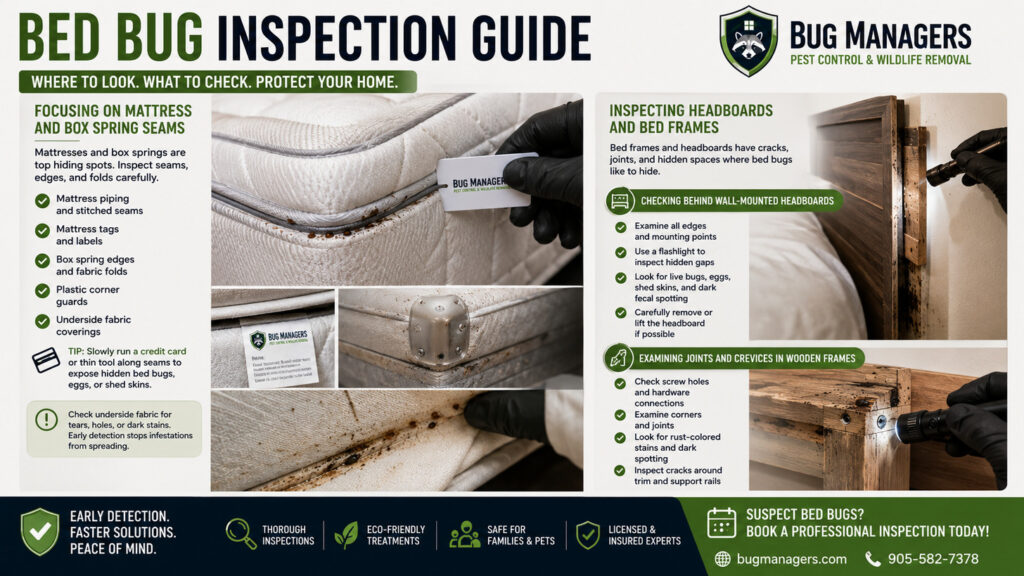
Carefully inspect:
- Mattress piping and stitched seams
- Mattress tags and labels
- Box spring edges and fabric folds
- Plastic corner guards
- Underside fabric coverings
A useful inspection technique is to slowly run a credit card or thin inspection tool along mattress seams to expose hidden bed bugs, eggs, or shed skins. Pay particular attention to the underside of the box spring, where infestations often develop unnoticed.
Additionally, inspect the fabric covering beneath the box spring for tears, holes, or dark staining that may indicate bed bug activity. Early identification in these areas can prevent a small infestation from spreading throughout the home.
Inspecting Headboards and Bed Frames
After examining the mattress and box spring, shift your attention to the bed frame and headboard. These structures contain numerous cracks, joints, and hidden spaces that provide ideal daytime shelter for bed bugs.
Because bed bugs prefer dark, undisturbed locations, wooden furniture, bed frames, and headboards are among the most common hiding places discovered during professional bed bug inspections.
Checking Behind Wall-Mounted Headboards
Wall-mounted headboards frequently conceal large bed bug populations because they create narrow, protected gaps between the furniture and the wall.
When inspecting:
✅ Examine all edges and mounting points
✅ Use a flashlight to inspect hidden gaps
✅ Look for live bed bugs, eggs, shed skins, and dark fecal spotting
✅ Carefully remove or lift the headboard if possible
Many severe infestations remain hidden behind headboards for months before homeowners discover them.
Examining Joints and Crevices in Wooden Bed Frames
Wooden bed frames often contain small cracks, screw holes, and joints that serve as ideal bed bug harborages. During daylight hours, bed bugs retreat into these protected spaces where they remain hidden until nighttime feeding begins.
When inspecting a wooden frame:
- Check all screw holes and hardware connections
- Examine corners and joints where wood pieces meet
- Look for rust-colored stains and dark spotting
- Inspect cracks around decorative trim and support rails
Older furniture deserves special attention, as age-related cracks and gaps create additional hiding opportunities for bed bugs.
Professional Bed Bug Inspection Services in the GTA
While homeowners can perform preliminary inspections, bed bugs are highly skilled at remaining hidden in difficult-to-access areas. Professional inspections often uncover activity that would otherwise go unnoticed.
At Bug Managers Pest Control & Wildlife Removal, our licensed technicians provide comprehensive bed bug inspections for homes, apartments, condominiums, hotels, and rental properties throughout Mississauga, Brampton, Toronto, Vaughan, Oakville, Richmond Hill, Markham, and the GTA.
Related Resources
Internal Links
- Bed Bug Control Services: https://bugmanagers.com/bed-bug-control/
- Residential Pest Control Services: https://bugmanagers.com/residential-pest-control/
- Pest Control & Wildlife Removal Services: https://bugmanagers.com/
External Resources
- Government of Canada Bed Bug Information: https://www.canada.ca
- Public Health Ontario: https://www.publichealthontario.ca
Focusing on the mattress and box spring seams
The mattress and box spring are the most common harborages for a bed bug colony. You should pay close attention to the piping, seams, and tags where these insects often tuck themselves away.
- Slowly run a credit card or a thin tool along the seams to flush out any hidden insects.
- Check the underside of the box spring, especially near the plastic corner guards.
- Inspect the fabric covering the bottom of the box spring for small tears or holes.
Inspecting headboards and bed frames
Once you have finished with the bedding, move your attention to the furniture structure. The frame provides many dark, protected areas that are perfect for these nocturnal pests.
Checking behind wall-mounted headboards
Wall-mounted headboards are notorious for hiding large colonies. Because they are often attached directly to the wall, they create a narrow gap that is difficult to reach. You may need to carefully lift or detach the headboard to see what is happening behind it.
Examining joints and crevices in wooden frames
Wooden bed frames often have small cracks where the wood pieces meet. These joints are ideal spots for a bed bug to rest during the day. Use your flashlight to peer into every screw hole and corner. If you are wondering how to find bed bugs in older furniture, look for dark, rust-colored spots that indicate their presence.
Visual indicators of a bed bug presence
Beyond just bites, there are several visual indicators that reveal if you are dealing with a bed bug infestation. These pests leave behind distinct traces that act as a roadmap for your inspection. By learning to spot these clues, you can take control of your living space quickly.
Identifying fecal spots and dark stains
One of the most common signs of bed bugs is the appearance of small, dark fecal spots. These look like tiny dots made by a felt-tip marker on your mattress or fabric surfaces. They are actually digested blood, which is why they often appear rusty or black in color.
Spotting shed skins and molted exoskeletons
As these insects grow, they must shed their outer shells to expand. You might find these pale, translucent, or yellowish husks in the same areas where the bugs hide. Finding these molted exoskeletons is a clear confirmation that a population is actively living and growing in your home.
Searching for translucent eggs and egg casings
Locating bed bug eggs is a vital step in identifying an active colony. These eggs are very small, measuring about one millimeter in length, and have a pearly white or translucent appearance. Because they are sticky, they are often attached firmly to surfaces.
Where to look for clusters of eggs
You should focus your search on tight, protected areas where adults prefer to congregate. Check the undersides of furniture, deep within mattress seams, and inside the crevices of bed frames. These clusters are often tucked away in dark, undisturbed corners.
Distinguishing eggs from dust or debris
It is easy to confuse bed bug eggs with common household dust or lint. However, unlike dust, these eggs will not easily brush away because of their adhesive coating. If you use a magnifying glass, you will notice an oval shape and a distinct, tiny cap at one end of the egg.
Identifying physical evidence on bedding and furniture
Identifying signs of bed bugs in secondary locations is essential for a complete home inspection. While the mattress is the most common site, these pests often venture into other areas of the room to hide. By expanding your search, you can gain a much clearer picture of the infestation’s true scope.
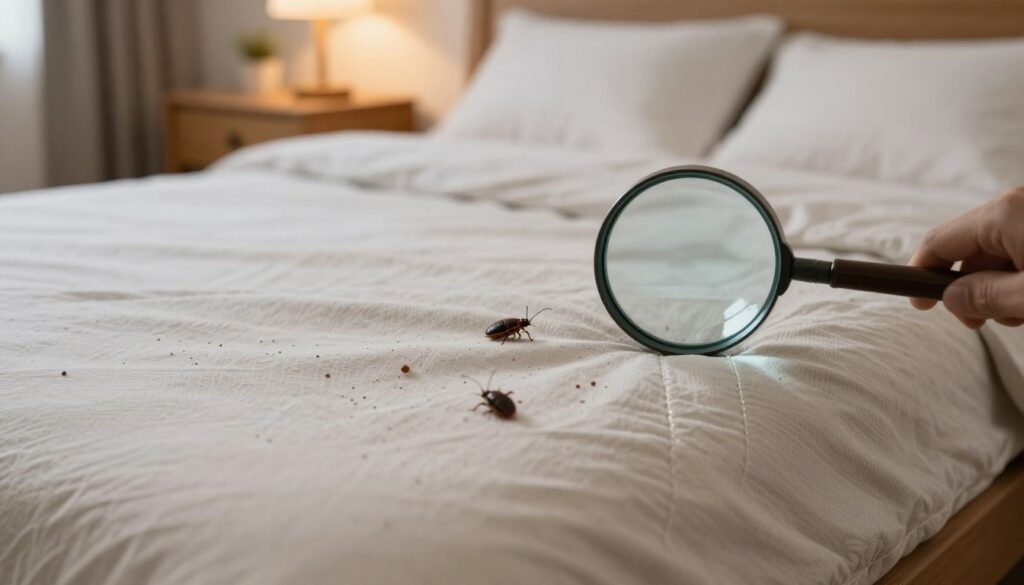
Analyzing blood spots on sheets and pillowcases
One of the most common indicators of a bed bug presence is the appearance of small, rust-colored spots on your linens. These marks are typically caused by crushed insects or fecal matter left behind after a feeding session. You should carefully inspect the corners and folds of your pillowcases, as these areas provide easy access for the pests.
Checking upholstered furniture and curtains
Do not limit your search to the bed alone, as sofas, armchairs, and curtains are frequent bed bug harborages. These items offer plenty of dark, undisturbed crevices where insects can settle during the day. Be sure to check the following areas:
- Underneath seat cushions and along the seams of upholstery.
- The folds and hems of heavy curtains near the floor.
- Behind decorative pillows or fabric trim on furniture.
Inspecting baseboards and electrical outlets
When these insects move between rooms, they often travel along the perimeter of the floor. Baseboards provide a perfect highway for them to navigate your home undetected. You should also examine the gaps around electrical outlet covers, as these are common entry points into wall cavities.
The role of wall voids in hiding infestations
Wall voids act as protected corridors that allow pests to move throughout the structure of your house. Because these spaces are dark and inaccessible, they serve as ideal bed bug harborages that are difficult to treat. If you notice insects appearing in multiple rooms, it is likely they are traveling through these hidden pathways.
Examining joints and crevices in wooden frames
Wooden furniture, such as nightstands and bed frames, contains many tiny gaps where insects can hide. Use a flashlight to inspect the joints, screw holes, and decorative carvings for any signs of bed bugs. A thin credit card or a specialized crevice tool can help you probe these tight spaces to see if anything is hiding inside.
Recognizing the signs of bed bug bites on the skin
Understanding the physical signs of a potential infestation is a critical step in protecting your home. While these pests are small, the reactions they cause on your skin can provide vital clues about their presence. Recognizing bed bug bites early helps you take swift action before an issue escalates.
Common patterns of bites on the body
A hallmark sign of a bed bug encounter is the specific arrangement of the marks. You will often notice them appearing in a straight line or a tight cluster on exposed areas like your arms, neck, or shoulders. This happens because the insect may move slightly while feeding, resulting in a series of small, red, and itchy bumps.
Unlike other insects that might bite once and move on, these pests often leave multiple marks in a single night. If you wake up with a row of itchy spots that were not there the night before, it is time to inspect your bedding closely.
Differentiating bed bug bites from mosquito or flea bites
It is easy to confuse various insect bites, but specific traits can help you tell them apart. Mosquito bites usually appear as random, puffy welts that show up quickly after being outdoors. Flea bites are typically found around the ankles and lower legs, appearing as tiny red dots surrounded by a reddish halo.
| Feature | Bed Bug Bites | Mosquito Bites | Flea Bites |
|---|---|---|---|
| Typical Pattern | Lines or clusters | Random, isolated | Lower legs/ankles |
| Appearance | Red, swollen bumps | Puffy, itchy welts | Small red dots |
| Timing | Usually at night | Any time | Any time |
When to seek medical attention for skin reactions
Most people experience mild itching and redness that can be managed with over-the-counter creams. However, some individuals may have a more severe allergic reaction to the saliva of the insect. If you notice excessive swelling, hives, or signs of infection like pus, you should consult a healthcare provider.
Always monitor your skin for signs of an allergic response that goes beyond simple irritation. If you experience difficulty breathing or widespread rashes, seek professional medical help immediately to ensure your safety and comfort.
Using specialized detection tools and monitors
If you want to stay ahead of a potential infestation, specialized detection gear is your best ally. While visual inspections are helpful, these tools provide objective data that can confirm the presence of pests even when they are hiding deep within your furniture. By integrating these devices into your routine, you significantly improve your ability to manage your home environment.
The effectiveness of interceptor cups
Interceptor cups are simple yet highly effective devices placed under the legs of your bed frame. They work by trapping the bed bug as it attempts to climb up or down the furniture legs. Because the interior of the cup is smooth and slippery, the insects become stuck, allowing you to identify them easily.
These cups serve as a constant bed bug detection method that works while you sleep. They are particularly useful for confirming if an infestation is originating from your mattress or if the pests are migrating from another area of the house.
Utilizing active and passive bed bug monitors
When learning how to find bed bugs, you will encounter two main types of monitoring devices. Passive monitors are designed to provide a safe harbor for insects to hide in, which you then check periodically for signs of activity. These are excellent for long-term surveillance in guest rooms or storage areas.
Active monitors, on the other hand, use heat, carbon dioxide, or chemical lures to attract the pests. A high-quality bed bug monitor can help you track activity levels over time, providing clear evidence of whether a treatment plan is working. Using these tools allows you to make informed decisions based on actual capture rates rather than guesswork.
The role of canine scent detection in early identification
For those seeking the highest level of accuracy, professional canine scent detection is the gold standard. Specially trained dogs can sniff out a bed bug colony in minutes, even when the insects are tucked away behind baseboards or inside wall voids. This method is often used by professionals to pinpoint the exact location of an infestation before it spreads.
| Detection Method | Primary Use | Accuracy Level | Ease of Use |
|---|---|---|---|
| Interceptor Cups | Monitoring bed legs | High | Very Easy |
| Passive Monitors | Long-term surveillance | Moderate | Easy |
| Active Monitors | Attracting and trapping | High | Moderate |
| Canine Inspection | Professional pinpointing | Very High | Professional Only |
Differentiating bed bugs from other household pests
It is quite common to confuse other household insects with the elusive bed bug. Because many small insects share similar environments, proper bed bug identification is vital to ensure you choose the right treatment method. Taking a moment to observe the physical traits of a pest can save you from unnecessary stress and ineffective home remedies.
Comparing bed bugs to carpet beetles
Carpet beetles are frequently mistaken for bed bugs because they are often found in bedrooms. However, these beetles are typically round or oval and covered in tiny scales or hairs, unlike the flat, reddish-brown body of a bed bug.
- Carpet beetles feed on natural fibers like wool and fur.
- They do not bite humans, though their larvae can cause skin irritation.
- Bed bugs strictly feed on blood and leave distinct fecal spots.
Identifying spider beetles and their similarities
Spider beetles are another common household pest that can cause confusion. They have long legs and a rounded body, which gives them a spider-like appearance that differs significantly from the wingless, flattened shape of a bed bug.
While they may be found in similar dark, undisturbed areas, they are generally scavengers. They do not seek out human hosts for a blood meal, making them a nuisance rather than a health threat.
Distinguishing bed bug signs from dust mite accumulation
Many people worry about dust mites when they see small particles on their bedding. It is important to remember that dust mites are microscopic and cannot be seen with the naked eye.
If you can see the “signs” of an infestation, such as dark spots or shed skins, you are likely dealing with something larger than a dust mite. Use the following table to help clarify the differences between these common household visitors.
| Pest | Visibility | Primary Sign |
|---|---|---|
| Bed Bug | Visible | Blood spots/fecal stains |
| Carpet Beetle | Visible | Larval skins/damaged fabric |
| Dust Mite | Microscopic | Allergic reactions |
What to do if you discover an infestation
Finding evidence of a bed bug infestation is stressful, yet a calm and systematic approach will help you manage the situation effectively. Once you confirm the presence of these pests, your primary goal is to stop them from moving into other rooms. Taking quick, decisive action is the most important step in protecting your home.
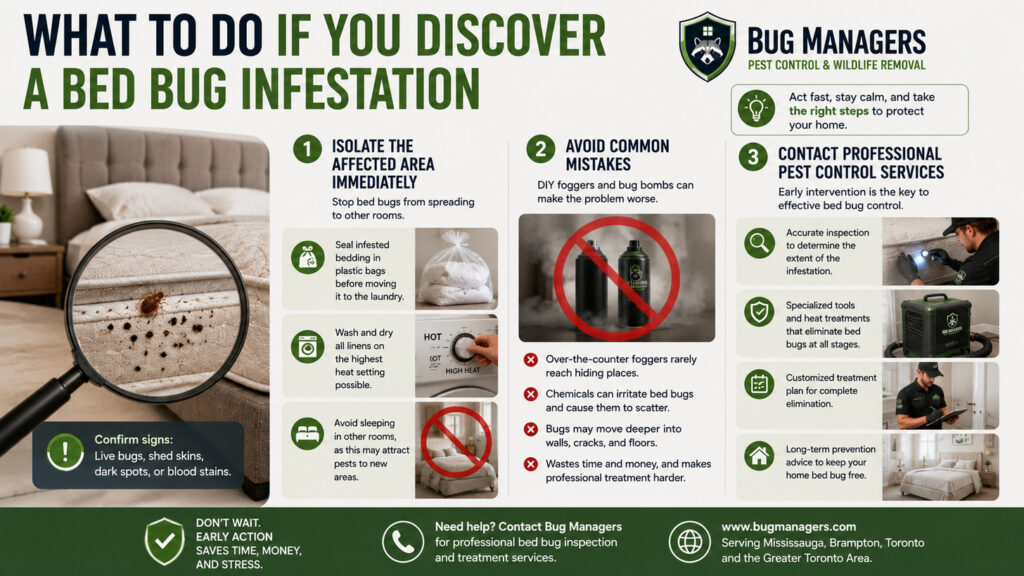
Isolating the affected area immediately
The first rule of containment is to stop the movement of items out of the infested room. You should avoid moving furniture, bedding, or clothing to other parts of the house, as this can easily spread the bed bug population. Instead, keep these items contained until they can be properly cleaned or treated.
- Seal infested bedding in plastic bags before moving it to the laundry.
- Wash and dry all linens on the highest heat setting possible.
- Avoid sleeping in other rooms, as this may inadvertently attract the pests to new areas.
Avoiding common mistakes like over-the-counter foggers
Many homeowners feel tempted to use store-bought foggers or “bug bombs” to solve the problem quickly. However, these products are rarely effective for a bed bug issue. In many cases, the chemicals in foggers actually irritate the insects, causing them to scatter deeper into wall voids and floor cracks.
This reaction makes a future bed bug treatment much more difficult for professionals to perform. Relying on ineffective sprays often wastes time and money while allowing the population to grow. It is better to avoid these products entirely and focus on proven containment methods.
When to contact professional pest control services
If you find signs of a bed bug infestation, it is best to contact a licensed pest control professional as soon as possible. Experienced technicians have access to specialized inspection tools, advanced heat treatments, and proven treatment methods that are far more effective than over-the-counter products. They can accurately assess the extent of the infestation and develop a customized treatment plan to eliminate bed bugs at every stage of their life cycle.
Do not wait until the infestation becomes severe. Early intervention can reduce treatment costs, prevent bed bugs from spreading throughout your home, and minimize the stress associated with a prolonged infestation.
At Bug Managers Pest Control & Wildlife Removal, we provide professional bed bug inspections and treatment services across Mississauga, Brampton, Toronto, Vaughan, Oakville, Markham, Richmond Hill, and the GTA. Our licensed technicians use effective, family-conscious solutions designed to eliminate bed bugs and help prevent future infestations.
If you suspect bed bug activity, contact Bug Managers today.
📞 647-326-4888
Early detection and professional treatment remain the fastest path to a bed bug-free home.If you find signs of an infestation, it is usually best to reach out to a licensed pest control expert as soon as possible. These professionals have access to specialized tools and heat treatments that are far more effective than anything available at a local hardware store. They can accurately assess the extent of the problem and create a targeted plan to eliminate the pests.
Do not wait until the infestation becomes severe before seeking help. Early intervention by a qualified pest control service saves you from the long-term stress of a persistent bed bug treatment process. Professionals provide the expertise needed to ensure your home is truly clear of these resilient insects.
Conclusion
Staying proactive remains your strongest defense against the stress of a potential infestation. You now possess the knowledge to spot early warning signs before they escalate into a major household issue.
Consistent bed bug prevention saves you time and money in the long run. Small habits like checking luggage after travel or inspecting second-hand furniture keep your living space secure.
A clean home environment serves as a vital barrier against these pests. Regular vacuuming and decluttering reduce the number of hiding spots available for a stray bed bug to settle.
Share these insights with your family to ensure everyone stays alert. Early detection empowers you to act quickly and maintain peace of mind throughout the year.
Reach out to local experts if you ever feel uncertain about your findings. Your commitment to bed bug prevention creates a safer and more comfortable sanctuary for everyone in your household.
FAQ
What are the very first indicators that I might have a bed bug problem?
Why is it so difficult to find bed bugs during the day?
How do bed bugs usually enter a clean home?
What do bed bug eggs look like, and where should I look for them?
Can bed bugs live in places other than my bed?
How can I tell if a skin rash is actually from a bed bug bite?
Are there specialized tools I can use to monitor for activity?
Could I be mistaking another insect for a bed bug?
Should You Use a Store-Bought Bug Bomb for Bed Bugs?
In many cases, bug bombs make the problem worse by causing bed bugs to scatter into new areas of the home, resulting in larger infestations and more difficult treatments.
If you discover bed bugs, avoid DIY foggers and focus on containment. Wash and dry bedding on high heat, reduce clutter, and avoid moving infested items to other rooms. Professional bed bug inspections and targeted treatments are the most effective way to eliminate infestations safely and completely.
At Bug Managers Pest Control & Wildlife Removal, we help homeowners across Mississauga, Brampton, Toronto, and the GTA identify, treat, and prevent bed bug infestations using proven professional solutions.
If you suspect bed bug activity, contact Bug Managers today.
📞 647-326-4888