
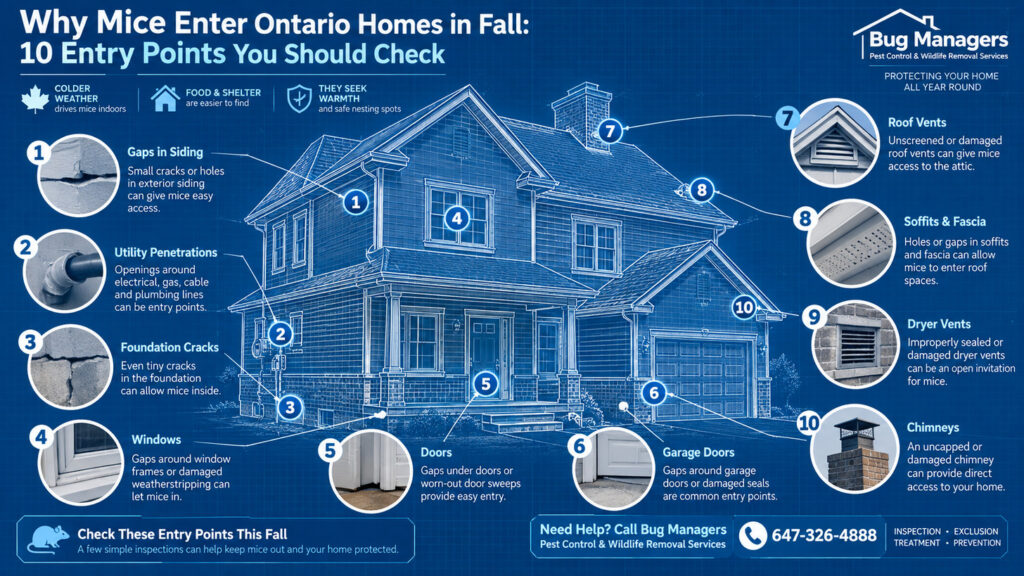
Have you ever wondered why mice suddenly appear inside your home when Ontario temperatures begin to drop? As autumn arrives, outdoor shelter becomes less reliable. Warm rooms, stored food and quiet nesting areas make a home an easy target.
A mouse can squeeze through a gap just 6 millimetres wide, about the width of a pencil. Small openings around foundations, garage doors, vents, utility lines, soffits, attics and porches can create hidden access.
This guide explores ten common entry points and shows where to focus an exterior inspection. Prevention works best before September and October activity grows. Check seals, screens and damaged materials each year, then arrange repairs quickly.
Bug Managers Pest Control & Wildlife Removal helps homeowners across Mississauga, Brampton, Toronto and the GTA. If signs appear, practical advice and professional rodent control can restore comfort without alarm.
Key Takeaways
- Mice seek warmth, food and protected nesting space as temperatures drop.
- Openings near foundations and roof areas deserve close attention.
- A 6-millimetre gap may provide enough access.
- Annual checks support effective prevention.
- Bug Managers serves Mississauga, Brampton, Toronto and the GTA.
Why Mice in House in Fall Ontario Become More Common

September and October bring a sharp rise in mouse activity across Ontario. Cooler nights reduce outdoor warmth and food, so sheltered homes become more attractive. The most common time for entry is fall, when conditions grow colder and less predictable.
Basements, attics and wall cavities offer insulation, steady temperatures and safe nesting space throughout winter. Freeze-thaw cycles can also widen small foundation cracks, creating fresh access routes around a home.
Once established, mice may stay active at night, breed and spread through the property. Food crumbs, pet bowls, garbage and water can support infestations through every season. Watch for early signs, such as droppings, scratching sounds or damaged insulation.
Older homes face risks around worn siding and utility openings. Newer builds may still have gaps near vents, pipes and service lines. Homeowners across Mississauga, Brampton, Toronto and the GTA should arrange prevention before autumn, rather than waiting for damage or needing urgent control.
- Inspect seals before September.
- Store food in sealed containers.
- Remove outdoor water sources.
| Season | Main risk | Best response |
|---|---|---|
| Early autumn | Cooling weather | Check exterior gaps |
| Winter | Breeding indoors | Monitor signs |
| Spring | Hidden damage | Repair weak areas |
How to Recognize Early Signs of Mice Activity
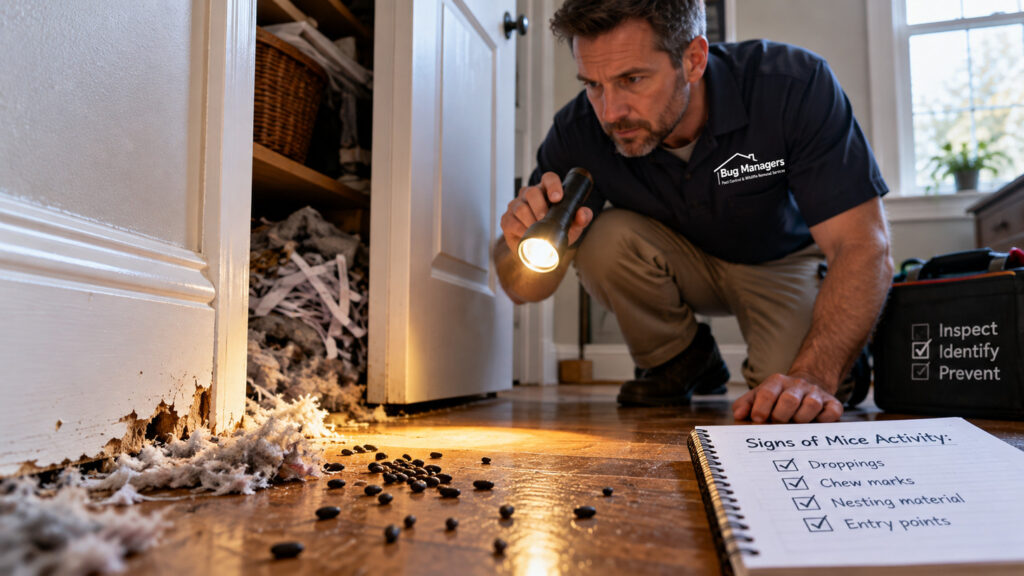
Small clues can reveal rodent activity before damage spreads. Fresh droppings look like dark, pointed rice grains. They measure about 3–6 millimetres and often appear near food, cupboards, baseboards and appliances.
One mouse may leave 50–75 droppings each day. Repeated findings across several areas suggest an active infestation, not a single visitor. Listen for light scratching, scurrying or gnawing at night near walls, ceilings, floors and utility spaces.
Small gnaw marks on packaging, wiring, wood, drywall or appliances need prompt control. Shredded paper, fabric, cardboard or insulation may also reveal nesting materials. A lasting ammonia-like odour within enclosed spaces can signal established activity.
During an inspection, photograph each clue and note its location. Avoid dry sweeping or vacuuming rodent droppings or contaminated nesting material, as this can release potentially harmful particles into the air. Follow Public Health Agency of Canada guidance for safely cleaning rodent-contaminated areas, or contact a qualified professional when signs continue or cleanup feels unsafe.
If you continue to find droppings, gnaw marks, nesting material or other signs of activity, learn more about Bug Managers’ professional mice and rat control services for inspection, treatment, exclusion and prevention.
| Clue | What it may indicate | Recommended response |
|---|---|---|
| Pointed droppings | Recent feeding activity | Record location and seek advice |
| Gnaw marks | Access or nesting behaviour | Check wiring and food storage |
| Shredded material | Possible nearby nest | Arrange a careful inspection |
Common Gaps Around Foundations and Siding
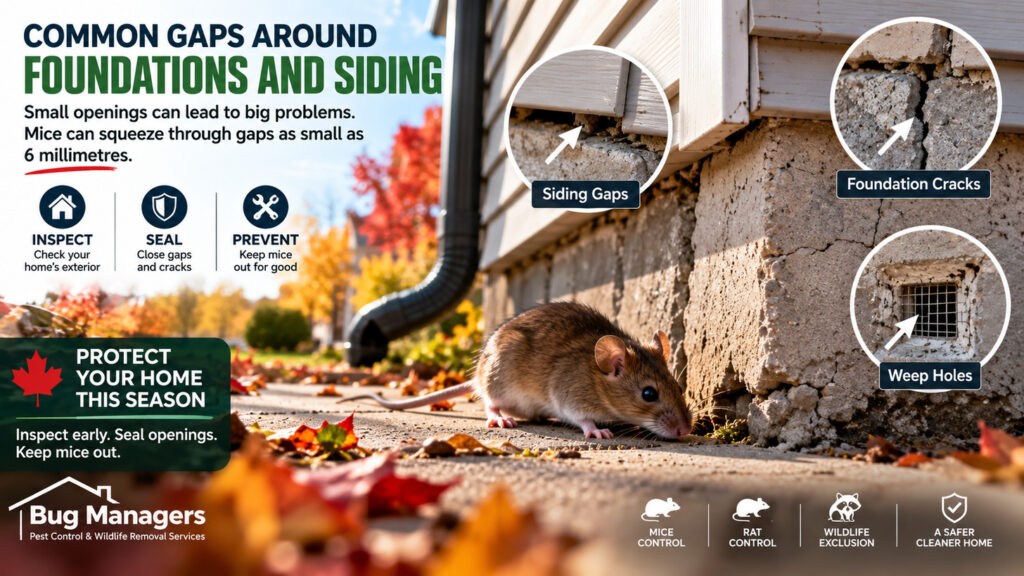
Cold-weather drafts are not the only concern around a property. Foundation cracks, siding joints and brick openings are among the most common entry points for mice.
Mice can squeeze through remarkably small openings. Health Canada recommends patching foundation cracks, weather-stripping doors and windows, and sealing openings around pipes as part of rodent-proofing a home.
Health Canada – Rats and Mice Prevention
Check the foundation-siding junction, especially where mortar, concrete or old sealant has cracked. Seasonal weather and deterioration can create or enlarge vulnerable areas around a home’s exterior.
Walk the full property perimeter. Examine basement windows, brick veneer, sill plates, siding overlaps and other openings. Look for droppings, rub marks, nesting debris, disturbed insulation or gnaw marks beside potential entry points. Health Canada also identifies droppings, gnawing, damaged food packages, tracks and holes around foundation walls as possible signs of rodent activity.
Older Ontario homes may have more areas that require inspection because of aging materials, repairs and changes to the building over time. Do not simply block openings that are designed for drainage or ventilation. Use an appropriate pest-resistant solution that preserves the building component’s intended function.
The Government of Ontario also recommends sealing ground-level holes or cracks, warped siding and other potential entry points while taking care not to seal an animal inside the building.
Ontario – Preventing Small Animals From Entering Buildings
Professional exclusion may be appropriate for complex masonry, concealed cavities or repeated mouse activity after repairs.
Entry Points Around Doors, Windows and Garages
A threshold check can reveal a surprising route before a visitor reaches the living space. Mice get through worn door sweeps, loose thresholds and gaps around frames when an opening nears 6 millimetres.
Inspect each exterior door from both sides. Look for daylight, cracked weatherstripping, droppings or gnaw marks. Pay close attention to garage corners, the bottom seal, side seals and the joint between the garage slab and foundation.
Window glass may remain sound while screens or frames create access. Check basement windows, ledges and poorly sealed edges. Since mice tend to follow walls and baseboards, activity beside a garage wall or window can show a travel route.
- Place a temporary monitoring indicator beside a suspected gap.
- Keep food, bait and traps away from children and pets.
- Replace worn seals with durable weatherstripping or fitted sweeps.
Plastic, soft foam and unsealed caulking may offer only short-term coverage. Arrange professional help if repeated signs continue after repairs, or if structural damage makes the source unclear.
Holes Around Pipes, Wires and Exterior Vents
Utility lines can create quiet doorways through a building’s protective shell. Check gas lines, water pipes, cable conduits and air-conditioning connections. A gap as small as 6 millimetres may allow mice to reach wall cavities.
Inspect holes around dryer vents, bathroom fans, range hoods, plumbing lines, electrical boxes and outdoor appliances. Unsealed openings may expose insulation to contamination, allow chewed wires and cause water damage.
Use copper mesh or tightly packed steel wool for narrow gaps. Add exterior-grade silicone to hold the barrier securely. For larger openings, galvanized hardware cloth with a mesh near 6 millimetres offers stronger protection. Plastic screening alone can fail after gnawing or harsh weather.
- Never move gas, electrical or water connections without qualified help.
- Check vent covers for loose edges and damaged seals.
- Call Bug Managers’ local pest control service when several entry points need coordinated repairs.
Follow Government of Canada cleanup guidance before handling contaminated materials.
| Opening type | Suitable barrier | Main caution |
|---|---|---|
| Small gap | Copper mesh and silicone | Avoid utility contact |
| Large opening | Galvanized hardware cloth | Keep vents clear |
| Damaged utility area | Professional exclusion | Check hidden damage |
Roofline, Attic and Porch Areas to Inspect
Upper levels can hide a route that starts beside the foundation. Mice may climb through wall cavities and reach attic insulation, ceiling voids or roofline spaces within hours.
Inspect soffits, fascia, roof vents, chimney flashing and roof-wall junctions. Also check loose material beneath eaves. Look for holes, rub marks, shredded insulation, paper, fabric or other debris. These nesting materials may show activity even when no mouse appears at night.
Porches, decks and attached sheds deserve attention too. Gaps around structural connections can lead toward siding or foundation cavities. Warm, hidden areas are appealing, especially when a food source sits within 3–10 metres.
Before winter, inspect roof vents, soffits, attic access panels, porch connections and roof-wall gaps. Use safe ladder practices. Arrange a professional inspection for unreachable roof points or damage. Contaminated insulation may need removal after prolonged nesting or strong odour develops.
| Area | What to check | Recommended action |
|---|---|---|
| Roofline | Soffits, vents and flashing | Repair loose or damaged sections |
| Attic | Insulation, debris and odour | Seek safe cleanup advice |
| Porch and deck | Structural gaps and attachments | Seal routes after assessment |
How to Seal Mouse Entry Points Safely
Effective exclusion starts with a careful repair plan. Mice can squeeze through a gap as narrow as 6 millimetres, so even small openings deserve attention. Begin with utility penetrations, garage seals, vents, siding joints and foundation gaps.
Pack narrow gaps with copper mesh or steel wool, then apply exterior-grade silicone. Expanding foam alone, plastic screening and weak caulk can fail after gnawing or harsh weather. Use galvanized hardware cloth for larger openings and fasten it firmly.
Sealing entry points blocks new mice, but it does not remove animals already hiding inside walls, attics or appliances. During repairs, place snap traps along walls where children and pets cannot reach them. A small amount of peanut butter may attract mice when a snap trap suits the area.
- Inspect the home every year before autumn.
- Repeat prevention after harsh winters or renovations.
- Ask a licensed technician about control when signs continue.
Professional exclusion may cost about $500–$1,500. The service may include an inspection report and a one- to two-year workmanship warranty.
| Repair area | Preferred material | Safety note |
|---|---|---|
| Small gap | Copper mesh and silicone | Keep clear of wires and pipes |
| Large opening | Galvanized hardware cloth | Secure every edge firmly |
| Active activity | Snap traps and exclusion | Use careful placement |
How to Control Mice Already Inside Your Home
Once signs appear, a calm, methodical response helps limit damage. Start with an inspection of kitchens, pantries, basements, attics, utility rooms and storage areas. Map droppings, gnaw marks, nesting materials, travel routes and other activity.
Place snap traps every 2–3 metres along walls and confirmed routes. Keep the trigger end against the baseboard. A typical kitchen may need 6–12 snap traps; larger infestations may need more. Add a pea-sized amount of peanut butter, while keeping each snap device away from children, pets, appliances and water.
Store food inside glass or heavy plastic containers. Remove crumbs, secure pet food and empty garbage often. Check traps daily, record catches and continue monitoring for two to three weeks after the last sign. Electronic options cost more, while snap traps usually cost less.
Never sweep or vacuum dry droppings. Ventilate the area for 30 minutes, wear gloves and wet debris with disinfectant. A bleach solution may use one part bleach to ten parts water. Deer mice can carry hantavirus, so an N95 respirator and professional cleanup suit rural cottages, sheds or garages.
Recurring infestations, chewed wiring, damaged insulation or hidden entry points justify professional pest control and safer control advice.
When Professional Pest Control Is the Better Choice
Persistent signs call for more than another round of DIY trapping. A licensed technician becomes the better choice when mice activity continues after snap traps, new droppings appear each week, or difficult entry points remain.
Bug Managers Pest Control & Wildlife Removal follows a clear process. A technician checks rooflines, soffits, siding overlaps, utility openings, attic insulation and foundation gaps. The team can also find concealed routes behind cladding or beside roof-wall junctions.
- Exclusion using hardware cloth or copper mesh
- Monitoring, sanitation advice and targeted control
- Careful review of wiring, appliances, odours and water risks
Professional exclusion often costs $500–$1,500, based on property complexity. Many services include a one- to two-year warranty. Prompt pest control helps limit damage and recurring infestations.
Bug Managers serves homeowners across Mississauga, Brampton, Toronto and the GTA. Ask when control should start, how long treatment may take, and whether prevention will protect your home next season.
Professional help is especially important when electrical damage, contaminated insulation or strong odours create safety issues. Review Health Canada guidance before cleanup, and choose experienced local pest control for lasting results.
Conclusion
Preventing seasonal rodent access starts with the exterior. Mice can enter Ontario homes during fall through gaps as narrow as 6 millimetres around foundations, doors, vents, utility lines and rooflines.
An early inspection can find droppings, gnaw marks, nesting material and damaged insulation before activity grows. A quick response may protect comfort and limit repair costs.
Keep food sealed, place traps safely, wet-clean contaminated areas and seal each vulnerable opening. Check results over time, rather than relying on one visit.
Plan prevention before September and October each year. This habit gives your home a stronger chance of avoiding winter activity.
For reliable pest control, contact Bug Managers Pest Control & Wildlife Removal across Mississauga, Brampton, Toronto and the GTA when signs persist or repairs feel unsafe. Call 647-326-4888 for a free quote.