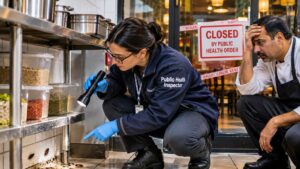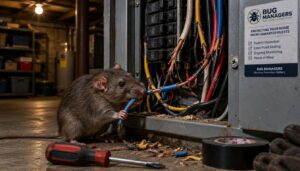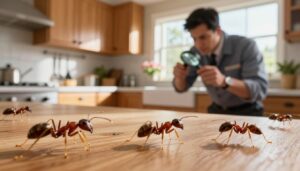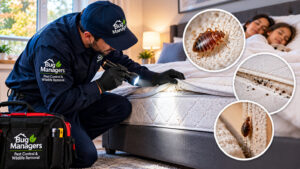
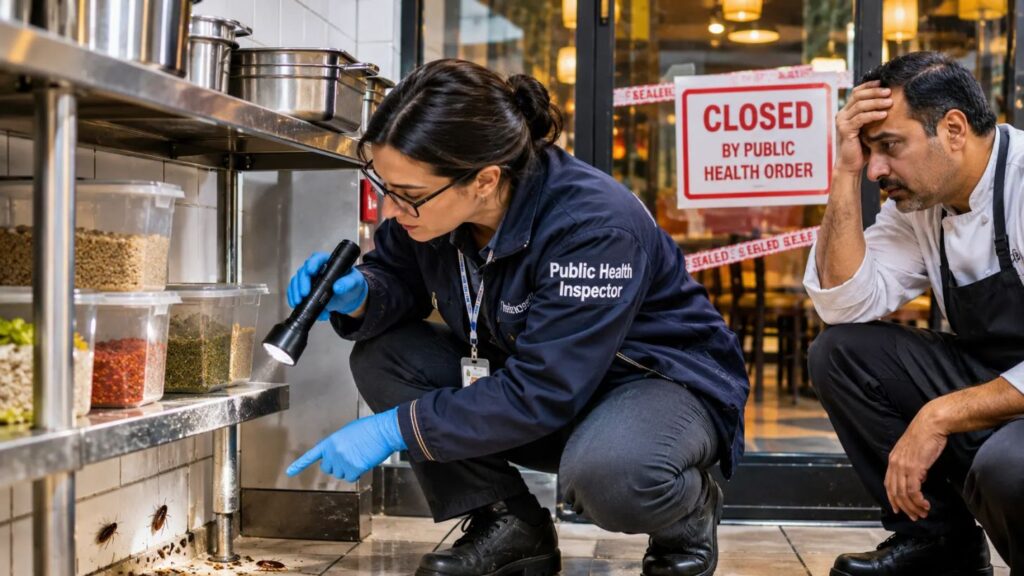
What would you do if a public health inspector found cockroaches, rodents or other pest activity in your restaurant and ordered it closed? For restaurant owners in Mississauga, Brampton and Toronto, a pest-related closure can mean lost revenue, interrupted operations and damage to customer confidence.
A restaurant closed under a public health order needs official reopening authorization from the responsible public health authority. Professional restaurant pest control Mississauga operators can arrange inspections, corrective work and records to help address violations and prepare for reassessment.
A pest treatment certificate records completed work; it does not grant permission to reopen. Requirements come from the responsible authority, so keep its instructions central while operations remain disrupted.
Key Takeaways
- Follow the public health order and its directions.
- Arrange a commercial inspection and targeted corrective work.
- Keep service records and corrective-action notes together.
- The responsible authority decides when operations may resume.
- Discuss urgent pest activity and appointment timing with a provider.
Restaurant Pest Control Mississauga: Common Pests and Warning Signs
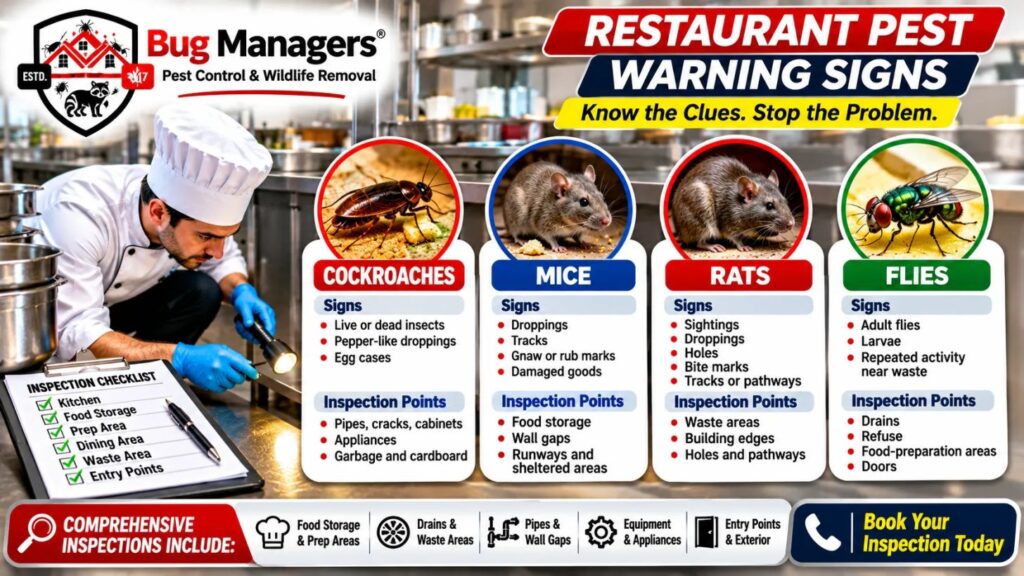
Cockroaches, mice, rats and flies each leave different clues, so a sighting is only one part of a restaurant pest inspection. Cockroaches are a commonly encountered pest in food premises, but no single pest is most common everywhere.
Mice control in Mississauga starts with finding droppings, gnaw marks or damaged goods, then locating food, shelter and entry points. Cockroach control, rodent control, a mice exterminator or fly control may be needed after an onsite inspection.
Suggested filename: restaurant-pest-warning-signs.jpg. Suggested alt text: Common pest signs and inspection points in a food premises.
| Pest | Practical signs | Likely inspection points |
|---|---|---|
| Cockroaches | Live or dead insects, pepper-like droppings, egg cases | Pipes, cracks, cabinets, appliances, garbage and cardboard |
| Mice | Droppings, tracks, gnaw or rub marks, damaged goods | Food storage, wall gaps, runways and sheltered areas |
| Rats | Sightings, droppings, holes, bite marks, tracks or pathways | Waste areas, building edges, holes and pathways |
| Flies | Adult flies, larvae or repeated activity near waste | Drains, refuse, food-preparation areas and doors |
Mice and rats can leave signs around food storage, waste areas, building edges, holes and pathways. Toronto’s rat-control guidance describes signs such as burrows and tracks. Record the location and type of each sign, since those details help focus an onsite inspection.
For a broader look at pests and their hiding places in institutional settings, see these common pest threats in healthcare facilities.
If you notice pest signs, record where they appear and arrange an onsite inspection to help identify the conditions involved.
Reduce Food, Water and Entry-Point Attractants
A pest-prevention routine starts by removing easy access to food and water and closing the routes pests use to enter. Ontario Regulation 493/17 requires covered food premises to be protected from pest entry and kept free of conditions that let pests harbour or breed.
The regulation applies to food premises, with specified exceptions. Examples include boarding houses serving fewer than 10 boarders, certain religious, service-club or fraternal-organization premises, and farmers’ market food vendors. Review Ontario Regulation 493/17 for its scope and requirements.
- Inspect incoming ingredients and materials, then rotate stock to limit old-product build-up.
- Keep food and stored materials off floors and in sealed containers.
- Clean spills, crumbs and grease from food-preparation and storage areas.
- Close or cover refuse containers and maintain waste-storage areas.
- Seal gaps, close unused doors and windows, and keep drain covers in place.
The Canadian Food Inspection Agency describes food-business pest control as preventing entry, detecting and eliminating pests, and preventing food contamination. Its pest-control guidance also covers delivery checks, storage and waste practices.
These checks suit a commercial kitchen, café or other food premises, and can be added to existing pest control routines. Add receiving, waste and structural checks to existing kitchen-cleaning routines so they happen consistently.
Review your receiving, waste and structural checks, and add any missing steps to your routine.
What to Do After a Pest-Related Violation or Closure Order
Start by reading the inspector’s report or order closely, because it identifies the hazard and the required response. A section 13 order under Ontario’s Health Protection and Promotion Act may close all or part of a food premises until an immediate health hazard is reduced or eliminated.
Current rodent or pest infestation can be a health hazard. Follow the order’s scope and contact the responsible local public health authority for instructions that apply to your premises.
Suggested filename: restaurant-closure-order-response.jpg. Suggested alt text: Restaurant records and affected areas being reviewed after a closure order.
Secure the affected area and preserve records
Keep the report or order available to your managers and commercial pest control provider. Record which rooms, equipment and food the inspector identified, then keep relevant photographs, inventory notes and communications together.
- Read and retain the inspection report or closure order, including its stated deadlines and directions.
- Identify the affected rooms, equipment and food, and keep staff out of restricted areas.
- Protect or discard affected food as directed by the responsible public health authority.
- Arrange an onsite commercial pest inspection and targeted treatment for the conditions found.
- Complete corrective actions, then follow the authority’s instructions for reassessment and reopening.
Correct pest conditions and coordinate the next steps
A pest-control visit supports corrective work, but the provider does not issue public health reopening authorization. Ask the authority what it needs to see before a reassessment, and do not resume operations until it authorizes reopening.
The Windsor-Essex Health Unit’s food-premises closure guidance is an example of official closure information. For your own site, use the local authority named in the order; the section 13 closure authority may apply to one area or the entire premises.
Keep the order, service records and corrective-action notes together for the authority’s follow-up.
Use the order as your guide, and contact the responsible authority if you need clarification about its requirements.
How Professional Restaurant Pest Treatment Works
Effective commercial treatment begins with finding where pests are living, feeding and entering, not just treating the place where someone saw one. Integrated Pest Management (IPM) is a prevention-led approach that combines inspection, monitoring, sanitation, exclusion and targeted pest treatments.
A licensed operator checks the pest type, harbourage, food and water sources, access routes and affected areas. Those findings help shape the treatment plan for the site instead of relying on a single method for every pest.
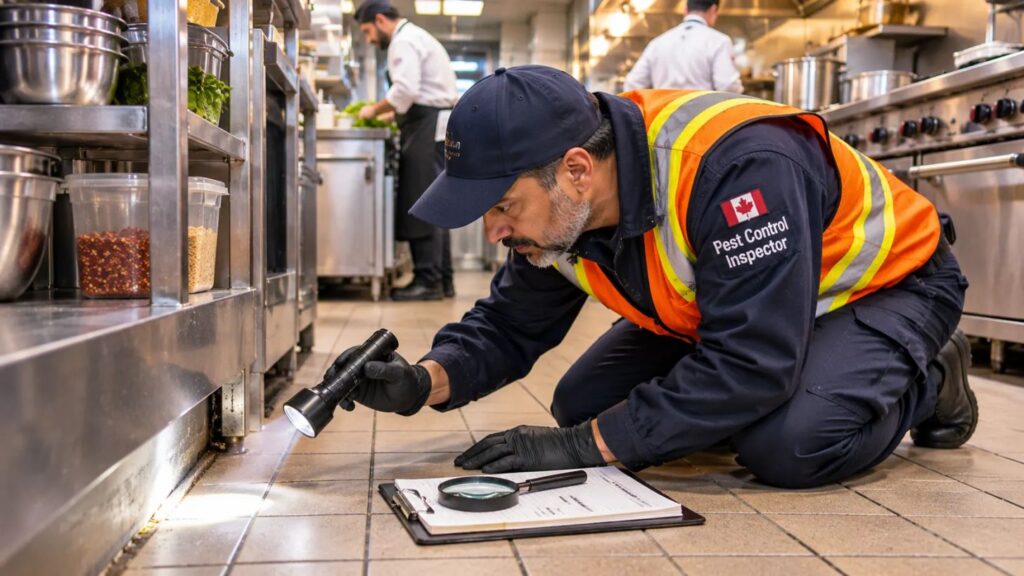
Inspection and pest identification
For rodent control, an inspection looks for the type of infestation, shelter areas and likely food sources. A professional pest inspection also helps distinguish active signs from older evidence and identifies areas that need attention.
A food-premises pest-control plan supports IPM, and a licensed pest-control operator can help develop and carry it out. Toronto’s food-premises pest-control guidance describes prevention, monitoring, sanitation, exclusion and responsible pesticide use.
Targeted treatment, exclusion and follow-up
A commercial exterminator selects targeted treatment for the pest and site. The work may include sanitation recommendations, rodent proofing, sealing gaps, suitable monitoring stations and follow-up checks.
Monitoring stations help track activity in selected areas, while exclusion work addresses access routes. A treatment plan can also set out which corrective actions belong to the operator and which work the pest-management team will complete.
For related methods, Bug Managers explains its Integrated Pest Management approach and offers commercial bed bug inspection and treatment for settings where that pest is present.
Follow-up monitoring checks whether corrective actions have reduced pest activity and reveals any remaining access points.
Ask a pest-management provider to explain the inspection findings and how its proposed treatment addresses them.
Commercial Pest Inspections and Documentation from Bug Managers
A commercial pest-control provider should be able to explain its inspection findings, proposed corrective actions and service documentation in terms a restaurant team can use. Bug Managers Pest Control & Wildlife Removal is a licensed and insured Canadian provider of commercial pest services.
Suggested filename: commercial-pest-control-service-records.jpg. Suggested alt text: Pest-control service documentation for a commercial food premises.
Its services include commercial inspections, targeted treatment, exclusion, prevention and monitoring. Monthly and quarterly monitoring programs are available, with service reports and pest treatment certificates documenting work performed.
When comparing restaurant pest control Mississauga reviews, assess the best restaurant pest control provider and the best pest control in Mississauga by checking licensing, insurance, food-premises experience, reporting practices and follow-up scope. Operators in Port Credit, Cooksville, Streetsville and Brampton can ask about service-area availability; businesses elsewhere in the GTA can confirm coverage too.
Need Commercial Pest Control in Mississauga? Contact Bug Managers
Choosing the right commercial pest control provider is important for protecting your business, maintaining food safety and addressing pest-related inspection concerns.
Bug Managers Pest Control & Wildlife Removal provides professional pest inspections, targeted treatments, prevention recommendations and service documentation for restaurants, commercial kitchens and other businesses across Mississauga, Brampton, Toronto and the GTA.
Visit the Bug Managers website to learn more about our services, explore our Mississauga pest control services or review our pest control and wildlife removal services.
Our licensed and insured professionals can assess pest activity, identify entry points and recommend a written treatment plan based on the conditions found onsite.
Facing a pest-related public health violation or temporary restaurant closure? We can provide professional treatment and documentation to support your corrective-action process. Official reopening approval remains with the responsible public health authority.
Contact Bug Managers today at 647-326-4888 to request a FREE commercial pest control estimate and arrange an inspection.
Protect your business, customers and reputation with professional pest management.
Reopening Authorization and Pest Treatment Certificates
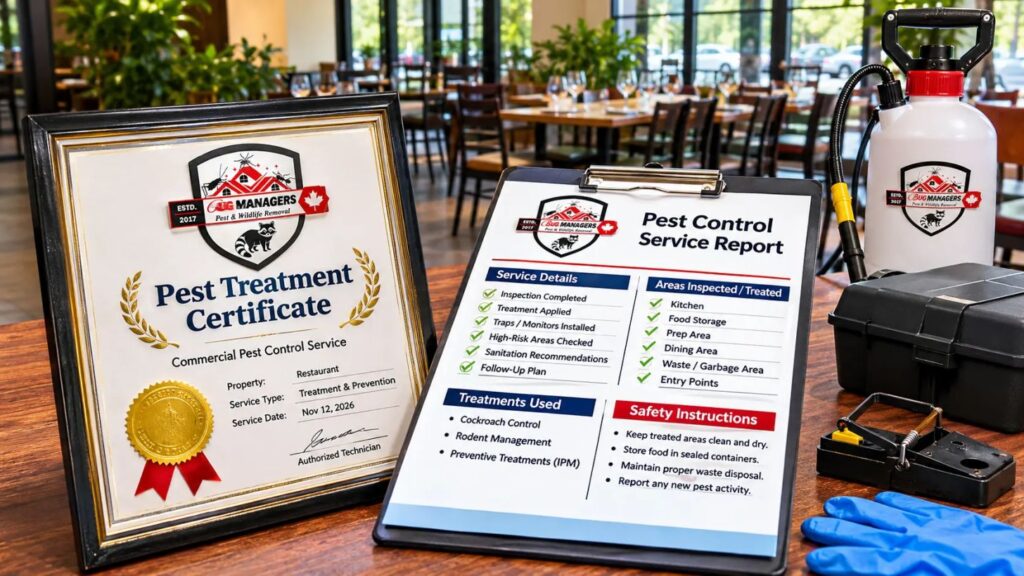
A pest treatment certificate is a record of completed pest-control work, while reopening authorization is an official public health decision. The responsible public health authority sets reopening requirements and authorizes a restaurant to reopen after a closure order.
| Document or decision | Who provides it | What it records or decides |
|---|---|---|
| Pest treatment certificate | Pest-control provider | Completed pest-control work |
| Service report | Pest-control provider | Inspection findings and corrective-action recommendations |
| Official reopening authorization | Responsible public health authority | Whether reopening is permitted and what requirements apply |
Bug Managers documents completed work and can provide inspections, treatments and corrective-action recommendations to support the process. A restaurant pest treatment certificate in Ontario does not replace the authority’s decision or set its reopening conditions.
Review the Health Protection and Promotion Act, your local public health authority’s closure or reopening information, and the relevant municipal or regional food-safety resources. Use the authority’s instructions to confirm which records and corrective actions it needs before reopening.
Check with the responsible authority about the records it needs before submitting your reopening request.
Monitoring Frequency and Commercial Pest Control Costs
The right monitoring interval depends on the restaurant’s pest pressure, site conditions and the corrective actions it needs to sustain. Bug Managers offers monthly and quarterly monitoring programs, but neither interval is a universal requirement.
Inspection and monitoring frequency should reflect activity, the building, food-premises needs and public health direction. A site with recurring activity may need a different schedule from one with stable conditions and effective controls.
Commercial pest control cost depends on the pest, extent of activity, site size and access, treatment needs, and whether ongoing monitoring is requested. Same-day appointments may be available, subject to confirmation.
Ask for an onsite estimate rather than relying on a general figure for pest control Mississauga cost. Request a free estimate that reflects the actual site, pest activity and monitoring scope.
Request an onsite estimate that accounts for your site conditions and monitoring needs.
Conclusion
A pest-related closure calls for prompt corrective work, clear service records and coordination with the authority responsible for reopening. Restaurant pest control Mississauga operators arrange should address the conditions found, while pest prevention helps support day-to-day food safety.
Bug Managers can discuss urgent activity, arrange an onsite restaurant pest inspection, provide professional treatment and document completed work. Same-day availability requires confirmation. Contact 647-326-4888 or visit bugmanagers.com to request a free commercial pest-control estimate.
Contact Bug Managers to discuss your restaurant’s pest activity and request an inspection and free estimate. Local Google Maps visibility can also help customers find food-service businesses in their area.