
Have you seen more pests around your home? Many in Mississauga and Brampton ask, “Why are mice in my house in summer?” The warm weather is perfect for them to breed and find food. Bird seed, pet food, and garden waste often draw them near.
Knowing why rats are more active in summer helps protect your home. They thrive with easy access to water and shelter. Leaving BBQ grease or overflowing garbage bins outside can attract them. Taking action now is key for summer pest control before it gets colder.
As the season changes, these animals will seek warm spots for winter. Taking steps now can prevent a small problem from becoming a big one. If you can’t seal entry points or notice pests, Bug Managers Pest Control & Wildlife Removal Services can help.
Key Takeaways
Warm weather increases local pest activity by providing easy access to food and water. Learn more about [rodent control in Mississauga] .
Common attractants include pet food, bird seed, garden debris, and improperly stored garbage. Following proper [rodent prevention and mice control] can make your property less attractive to rodents.
Early intervention is essential to stop infestations before animals seek shelter for the fall. Homeowners can also review rodent prevention guidance from Health Canada.
Homeowners should inspect their foundations and seal possible entry points to keep pests out. A professional [pest control inspection in Mississauga] can help identify less obvious entry points.
Summer Rodent Surges: Why Mice and Rats Become More Noticeable

How warmer weather changes rodent behaviour around Mississauga, Brampton and the GTA
Warmer weather lets rodents roam more in the GTA. Mice and rats look for food and water near homes during this time.
They are seen more in gardens, sheds, and on house walls. Keeping up with pest control is key to manage this.
Why summer breeding and population growth increase activity
Summer is perfect for rodents to breed and grow fast. This leads to more rodents looking for food and water.
More rodents in homes is common in summer. Without action, they can hide in your property.
Why rodents may enter homes even when outdoor conditions seem comfortable
You might think rodents stay outside in good weather. But homes offer food, water, and nesting materials they can’t find outside.
Rodents seek safety and food. So, they might go inside to nest in quiet spots like attics or wall voids.
Why late-summer prevention matters before rodents seek fall shelter
Acting in late summer is key to protect your home. Fixing vulnerabilities now stops rodents from finding ways in later.
Good rodent control in summer keeps your home safe from pests seeking shelter in fall. Early action reduces the chance of rat infestations as autumn comes.
What Attracts Rodents to Your Home During Summer
To keep rodents out, see your home from their perspective. Many homes unknowingly offer a feast for pests. Knowing what draws mice is key to preventing them.

Garbage, recycling and improperly stored waste
Trash bins are a magnet for rodents. Even bagged garbage can smell of food. Use strong, locked lids on outdoor bins to help.
Pet food, water bowls and outdoor feeding areas
Feeding pets outside is a big mistake. It attracts pests. Bring pet bowls inside after meals. Clean up outdoor feeding areas quickly if you must feed pets outside.
Bird seed, feeders and spilled seed beneath them
Bird feeders are great for birds but leave seeds on the ground. This attracts rats and mice. Use seed catchers or move feeders away from your house to prevent this.
BBQ grease, food scraps and outdoor cooking residue
Your grill can attract rodents if not cleaned. Grease and charred food are high-calorie snacks for pests. Keep your grill area clean to protect your home.
- Keep compost bins tightly sealed and away from the house.
- Remove standing water from birdbaths or clogged gutters.
- Clear away piles of wood, garden debris, or unused clutter.
- Store firewood at least 20 centimetres off the ground.
How Rodents Get Inside a House
Many homeowners wonder how mice get inside their homes. Despite keeping their properties clean, rodents can still find ways in through surprisingly small openings. Professional [mice control in Mississauga] can help identify these hidden access points. Knowing where rodents enter is an important part of effective [rodent prevention] .
Before sealing entry points, check whether mice, rats, or wildlife may already be hiding inside. Sealing an occupied opening can potentially trap animals and lead to additional problems. A thorough [pest control inspection] should come before exclusion work.
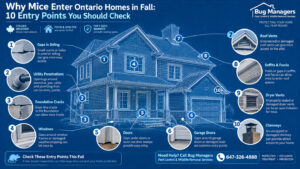
Foundation gaps, cracks and openings around the basement
Rodents often start by targeting the foundation. Even a small crack in the concrete can let them in. Look around your home’s foundation for any gaps where utility lines enter the basement. These are common spots for rodents to get in.
Garage doors, side doors and gaps around thresholds
Garages are often weak spots in homes. If your garage door doesn’t fit perfectly, rodents can slip underneath. Here are some areas to check for improvements:
- Gaps beneath side entry doors.
- Worn-out weatherstripping on the main garage door.
- Openings around door frames where wood has rotted.
Vents, exhaust outlets and damaged screens
Vents are important for airflow but can let pests in if not sealed. To rodent-proof, cover these openings with heavy-duty steel mesh. Make sure your dryer vents and exhaust outlets have tight-fitting flaps when not in use.
Rooflines, soffits, fascia and attic access points
Rodents are great climbers and can reach your roof via trees or wires. They look for gaps in soffits or fascia boards. To keep them out, check these areas for loose materials or damaged vents leading to your attic.
When sealing entry points, use strong materials like copper mesh, steel wool, or high-quality caulk. Stay away from materials rodents can chew through, like plastic or foam alone. By protecting your home’s exterior, you can lower the chance of unwanted visitors.
Signs of a Rodent Infestation and the Risks It Creates
Spotting mice or rats early helps you act before the problem becomes more difficult to manage. Knowing the [signs of a rodent infestation] is an important part of protecting your home. Professional [rodent control in Mississauga] can help identify activity, entry points, and conditions attracting rodents.
Rodents can contaminate food and surfaces and cause property damage through gnawing. For more information about health concerns associated with rodents, visit Health Canada – Rats and Mice.Spotting mice or rats early helps you act fast before they cause more harm. Knowing the signs of a rodent problem is key to protecting your home. It keeps your property safe from damage and health risks.
Mouse droppings, rat droppings and where to look for them
Waste is a big clue to rodent activity. Mouse droppings are small, like a grain of rice, with pointed ends. Rat droppings are bigger, like an olive, with blunt ends.
Look for these signs in quiet, dark spots. Check kitchen cupboards, behind appliances, and in basements or garages. Finding droppings means you need to check further.
Scratching, squeaking and movement heard inside walls or ceilings
Rodents are generally most active at night. Hearing scratching, squeaking, or scurrying sounds from walls, ceilings, or attics may indicate rodent activity. These noises can sometimes mean mice or rats are travelling through hidden areas or nesting near insulation. Learn more about [mice control in Mississauga] and [rat control services] .
Listen carefully during the evening when the house is quieter. Repeated noises from the same area may help identify possible travel routes or nesting locations. A professional [rodent inspection and exclusion service] can help locate entry points and determine the appropriate next steps.
For general information about preventing and managing rodents, see Health Canada – Rats and Mice. Rodents are most active at night. Hearing scratching, squeaking, or scurrying sounds means you have a problem. These sounds often mean rodents are nesting in your insulation.
Listen for these sounds in the evening. Persistent noises mean rodents have a routine path in your home. Knowing where they are helps you plan how to get rid of them.
Gnaw marks on wiring, wood, insulation and stored belongings
Rodents chew on hard things to keep their teeth from growing too long. This can damage wiring, causing fires. They also chew on wood, insulation, and stored items.
Look for small holes in baseboards or chewed wires. Damage to items means you need to tackle the problem. Fixing these issues early keeps your home safe.
Nests made from paper, fabric, insulation and garden material
Rodents make nests for their young. They use paper, fabric, insulation, and garden materials. You might find these nests in attics, crawl spaces, or storage boxes.
Finding a nest means rodents are living in your home. Removing nests is important, but sealing entry points is key to keeping them out. Knowing these signs helps prevent infestations and choose the right treatments.
| Sign of Activity | Common Location | Primary Risk |
|---|---|---|
| Droppings | Cupboards, basements | Disease and contamination |
| Gnaw Marks | Wiring, wood, baseboards | Fire hazards and structural damage |
| Nesting Material | Attics, wall voids | Insulation damage and breeding |
| Noises | Ceilings, wall cavities | Property disturbance and stress |
Step-by-Step Summer Rodent Prevention for Your Property
Keeping your property pest-free is key for a great summer. A regular maintenance routine helps manage your space and lowers infestation risks. Start by tackling small tasks that make a big difference for your peace of mind.
Step 1: Remove food sources from indoor and outdoor areas
Rodents look for easy food, so cutting off access is an important part of [rodent prevention] . Store pantry items in sealed containers, clean crumbs and spills promptly, and keep outdoor dining and BBQ areas clean.
Step 2: Reduce water sources and outdoor shelter
Rodents need accessible water and shelter. Repair leaks, avoid leaving pet food or water outdoors unnecessarily, trim vegetation near the foundation, and remove unnecessary debris or wood piles. These steps can support effective [mice and rat prevention].
Step 3: Declutter garages, basements, sheds and storage areas
Clutter provides rodents with protected hiding and nesting areas. Keeping garages, basements and storage spaces organized also makes droppings, gnaw marks and other [signs of rodent activity] easier to detect.
Step 4: Inspect and seal accessible openings
Check your home’s exterior for foundation gaps, damaged vents, openings around utility lines and worn door sweeps. Appropriate rodent-resistant materials should be used for exclusion rather than relying on caulk alone. Health Canada also recommends sealing openings and eliminating food and water sources as part of rodent prevention. Health Canada – Rats and Mice
DIY prevention can help, but recurring activity, inaccessible nesting areas or contamination may require professional assistance. [Rodent control in Mississauga] can include inspection, identification of entry points, control and exclusion measures.
Building a Rodent-Proof Home Before Fall
Homeowners in the GTA need to focus on keeping their homes strong against mice and rats this fall. Sealing your home well is key to preventing pests, which is why getting reliable rodent control mississauga services is important. Fixing small gaps now helps avoid big problems when it gets cold.
Inspecting the foundation, exterior walls and basement windows
Begin by checking your home’s outside. Look for cracks in the foundation or where siding meets the ground. These spots are where pests often get in. Fixing these areas is a must for keeping mice out of your home.
Improving garage seals, door sweeps and weatherstripping
Garages are a common entry point for rodents. Check the rubber seals at your garage doors for damage. Adding heavy-duty door sweeps and new weatherstripping can help keep your home safe.
Protecting roof, attic and soffit access points
Rodents are great climbers and often go for the top of your house. Check your roof for loose shingles or gaps in the soffits. Sealing these areas well is key for keeping mice out, which is important for those in Brampton.
Securing vents and utility openings without restricting airflow
Vents for dryers, bathrooms, and furnaces are important but need protection. Use steel mesh to cover these openings. This keeps pests out while letting air flow freely. Steel mesh stops rodents from chewing through to get in.
| Inspection Area | Common Weakness | Recommended Fix |
|---|---|---|
| Foundation Walls | Cracks and gaps | Use mortar or sealant |
| Garage Doors | Worn rubber sweeps | Install new weatherstripping |
| Roof/Soffits | Loose or damaged trim | Secure with metal flashing |
| Utility Vents | Missing or torn screens | Apply steel mesh covers |
If you can’t reach certain areas or are unsure about entry points, get a professional rodent inspection. Experts can find hidden spots that DIY checks might miss. This is the best way to keep your home safe all year, including in areas needing special rodent control brampton.
Safe Monitoring and Practical Responses to Rodent Activity
Managing rodents starts with careful inspection, prevention and ongoing monitoring. [Integrated Pest Management (IPM)] combines sanitation, exclusion, monitoring and appropriate control methods to address the conditions that allow rodent activity to continue.
Regularly checking for droppings, gnaw marks, nesting materials and possible entry points can help detect mice or rats before the problem becomes established. Professional [rodent control in Mississauga] can provide inspection, monitoring and exclusion when additional help is needed.
For more information about Integrated Pest Management principles, see Health Canada – Integrated Pest Management.
Using visual checks, tracking signs and inspection records
Regular checks are key to keeping your home safe. Look in dark spots, basements, and attics for signs of rodents.
- Keep a log of dated photos to track signs of mice.
- Use tracking powder or dust to find where mice move.
- Keep a simple record of when you last checked each area.
Placing monitoring devices where children and pets cannot reach them
When setting up traps, safety comes first. Make sure they are out of reach of kids and pets.
Use tamper-resistant bait stations that lock well. If you’re not sure where to put them, ask a pro to keep your home safe for everyone.
Understanding when DIY rodent control is appropriate and when it is not
DIY can work for small, easy-to-spot problems. But for big or ongoing issues, you might need more help.
In Mississauga, a pro might be better for tough cases. Knowing when to call a rodent exterminator can stop the problem from getting worse.
Why feeding, relocating or handling live rodents can create additional risks
Don’t try to feed or touch rodents. Handling them can be very dangerous, as they carry diseases.
Relocating rodents usually doesn’t work. They often come back or go to a neighbour’s place. Always choose humane ways to keep them out, like sealing up holes.
Professional Rodent Control for Mississauga, Brampton and the GTA
Seeing mice or rats regularly—especially during the daytime—can be a sign that professional [rodent control services] may be needed. Small rodent problems can become more difficult to manage when entry points, nesting areas and food sources are not addressed.
A professional [rodent inspection in Mississauga] can help identify the source of activity rather than focusing only on visible signs. Experienced technicians can use monitoring, exclusion and [Integrated Pest Management (IPM)] strategies to develop a longer-term solution.
For additional guidance on dealing with mice and rats safely, see Health Canada – Rats and Mice.
What to expect from a professional rodent inspection
First, a detailed inspection is key. Experts check for holes in your foundation or damaged vents. They also look for signs inside, like droppings and gnaw marks.
They check where food and water are, to see why rodents are coming in. This helps them make a plan just for your home.
How integrated pest management guides effective rodent treatments
Today’s pest control is more than just traps. It’s about managing pests in a complete way. This includes cleaning up, sealing off entry points, and watching for more pests.
Experts use kind methods to block rodents from coming back. This makes your home less welcoming to them, which is better than quick fixes.
When to call a rodent exterminator near you
If you hear scratching or see nests, call a pro. If DIY didn’t work, it’s time to find a reliable exterminator. Quick action stops more damage and keeps your home safe.
Choosing rodent removal experts for homes in the GTA
Finding the right team is critical. Look for experts who are open and have a good track record in your area. They should know how to handle rat problems in Mississauga or Brampton.
Choose companies that care about safety and have a plan for after they’re done. A good expert will walk you through everything, making you feel sure your home is safe.
A Late-Summer Action Plan for Preventing Rodents Before Fall
Late summer is a great time to protect your home from pests. By acting now, you can keep rodents out before they seek shelter indoors. This is key for effective summer pest management.
Complete an outdoor inspection before temperatures drop
Take a walk around your property to find weak spots. Look for cracks, gaps, or loose mortar that could let rodents in. In the GTA, pest control experts often focus on areas where utility lines enter homes, as these are common entry points for mice and rats.
Remove attractants before rodents establish new feeding routes
Rodents love easy food and water. Clear debris, trim back plants, and seal waste bins tightly. Here are some key steps to make your home less appealing:
- Store pet food in airtight metal or heavy-duty plastic containers.
- Clean up spilled bird seed from beneath feeders daily.
- Remove standing water from gutters, pet bowls, or garden features.
- Keep compost bins at least three metres away from your exterior walls.
Seal, repair and screen vulnerable areas before fall migration
After cleaning up outside, focus on making your home stronger. Use steel wool or heavy-duty hardware cloth to block gaps around vents and pipes. Rodents can chew through softer materials. Always think about the species and risks to your property when choosing extermination methods. Getting professional advice can help you decide between exclusion or trapping.
Set up a household monitoring routine for garages, attics and basements
Regular inspections are key to keeping your home pest-free. Check storage areas monthly for signs of pests, like droppings or gnaw marks. By staying alert, you can catch infestations early. Regular checks help keep your home safe all year round.
Conclusion
Before summer starts, it’s important to prepare your home for increased rodent activity. Mice and rats search for accessible food, water and shelter. Removing these attractants and sealing potential entry points can help reduce the risk of an infestation.
If you hear scratching sounds, notice droppings or discover gnaw marks, don’t ignore the warning signs. Early action can make a rodent problem easier to manage.
Bug Managers Pest Control & Wildlife Removal Services provides professional mice control, rat control, rodent inspections and exclusion services throughout Mississauga, Brampton and the GTA. Our licensed and insured team uses Integrated Pest Management (IPM) and practical prevention strategies tailored to your property.
Need Help With Mice or Rats?
Contact Bug Managers Pest Control & Wildlife Removal Services to schedule a professional rodent inspection or request a free quote.
📞 Phone: 647-326-4888
🌐 Website: www.bugmanagers.com
📍 Serving: Mississauga, Brampton, Toronto, Oakville, Vaughan and surrounding GTA communities
Protect your home by addressing rodent activity before it becomes a larger problem.